

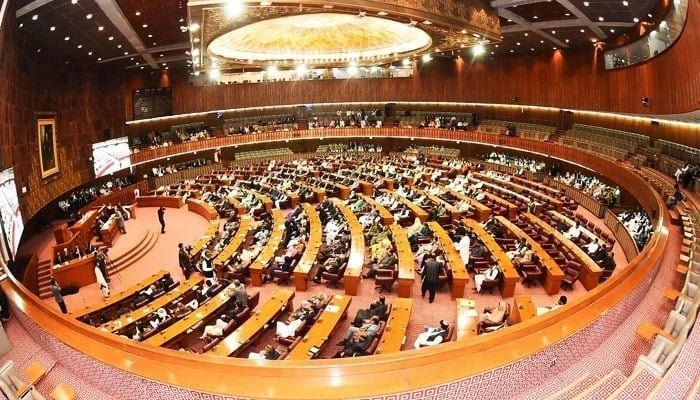

The joint parliamentary committee of the Senate and National Assembly has granted clause-by-clause approval to the draft of the 27th Constitutional Amendment. The approval covers 49 amendments, focusing on judicial reforms, the formation of a Federal Constitutional Court, and changes to the appointment process for the Chief of Army Staff (COAS).
The proposed amendment is expected to be presented for approval in the Senate session scheduled for tomorrow.
Key Provisions for Judiciary
The draft outlines significant changes in judicial procedures:
-
High Court Transfers: The President, on the Judicial Commission’s recommendation, can transfer high court judges.
-
Restrictions: Chief justices cannot be transferred, and judges senior to a high court chief justice retain their positions.
-
Refusal of Transfer: Judges declining transfers or appointments to the Federal Constitutional Court will be considered retired with pension benefits.
-
Federal Constitutional Court: The amendment proposes a seven-member court, replacing multiple references to the Supreme Court. The Chief Justice will serve a three-year term, and judges must have at least 20 years of legal experience.
Additionally, the court will hear disputes between the federal and provincial governments, presidential references, and will have its permanent seat in Islamabad. Decisions will be binding on all courts, including the Supreme Court, which will no longer hold suo motu powers under Article 184.
Changes to Military Appointments
Significant adjustments are proposed regarding military leadership:
-
The President, acting on the Prime Minister’s advice, will appoint the COAS, who will also serve as the Chief of Defence Forces.
-
The post of Chairman Joint Chiefs of Staff Committee will be abolished starting November 27, 2025.
-
Appointment of commanders for the National Strategic Command will follow the Army Chief’s recommendation.
-
Lifetime ranks of Field Marshal, Marshal of the Air Force, and Admiral of the Fleet will carry privileges and national hero status.
The amendment also allows the federal government to define duties, responsibilities, and benefits of military officers. Removal will require procedures under Article 47.
Other Proposed Revisions
Additional notable changes include:
-
Articles 42, 59, 63-A: Replacing “Supreme” with “Federal Constitutional” in judicial references and clarifying membership tenure.
-
Judicial oaths and references in legislation will align with the new Federal Constitutional Court.
-
Clauses related to NFC Award, population, education, health, and executive magistrates were dropped following objections from political parties.
The federal government is set to respond to allies’ proposed amendments, while consultations will continue on Balochistan assembly seat adjustments and local government changes. Once tabled, the Senate will vote on the amendment, requiring a two-thirds majority for ratification.
Army chief/Field Marshal
Will the army chief and Field Marshal General Asim Munir be a beneficiary of the 27th Constitutional Amendment? This question has become a talk of the town in the country and abroad.
