

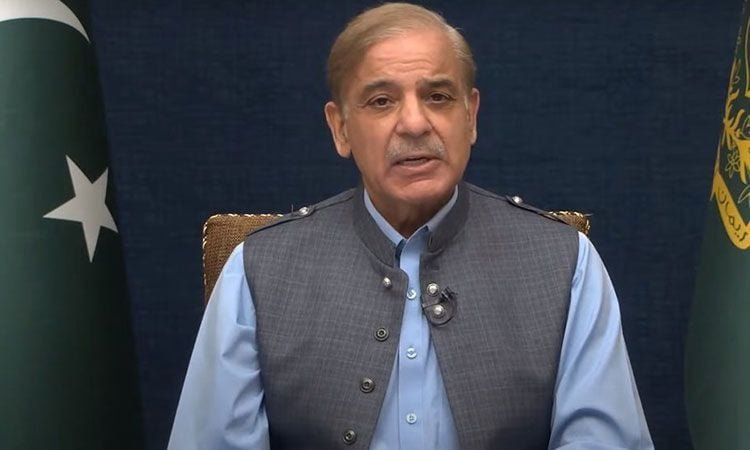

Prime Minister Shehbaz Sharif announced on Wednesday that Pakistan has successfully persuaded the International Monetary Fund (IMF) to exclude the agriculture sector from new taxes, despite repeated calls from the global financial institution.
Speaking during a federal cabinet meeting, the premier said, “We informed the IMF that no taxes would be levied on the agriculture sector, including on fertilisers and pesticides. I’m pleased to share that the IMF, although insistent, ultimately accepted our position.”
He stressed that the agricultural sector is already facing significant challenges, and protecting it was essential under current circumstances.
PM Shehbaz also addressed changes in the tax structure for salaried individuals, noting that those earning between Rs 600,000 and Rs 1.2 million annually will now pay just 1% income tax, a significant reduction from the previously proposed 5% in the FY25 budget. Additionally, salaries of government employees have been increased by 10%.
However, the statement appears to conflict with Finance Minister Muhammad Aurangzeb’s earlier budget speech for FY26, in which he proposed a 2.5% tax rate for the same income bracket, as outlined in the Finance Bill 2025.
Pakistan recently presented its federal budget for the fiscal year 2025–26 under the theme of fostering a “competitive economy,” aiming for a growth target of 4.2%, compared to the 2.7% growth projected for the outgoing fiscal year.
Highlighting regional tensions, the prime minister said the government had expanded its fiscal space to support the country’s defence requirements, especially in light of strained ties with India. “It’s a critical necessity in the current environment,” he remarked.
Furthermore, the government has earmarked Rs1 trillion under the Public Sector Development Programme (PSDP), reinforcing its commitment to meeting obligations with development partners.
PM Shehbaz concluded by stating that Pakistan has successfully avoided a sovereign default and is now on a path toward economic sustainability.
