


Government Forms High-Level Committee as IHC Presses for Action
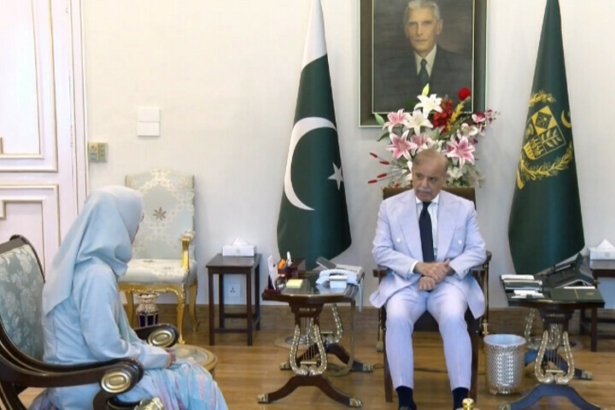
ISLAMABAD – Prime Minister Shehbaz Sharif on Friday met with Dr. Fouzia Siddiqui, the sister of Dr. Aafia Siddiqui, and assured her of the government’s unwavering commitment to continue providing full legal and diplomatic support in the high-profile case of her sister’s imprisonment in the United States.
During the meeting, PM Shehbaz reiterated that the government has never shown negligence in Dr. Aafia Siddiqui’s case and would pursue all avenues to secure justice. A statement issued by the Prime Minister’s Office emphasized that previous diplomatic and legal assistance in the case had been extended under the prime minister’s direct orders.
As part of renewed efforts, the prime minister informed Dr. Fouzia Siddiqui that a dedicated committee has been formed to expedite progress in the case. The committee is being headed by Federal Minister for Law and Justice Azam Nazeer Tarar and will remain in contact with Dr. Fouzia to ensure consistent support. PM Shehbaz also disclosed that he had written a letter to then-U.S. President Joe Biden, urging intervention and consideration in Dr. Aafia’s case.
IHC Issues Warning to Federal Cabinet Over Delays in Case
This development comes shortly after the Islamabad High Court (IHC) issued a show-cause notice to the federal cabinet for contempt of court due to its failure to submit a report on Dr. Aafia Siddiqui’s case. Presiding over the hearing, Justice Sardar Ijaz Ishaq Khan expressed strong disapproval of the government’s inaction, warning that he would not hesitate to summon the entire cabinet, including the prime minister, if the court’s directives were ignored.
Justice Ijaz Ishaq reminded the federal government that it had been ordered in June to submit a report detailing its assistance to Dr. Aafia in U.S. court proceedings. “Why shouldn’t contempt proceedings be initiated against all cabinet members?” he questioned, warning of serious legal consequences for continued delays.
The court granted the government additional time to comply but made it clear that judicial authority would not be undermined. “Even if I must hold court on a holiday, I will ensure justice is served,” Justice Ijaz stated, vowing not to allow administrative interference to hinder due process.
The hearing was attended by Dr. Fouzia Siddiqui’s legal counsel Imran Shafiq and Additional Attorney General Rashid Hafeez, representing the federal government.
Background on Dr. Aafia Siddiqui’s Case
Dr. Aafia Siddiqui, born in 1972 in Karachi, is a Pakistani neuroscientist who studied in the United States and earned her PhD from Brandeis University in 2001. Her life took a dramatic turn post-9/11, when she was accused of having links to extremist networks.
In 2008, she was arrested in Ghazni, Afghanistan, under controversial circumstances. U.S. authorities alleged that while in custody, she attempted to shoot American soldiers with a rifle during interrogation—though no one was injured. She was shot in the abdomen during the incident and later convicted in a U.S. court.
Her imprisonment has sparked widespread outcry in Pakistan, with many believing her trial was unjust and marred by procedural flaws. The case continues to be a deeply sensitive national issue and a matter of ongoing diplomatic concern.
