

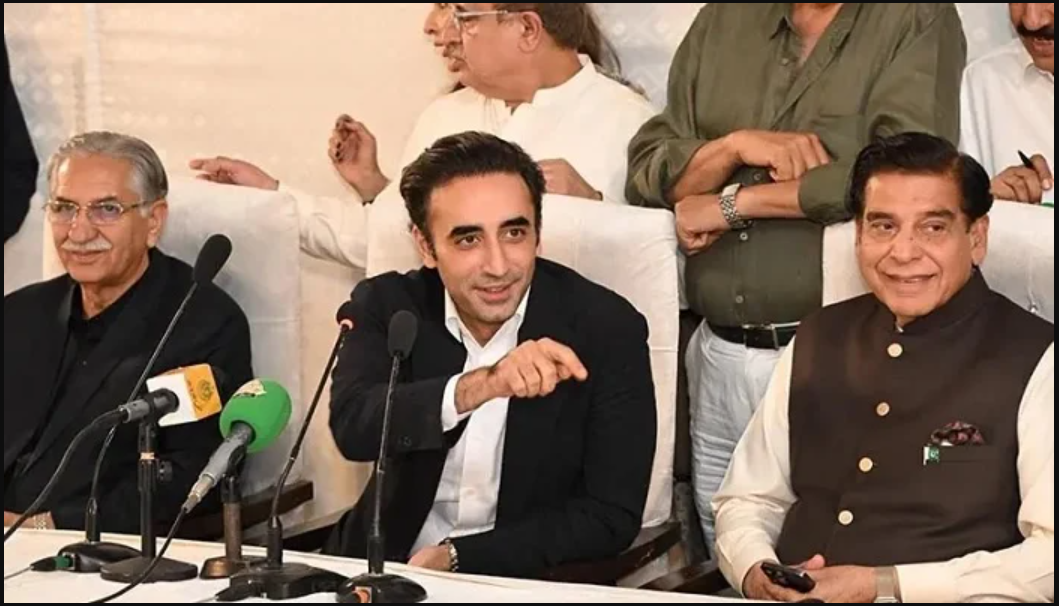

The Pakistan Peoples Party (PPP) has clearly outlined its stance on the proposed 27th Constitutional Amendment. While the party supports a few key reforms, it strongly opposes any move that undermines provincial autonomy, judicial independence, or democratic principles.
During the recent Central Executive Committee (CEC) meeting, PPP Chairman Bilawal Bhutto-Zardari reaffirmed that the party would only back amendments protecting civilian authority and provincial rights. His remarks reflected growing differences between the PPP and the Pakistan Muslim League-Nawaz (PML-N) over the amendment’s scope.
Opposition to Reversing Provincial Autonomy
Party leaders rejected the proposal to remove Clause 3A of Article 160, which safeguards provinces’ shares in the National Finance Commission (NFC) Award. According to the PPP, reducing provincial allocations would be a direct violation of the spirit of federalism.
The party also declined to support any rollback of Schedules 2 and 3, which are linked to provincial autonomy. It firmly opposed transferring key subjects such as education and population control back to the federal domain.
Bilawal emphasized that financial shares for provinces could increase but must never be reduced. “NFC allocations can rise but cannot be cut,” he said, stressing that Sindh’s financial autonomy must remain intact.
Rejection of Amendments on Dual Citizenship and Election Commission
The PPP rejected proposed changes to Article 213, which governs the appointment of the Chief Election Commissioner (CEC). The party argued that the current system ensures balance and transparency and should remain untouched.
It also turned down suggestions to amend Article 63(1)(c) regarding dual citizenship among civil servants and lawmakers. PPP leaders maintained that such changes could invite unnecessary political and legal complications.
Additionally, the party opposed the idea of restoring executive magistrates’ powers, citing concerns over potential misuse of authority.
Support for Amending Article 243 and Creating a Constitutional Court
While rejecting several proposals, the PPP agreed to support amendments to Article 243, which pertains to the command and control of the armed forces. The party, however, stressed that any change must preserve civilian supremacy.
Bilawal confirmed that the party endorsed three areas of reform:
-
Amending Article 243 with safeguards for democratic oversight
-
Establishing a Constitutional Court
-
Managing judges’ transfers through transparent consultation
He clarified that judges’ transfers should involve both outgoing and incoming chief justices to avoid unilateral decisions. “Authority should never rest with one individual,” he added.
Concerns over Proposed “Commander of Defence Forces” Designation
Reports suggest the government plans to introduce a new title — “Commander of Defence Forces” (CDF) — under Article 243. The PPP has expressed reservations, warning that such a move could weaken presidential authority and disrupt the constitutional balance between civilian and military institutions.
The party also resisted removing constitutional protection for the NFC Award and opposed changes that could alter the relationship between the federation and provinces.
Call for Democratic Consensus
Bilawal Bhutto-Zardari emphasized that any constitutional change must emerge through national consensus and respect the Charter of Democracy. He urged dialogue among political parties to ensure reforms strengthen, rather than dilute, democratic institutions.
He reiterated that the PPP would oppose any clause that weakens democracy or diminishes civilian control. “If democracy or civilian authority were harmed, we would be the first to object,” he declared.
Bilawal also invited JUI-F chief Maulana Fazlur Rehman to Bilawal House for further discussions, emphasizing political cooperation. The JUI-F leader, meanwhile, warned against amendments that could reduce provincial authority, stating that expansion of provincial powers is acceptable, but reduction is not.
The PPP’s position on the 27th Amendment highlights its commitment to preserving provincial autonomy, judicial independence, and civilian supremacy. By supporting only limited and balanced reforms, the party has drawn firm boundaries around constitutional changes that could reshape Pakistan’s political structure.
