

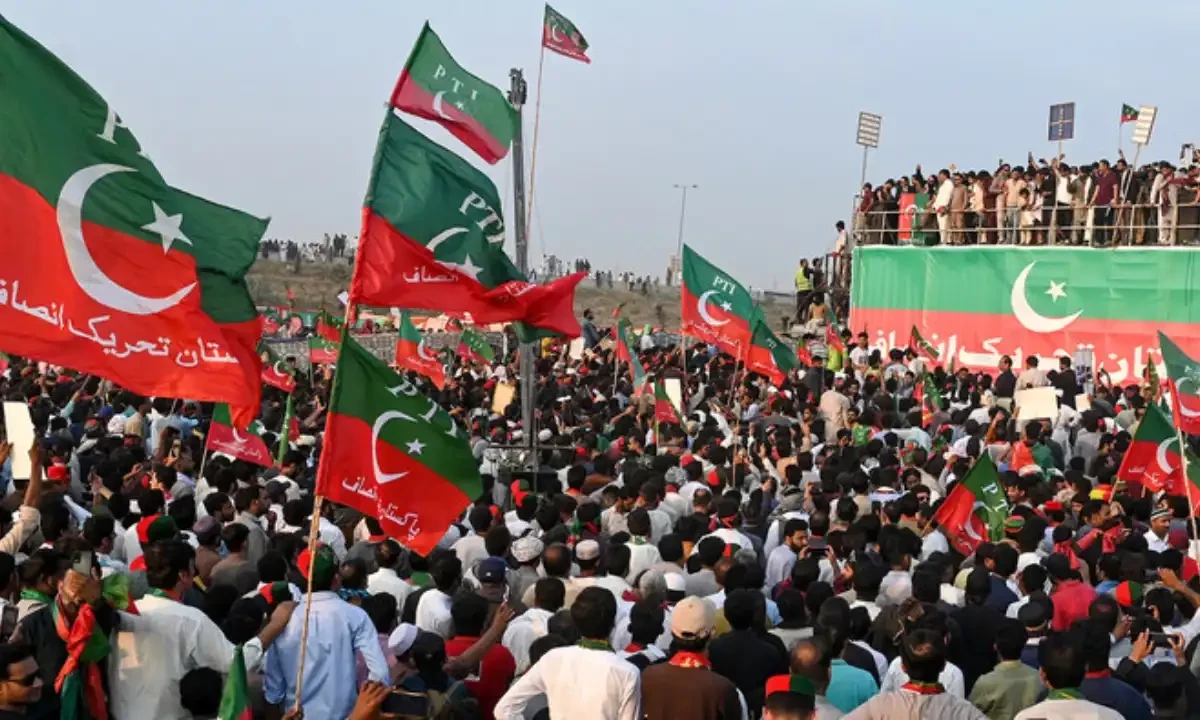

Mass Protests
Pakistan Tehreek-e-Insaf (PTI) Secretary General Salman Akram Raja has urged the establishment to reconsider its position, warning that if political issues are not resolved through meaningful dialogue, the party will have no choice but to mobilize public protests. He emphasized that PTI does not want the situation to worsen but insisted that the public mandate must be honored.
Speaking during an appearance on program Rubaroo with host Shaukat Paracha, Raja explained PTI’s three-level strategy for dealing with the ongoing political crisis. He said the first level is political engagement, highlighting that the party is actively in contact with other political groups.
He mentioned PTI’s alliance with Jamiat Ulema-e-Islam-Fazl (JUI-F) under the banner of “Tehreek Tahafuz-e-Aain” — the Movement for the Protection of the Constitution — led by Mehmood Khan Achakzai and supported by Allama Nasir Abbas and the Sunni Ittehad Council.
Raja added that PTI is also in talks with other parties such as the Grand Democratic Alliance (GDA) and has taken part in recent protests including Akhtar Mengal’s demonstration in Mastung.
He stressed that the country is facing a crucial moment in history and called on all democratic forces to unite against what he described as a rigged and dishonest system. According to him, a major political alliance is likely to form soon.
On the legal front, Raja said PTI will continue to pursue justice through the courts. He noted that Imran Khan’s release cannot happen without a judicial order, but he pointed out how legal decisions are often shaped by the broader political environment. He stressed the need for unity to change that atmosphere and ensure justice.
The third part of PTI’s strategy, he said, involves public mobilization. Raja hoped it would not be necessary but warned that if the establishment does not change its approach, people will eventually be forced to rise.
He referenced growing discontent in provinces like Balochistan and among Sindhi farmers, saying these issues must be resolved through talks rather than force.
Raja also noted that mass protests are often spontaneous and not necessarily sparked by leadership. “People don’t come out just because someone tells them to,” he said. “They act when they feel deeply wronged — when their votes are stolen, when poverty increases, when broken promises push them over the edge.”
Regarding any potential talks with the government, Raja made it clear that Imran Khan’s release must be central to the dialogue, calling it a key step toward restoring constitutional rule and the rule of law.
He again urged the establishment to engage in talks before the situation becomes uncontrollable. “You can resist with power — with tanks and bullets — but it only brings harm to the country,” he said. “We don’t want that. That’s why dialogue is not just an option anymore — it’s a necessity.”
