


Budget 2025-26
LAHORE: In a key announcement during the Punjab Assembly’s budget session on Monday, the provincial government approved a 10 per cent increase in the salaries of government employees and a 5 per cent rise in pensions for retired officials.
The decision forms a central component of the Punjab Budget 2025–26, aimed at providing financial relief to public sector workers amid rising inflation and economic instability.
Punjab Finance Minister Mian Mujtaba Shuja-ur-Rehman, presenting the budget on behalf of the ruling PML-N and PPP coalition, emphasised that the salary and pension hikes were a carefully considered move reflecting the administration’s empathy toward the financial hardships faced by citizens. “The government recognises the financial strain on employees and pensioners and has responded with a responsible and compassionate increase,” said Shuja-ur-Rehman during his address to the assembly.
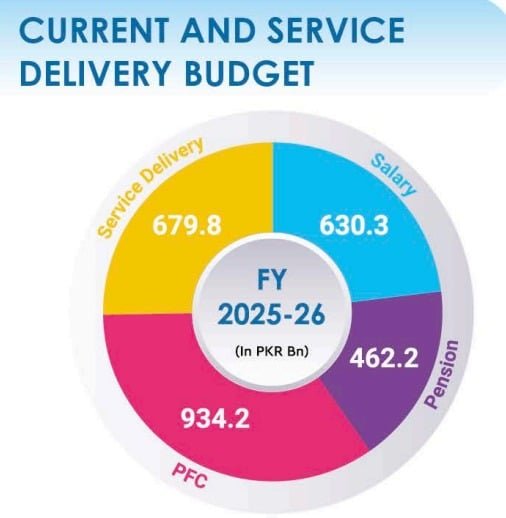
The salary raise will apply to all provincial government employees, while the pension increase will benefit thousands of retired civil servants. These adjustments are included in the Rs2,706.5 billion allocated for non-development expenditures.
This broader expenditure category also includes funding for general administration, salaries, pensions, and other operational costs necessary for the functioning of the provincial machinery.
In addition to employee welfare measures, the budget unveiled significant investments in the health and education sectors. Notable among these is the Rs72 billion earmarked for the Nawaz Sharif Cancer Hospital in Lahore — a major public healthcare initiative expected to enhance cancer treatment facilities across Punjab.
Meanwhile, the education sector is set to receive Rs148 billion, which will support the construction of new classrooms, expansion of existing institutions, and the continuation of merit-based scholarship programs aimed at improving access to education.
Despite these developments, the budget session was marred by vocal protests from opposition lawmakers. Opposition members raised slogans and denounced the budget as “politically motivated” and “inadequate” to meet the needs of the general public.
They argued that the allocations were driven more by electoral strategy than long-term economic planning. Treasury members, however, defended the budget, asserting that it struck a balance between development needs and fiscal discipline while prioritising the welfare of the province’s population.
The 2025–26 budget marks a critical juncture for the coalition government, which faces growing pressure to deliver economic stability and address public grievances in the lead-up to the next general elections.
