

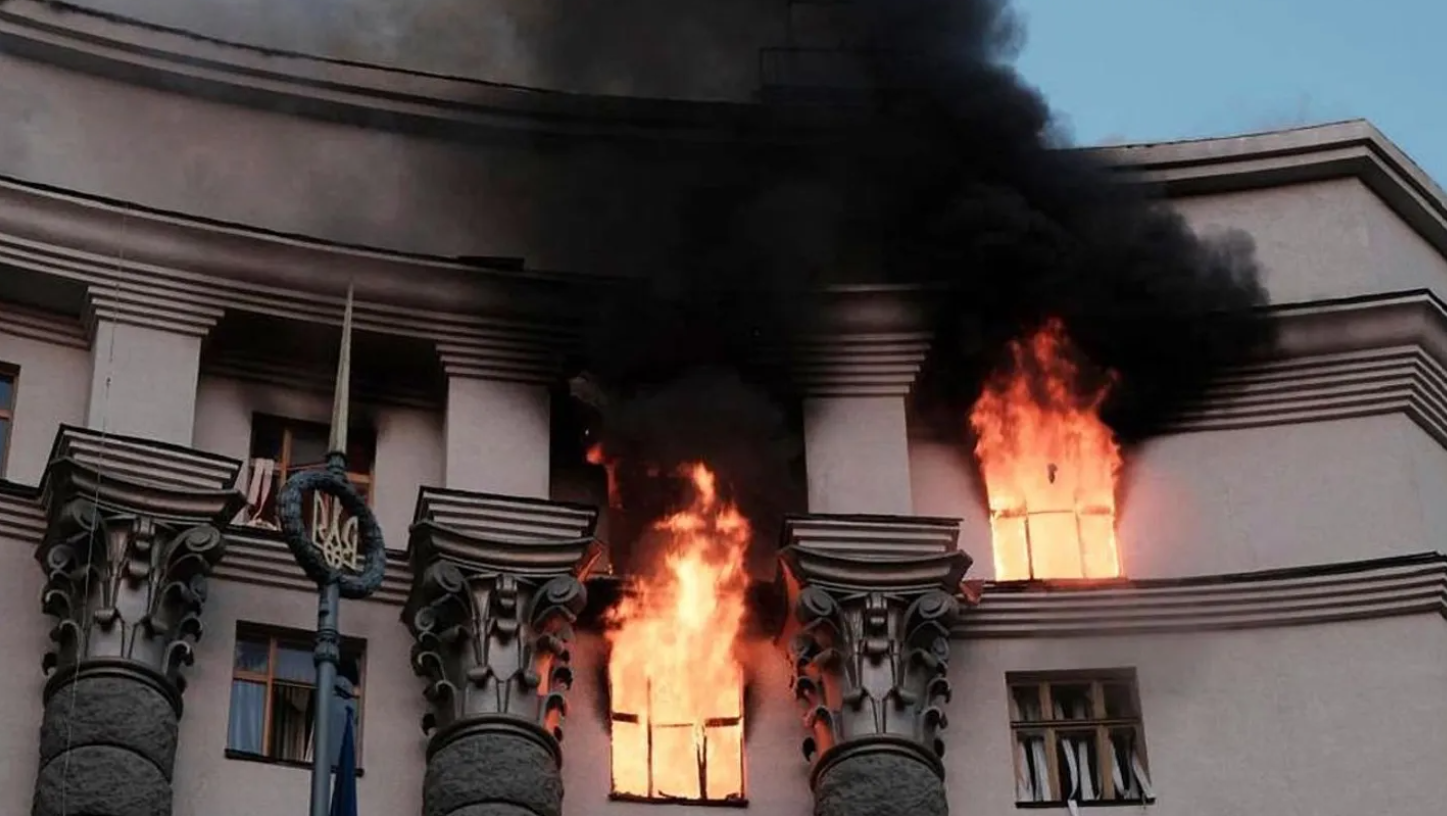

Russia unleashed its most extensive aerial assault on Ukraine since the beginning of the war, targeting the capital Kyiv and killing four people. The attack marked the first time Ukraine’s government complex was directly hit, intensifying global concern and condemnation.
Direct Hit on Ukraine’s Cabinet of Ministers
In the early hours of Sunday, the Ukrainian government’s cabinet building in central Kyiv sustained heavy damage after a Russian strike. Flames and smoke were seen rising from its roof as firefighters and helicopters battled the blaze. The strike also damaged several residential high-rises, leaving dozens injured.
Officials confirmed that at least 810 drones and 13 missiles were launched against Ukraine during the overnight assault. Emergency services reported widespread destruction across Kyiv, with one nine-story residential building collapsing after a strike. Two victims, including a mother and her two-month-old baby, were killed instantly.
Civilian Casualties and Human Impact
Beyond Kyiv, strikes hit Ukraine’s eastern and southeastern regions, killing two more people and wounding many others. In the capital, over 20 individuals were hospitalized, including a pregnant woman who gave birth prematurely after being injured. Doctors were fighting for both her life and the newborn’s survival.
The Ukrainian foreign ministry also reported the deaths of seven horses at an equestrian club on the outskirts of Kyiv, highlighting the indiscriminate nature of the strikes. Officials condemned the attacks as “terror” and appealed to the global community for stronger action.
International Response and Condemnation
World leaders strongly denounced the strikes. French President Emmanuel Macron called the assault “terror and war logic,” pledging support to strengthen Ukraine’s defenses. UK Prime Minister Keir Starmer described the strikes as “cowardly,” while EU chief Ursula von der Leyen said Russia was mocking diplomacy by escalating attacks instead of seeking peace.
Ukrainian President Volodymyr Zelensky declared that the strikes were deliberate acts meant to prolong the war. He stressed that diplomacy could have already been underway but Russia’s aggression continues to block meaningful negotiations.
Russia’s Denial
Russia’s defense ministry claimed it had only struck a plant and a logistics hub in Kyiv, denying responsibility for the government building strike. It maintained that “no other targets” were hit in the capital. Ukraine, however, accused Moscow of deliberately attacking civilian infrastructure and government institutions.
Kyiv’s Struggle and Global Security Concerns
The Ukrainian prime minister toured the damaged government offices, posting videos showing burned walls and shattered rooms. She vowed that destroyed infrastructure would be rebuilt but mourned the irreplaceable loss of civilian lives.
The attack came shortly after more than two dozen European nations pledged to enforce any eventual peace deal. Several countries signaled willingness to send troops to ensure compliance. Ukraine continues to demand firm Western-backed security guarantees, while Russia warns that the presence of foreign troops would make them “legitimate targets.”
Prolonged War and Human Cost
Three and a half years into the conflict, Russia controls around 20 percent of Ukraine’s territory, primarily in the east and south. The fighting has caused tens of thousands of deaths, displaced millions, and left vast swathes of Ukraine in ruins.
The latest escalation underscores the grim reality of Europe’s deadliest conflict since World War II, with no signs of resolution despite diplomatic efforts. U.S. attempts to mediate peace have stalled, while Russia continues its grinding territorial campaign.
The strike on Kyiv’s government building is a stark reminder of how Russia’s aggression is deepening the crisis. With mounting casualties and growing international outrage, the war shows little sign of ending soon. Ukraine insists on more military support and security guarantees, while Russia remains defiant. The world now watches as one of the most destructive conflicts in modern Europe pushes further into dangerous territory.
