

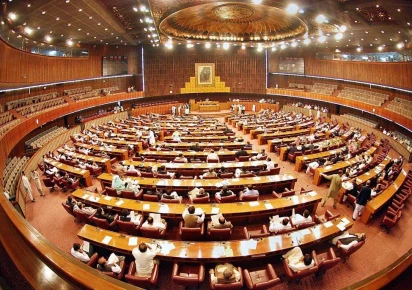

The Senate of Pakistan has approved key legislation to align armed forces and judicial laws with the 27th Constitutional Amendment.
The approved bills include the Pakistan Army (Amendment) Bill, 2025, Pakistan Navy (Amendment) Bill, 2025, Pakistan Air Force (Amendment) Bill, 2025, and the Supreme Court (Practice and Procedure) Bill, 2025.
These amendments redefine institutional roles, modernize command structures, and ensure consistency with constitutional provisions.
Recommencement of Field Marshal Asim Munir’s Tenure
A major feature of the amendments is the recommencement of Field Marshal Asim Munir’s five-year tenure. He will serve concurrently as Chief of the Army Staff (COAS) and Chief of Defence Forces (CDF). His tenure as CDF officially begins from the date of the new notification.
The amendments clarify that Article 243 provisions for a Field Marshal will also apply to generals promoted to the rank. Furthermore, the government can authorize the Vice Chief or Deputy Chief of Army Staff to exercise COAS powers under written orders issued on the CDF’s recommendation.
Structural Changes in Command
The legislation abolishes the post of Chairman Joint Chiefs of Staff Committee (CJCSC). It will be replaced by the Commander of the National Strategic Command, appointed by the Prime Minister from serving Army generals. Appointments are based on the COAS/CDF’s recommendation.
The Prime Minister can set terms, grant extensions in the national security interest, and all appointments or extensions cannot be challenged in court.
Amendments in Air Force and Navy Laws
The Pakistan Air Force (Amendment) Bill, 2025 removes sections regarding the Air Force chief’s tenure, appointment, and extension as CJCSC. All CJCSC references have been eliminated across the Act.
Similarly, the Pakistan Navy (Amendment) Bill, 2025 deletes provisions regarding the Naval Chief’s CJCSC role, ensuring a consistent legal framework across the armed forces.
Supreme Court (Practice and Procedure) Bill
The Supreme Court Bill establishes a committee to hear all petitions, appeals, and review applications. This committee includes the Chief Justice, the next senior judge, and a judge nominated by the Chief Justice.
If a member is unavailable, the Chief Justice may nominate another judge. The bill also removes references to “Constitutional Benches” from the Supreme Court Act, 2023.
Strategic and Legal Impact
These amendments aim to streamline military command, promote multi-domain integration, and ensure joint operations across the armed forces. Additionally, honorary ranks of Field Marshal, Marshal of the Air Force, and Admiral of the Fleet have been introduced.
The legislation provides clear roles, responsibilities, and succession mechanisms for senior military leadership. It also strengthens the legal framework for the Supreme Court to manage petitions and appeals effectively.
With Senate approval, Pakistan’s armed forces and judicial laws are now fully aligned with the Constitution. Field Marshal Asim Munir’s tenure has officially restarted, and the CJCSC post has been abolished in favor of a modern command structure.
