

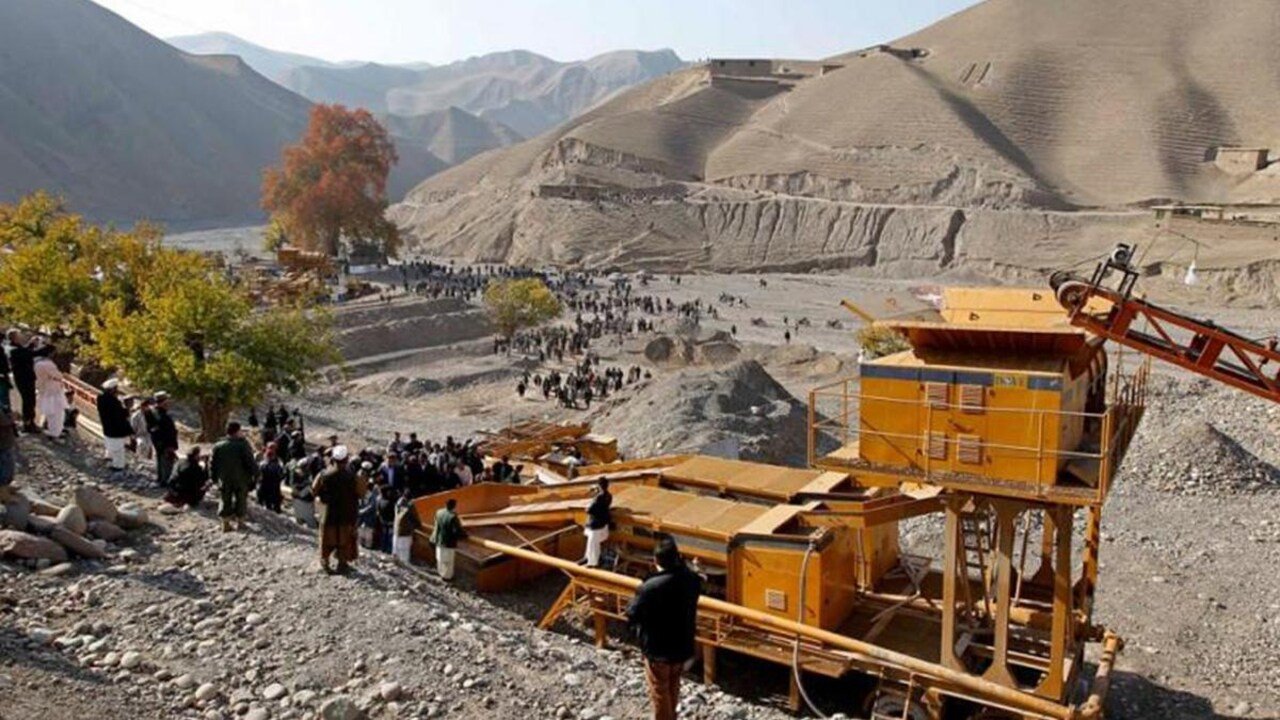

Afghanistan’s rich mineral resources are at the forefront of the Taliban’s efforts to boost the country’s economy, with the group courting both local and foreign investors to tap into its underground wealth. The country’s vast reserves, which include emeralds, rubies, marble, gold, and lithium, are estimated to be worth around a trillion dollars, according to past US and UN assessments.
At a mining site in eastern Afghanistan, workers recently exposed a block of jade, part of the Taliban’s broader push to develop the mining sector. Security has greatly improved since the Taliban’s return to power in 2021, leading many to revisit investment opportunities in the country.
While the authorities have secured nearly 200 mining contracts, the majority with local companies, experts caution that many of these deals are focused on exploration, which can take years to yield results, and loosely regulated extraction methods that may harm the environment.
Humayoun Afghan, spokesman for the Ministry of Mines, acknowledged the challenges, saying, “We have no experts, no infrastructure, no knowledge,” but emphasized that the Taliban is open to foreign investors, particularly those with mining experience.
The production of coal, talc, and chromite surged between 2021 and 2022, and the authorities are prioritizing resources that may still rise in value on global markets, such as lithium. The ministry has been actively inviting foreign companies to invest by publishing tenders for exploration and extraction projects, which are seen as essential to meeting Afghanistan’s pressing cash needs.
While the World Bank reports a 6.9% growth in mining and quarrying in 2023-2024, some contracts have yet to begin operations, as the country struggles to manage the demands of such a rapidly expanding sector. Mining expert Javed Noorani warned that the Taliban may be overextending itself by issuing more tenders than it can realistically handle.
China’s Leading Role in Mining
Foreign investment in Afghanistan is still a tricky proposition due to the country’s unrecognized status and international sanctions. However, nations like China, Iran, Turkey, Uzbekistan, and Qatar have shown interest. The Chinese state-owned company MCC is already active at the Mes Aynak copper deposit, and Chinese firms have secured other major projects in gold and copper.
Habibrahman Kawal, co-owner of a jade mine in eastern Nangarhar province, noted that most of his jade goes to China, highlighting China’s dominant role in Afghanistan’s mining sector.
Environmental Concerns and Risks
Despite the growing interest in Afghanistan’s mineral wealth, there are serious concerns about the environmental impact of unchecked mining practices. Many investors are drawn to the lack of regulatory oversight, allowing for faster work but risking long-term damage. Mine waste, including iron sulfide minerals, can contaminate the ground and water if not handled properly.
Shir Baz Kaminzada, head of the Afghanistan Chamber of Industries and Mines, noted that some investors disregard international sanctions and environmental regulations, knowing they can profit quickly in a largely unregulated market. Geophysicist David Chambers pointed out that these short-term gains could come at a significant cost in the future, particularly in terms of environmental cleanup.
While the Taliban claims to adhere to existing laws regarding mine cleanup, specific details on enforcement are unclear. Mining experts like Chambers stress the importance of investing in safe waste management systems to avoid future environmental damage.
As Afghanistan’s mining sector continues to grow, the challenges of balancing economic gain with environmental responsibility remain a significant concern for both the Taliban and foreign investors.
