

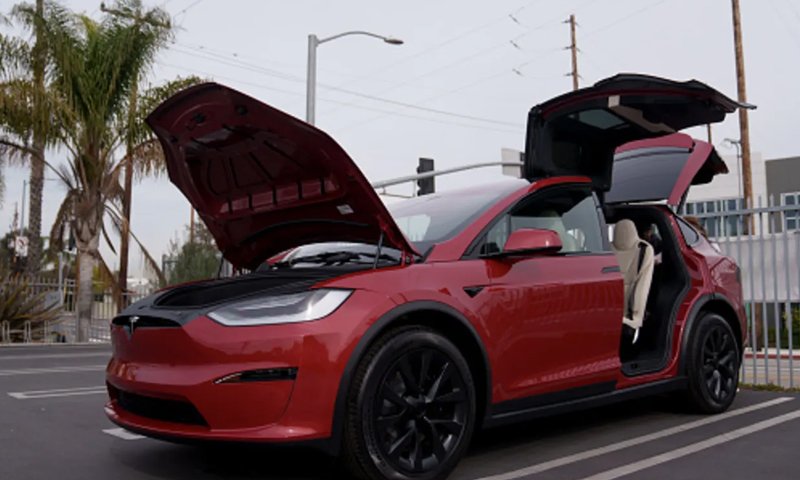

Tesla CEO Elon Musk announced a major shift in the company’s strategy on Wednesday, revealing that Tesla will officially end production of its long-running Model S and Model X vehicles. The Fremont, California factory that once produced the luxury electric cars will instead be retooled to manufacture Tesla’s Optimus humanoid robots.
Speaking during Tesla’s fourth-quarter earnings call, Musk described the decision as a turning point for the company’s automotive legacy. “It’s time to basically bring the Model S and X programs to an end with an honorable discharge,” he said. Musk also encouraged potential buyers to act quickly, adding, “If you’re interested in buying a Model S and X, now would be the time to order it.”
The Model S and Model X are among Tesla’s oldest vehicles, following the original Roadster. The Model S sedan launched in 2012, while the Model X SUV debuted in 2015. Once considered premium flagships for the brand, both vehicles have struggled in recent years amid rising global competition in the electric vehicle market. Tesla has repeatedly cut prices to maintain demand.
As of now, Tesla’s website lists the Model S starting at approximately $95,000, while the Model X begins at around $100,000 — prices that place them well above Tesla’s mass-market offerings.
The company’s Model 3 and Model Y have become Tesla’s dominant sellers, accounting for a staggering 97% of its 1.59 million vehicle deliveries last year. The Model 3 now starts at roughly $37,000, while the Model Y is priced around $40,000. Tesla introduced more affordable versions of both vehicles late last year, further cementing their popularity.
The announcement comes at a challenging time for the automaker. In its earnings release, Tesla reported its first-ever annual revenue decline, with sales dropping in three of the past four quarters. As demand for electric vehicles cools in some markets, Musk has increasingly shifted the company’s narrative away from traditional EVs toward ambitious future technologies.
Chief among those is Optimus, Tesla’s humanoid robot project. The company envisions Optimus as a bipedal, intelligent robot capable of performing tasks ranging from factory labor to household assistance. While Tesla currently generates little to no revenue from robotics, Musk has repeatedly described Optimus as central to the company’s long-term vision.
Tesla confirmed it plans to unveil the third generation of Optimus later this quarter, calling it the company’s first design intended for mass production. According to Musk, the Fremont factory will house a new production line capable of building up to 1 million Optimus robots per year.
“Because it is a completely new supply chain,” Musk explained, “there’s really nothing from the existing supply chain that exists in Optimus.” He added that Tesla expects to increase headcount at the Fremont facility and significantly ramp up output as the transition moves forward.
The move marks the end of an era for Tesla’s earliest mainstream vehicles — and the beginning of a bold bet on a future dominated not just by electric cars, but by intelligent machines.
