

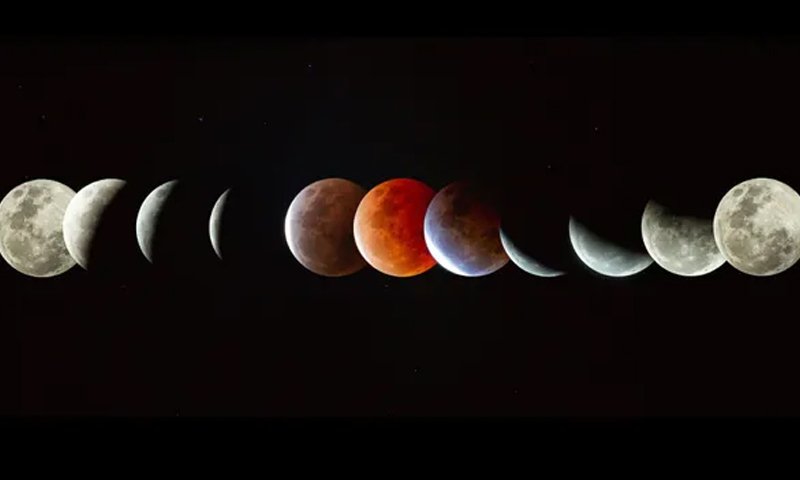

Skywatchers across much of the Americas are in for a celestial treat in the early hours of Tuesday, March 3, 2026: a stunning total eclipse of the Moon. Unlike a solar eclipse, a lunar eclipse is safe to view with the naked eye and requires no special equipment, though binoculars will enhance the experience.
This event will be widely visible across North and South America, the Pacific Rim, and parts of Asia and Australia. For those in the Eastern Time Zone, the eclipse will be a race against sunrise, with the Moon setting during totality. Viewers farther west will see more of the event, with the Far West and Hawaii enjoying the entire eclipse from start to finish under a dark sky.
How to Prepare: A Clever Trick for Scout Night
One key to a good view is an unobstructed western horizon, especially for eastern observers. You can plan ahead by using the Moon itself as a guide on Wednesday, February 4. On that morning, the Moon will be in nearly the same part of the sky it will occupy during the eclipse. To find its eclipse position, simply look 2 hours and 8 minutes later than the eclipse times listed for your time zone.
For example, if you’re in Mountain Time and the eclipse begins at 2:49 a.m. on March 3, check the sky at 4:57 a.m. on February 4 to see where the Moon will be.
Eclipse Timeline & Viewing Guide by Time Zone
The table below shows when to look on February 4 to preview the Moon’s position for each stage of the March 3 eclipse:
Eclipse Stage EST (Feb 4) CST (Feb 4) MST (Feb 4) PST (Feb 4)
Eclipse Starts 6:57 a.m. 5:57 a.m. 4:57 a.m. 3:57 a.m.
Totality Starts 8:11 a.m. 7:11 a.m. 6:11 a.m. 5:11 a.m.
Mid-Eclipse 8:41 a.m. 7:41 a.m. 6:41 a.m. 5:41 a.m.
Totality Ends 9:10 a.m. 8:10 a.m. 7:10 a.m. 6:10 a.m.
Eclipse Ends Not Visible 9:25 a.m. 8:25 a.m. 7:25 a.m.
Viewing Tips:
Eastern North America: The farther west you are within your time zone, the longer you’ll see totality before moonset. In Portland, ME, the Moon sets just one minute into totality, while in Indianapolis, IN, the entire total phase is visible.
Western North America & Hawaii: Prime viewing! The entire eclipse will unfold high in a dark sky.
Asia & Australia: The eclipse will be visible during evening hours on March 3.
This eclipse is a perfect opportunity for a simple, beautiful night (or early morning) of astronomy. All you need are clear skies and a view toward the west. Stay tuned to Space.com for updated maps and viewing guides as the date approaches!
