

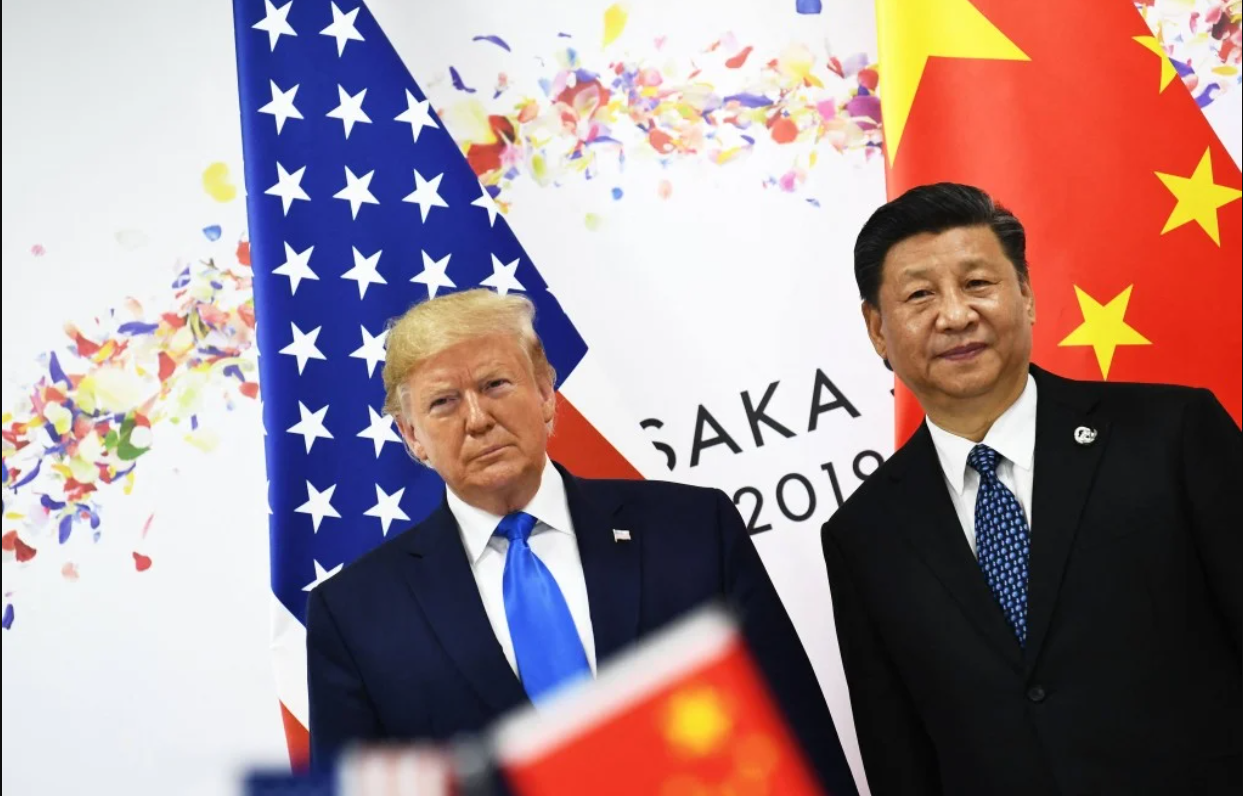

US President Donald Trump acknowledged that his proposed 100% tariffs on Chinese goods are “not sustainable” in the long run but justified the move as a response to Beijing’s export curbs on critical rare earth elements. His comments come as Washington and Beijing prepare for renewed trade talks, with Trump set to meet Chinese President Xi Jinping in South Korea within the next two weeks.
Trump Blames China for Escalating Trade Standoff
In an interview, Trump said China had “forced his hand” by tightening its control over rare earth exports — elements essential for global tech manufacturing, from smartphones to electric vehicles.
“They forced me to do that,” Trump stated, referring to the sweeping tariff hike. He added that while such high tariffs were economically difficult to maintain, the United States needed to respond decisively to what he described as unfair trade practices and strategic resource manipulation by China.
Last week, Trump announced a 100% tariff on all Chinese exports to the United States, alongside new export restrictions on critical software and technologies. These measures will take effect by November 1, just nine days before previous tariff relief was due to expire.
Meeting with Xi Jinping Signals Possible Thaw
Despite his tough rhetoric, Trump expressed optimism about resolving the trade impasse through dialogue. He confirmed plans to meet Chinese President Xi Jinping in South Korea, a meeting he had earlier cast doubt on.
“I think we’re going to be fine with China,” Trump said. “But we have to have a fair deal. It’s got to be fair.”
His comments were seen as a softening of tone, helping stabilize investor sentiment after days of market volatility. Wall Street stocks, which had dipped sharply following the tariff announcement, showed modest recovery as hopes for diplomatic progress rose.
Rare Earths at the Center of Economic Battle
China currently dominates global rare earth production, supplying over 80% of the world’s demand. The metals are vital for manufacturing semiconductors, defense equipment, batteries, and renewable energy technologies. Beijing’s decision to expand export controls has raised alarm in Washington, where policymakers fear overdependence on Chinese resources.
Trump’s latest tariff move is viewed as both a political signal and economic pressure tactic, designed to push China toward a broader trade and resource-sharing agreement.
High-Level Talks to Resume Between US and China
In a related development, US Treasury Secretary Scott Bessent and Chinese Vice Premier He Lifeng are expected to hold a high-level call to discuss ongoing trade negotiations. The discussion will focus on identifying common ground and mitigating the economic damage caused by escalating tariffs and export restrictions.
While details remain undisclosed, analysts believe the talks could pave the way for a temporary easing of trade tensions ahead of the Trump–Xi meeting. However, relations remain fragile, as recent accusations from both sides underscore deep mistrust between the two largest global economies.
Economic Uncertainty and Market Reactions
Economists warn that a prolonged tariff war could hurt manufacturing, technology, and consumer goods sectors in both nations. Although Trump admitted the 100% tariff is unsustainable, he maintained that it was necessary to protect American industries and pressure Beijing into fairer trade terms.
The White House has also hinted at possible tariff rollbacks if negotiations yield meaningful progress, raising hopes among investors and businesses affected by rising import costs.
Toward a Fragile Truce?
As Trump prepares to meet Xi, global markets are closely watching for signs of compromise. A successful dialogue could ease inflationary pressures, restore trade confidence, and reshape global supply chains.
For now, however, both nations appear locked in a strategic standoff, balancing political posturing with economic pragmatism.
