

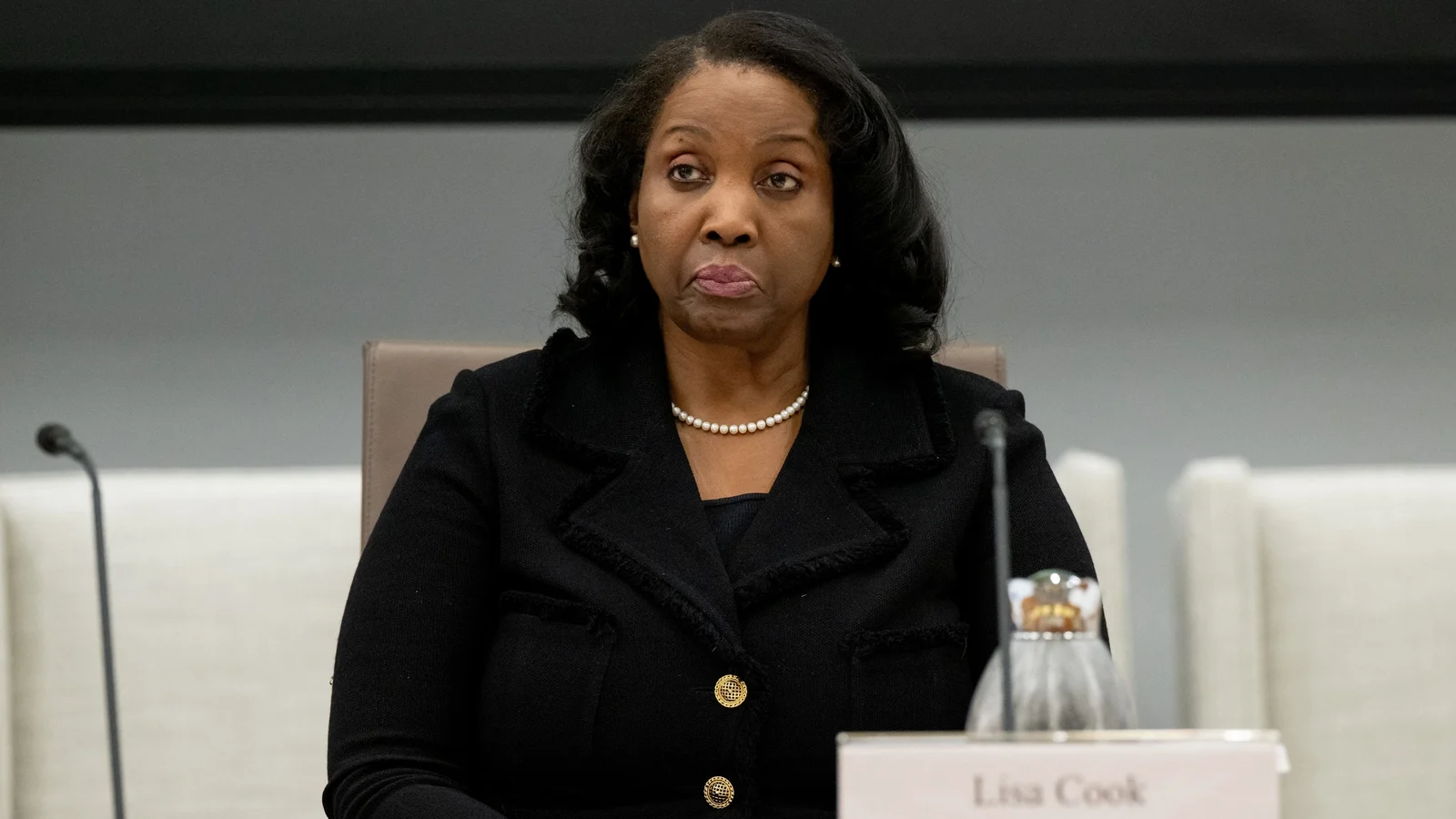

US President Donald Trump on Monday announced he was firing Federal Reserve Governor Lisa Cook, citing alleged improprieties in her handling of mortgage loans. Cook, the first African-American woman to serve on the Fed’s governing board, was accused of misrepresenting both Michigan and Georgia properties as primary residences on loan documents in 2021.
In a letter addressed to Cook, Trump said he had “sufficient cause” for removal, accusing her of “deceitful and criminal conduct in a financial matter.” He argued that her alleged actions undermined confidence in her “integrity, competence and trustworthiness as a financial regulator,” invoking both the Federal Reserve Act and Article 2 of the US Constitution to justify his move.
Cook swiftly rejected the dismissal, issuing a statement through her lawyer Abbe Lowell, who argued Trump lacked any legal authority to fire her. “No cause exists under the law, and he has no authority,” Cook said, vowing to continue performing her duties. Lowell added that Trump’s actions “lack proper process, basis or legal standing,” promising legal action to challenge the attempt.
The controversy stems from questions first raised last week by US Federal Housing Finance Agency Director William Pulte, who referred the matter to Attorney General Pam Bondi for investigation.
Cook’s mortgage arrangements were part of her financial disclosures vetted during her 2022 Senate confirmation under former President Joe Biden. Legal scholars argue that using pre-appointment financial transactions as grounds for removal stretches the meaning of “for cause” under the Federal Reserve Act, a provision never tested before in practice.
“This attempt to reach back into her private life and claim cause for dismissal contradicts the entire logic of ‘for cause’ removal,” said Peter Conti-Brown, a University of Pennsylvania expert on Fed history.
Trump’s announcement rattled financial markets. Yields on two-year US Treasuries, sensitive to Fed rate expectations, fell, while 10-year yields jumped, reflecting investor fears that political interference could weaken the Fed’s commitment to fighting inflation.
Analysts warned the dismissal fits into Trump’s broader push to reshape the Fed and install loyalists. Cook’s ouster, if upheld, would mark Trump’s fourth appointment to the Fed board. Critics also note the timing aligns with the administration’s efforts to scale back diversity, equity, and inclusion programs, raising concerns of political motivation.
With the Fed’s next policy meeting scheduled for September 16-17, the dispute now heads toward an unprecedented legal test that could redefine the independence of the world’s most powerful central bank.
