

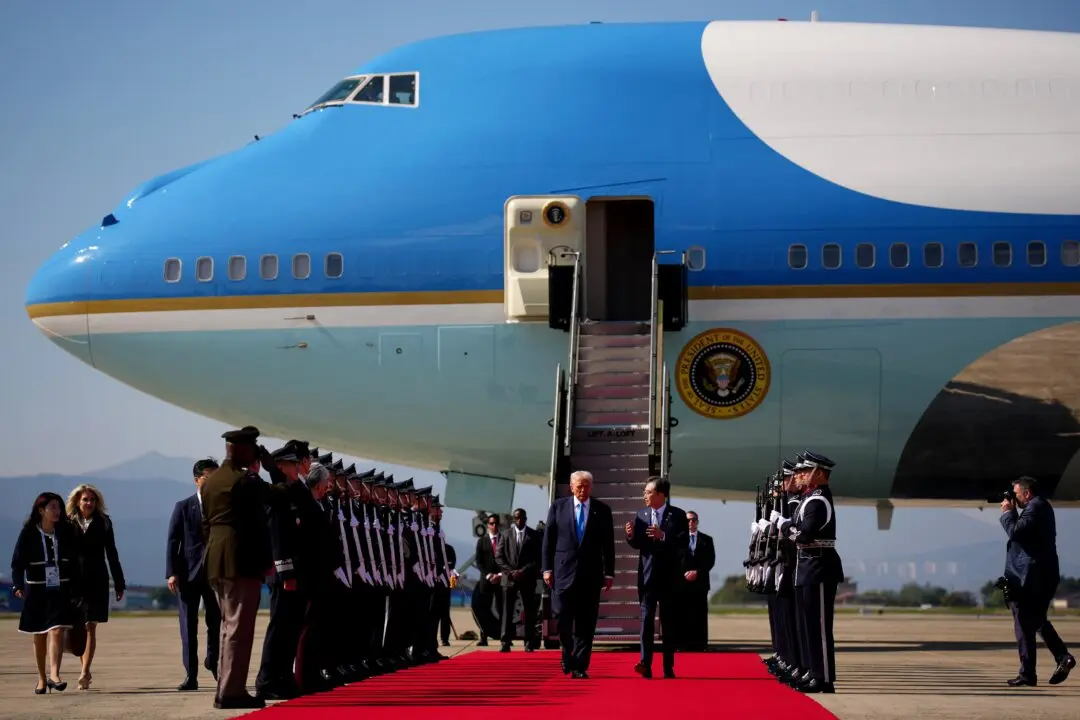

U.S. President Donald Trump landed in South Korea on Wednesday for the final leg of his Asia trip, arriving just hours after North Korea launched several sea-to-surface cruise missiles into its western waters. The tests, conducted on Tuesday, further escalated regional tensions as key meetings of the Asia-Pacific Economic Cooperation (APEC) forum approach.
According to North Korea’s state-run Korean Central News Agency (KCNA), the missiles were fired from the Yellow Sea and flew for more than two hours before striking their intended targets with precision. Senior military official Pak Jong Chon, who oversaw the test, hailed it as a significant success in strengthening the country’s nuclear deterrent. He emphasized that the exercise was designed to verify the “reliability of different strategic offensive means” and demonstrate North Korea’s combat readiness.
Pak stated that maintaining and advancing the country’s nuclear posture was a “responsible mission and duty,” underscoring Pyongyang’s continued focus on nuclear capability despite mounting international sanctions and diplomatic isolation.
Seoul and Washington Heighten Vigilance as Trump Pursues Trade Goals
South Korea’s Joint Chiefs of Staff confirmed that the nation’s military had closely monitored the missile preparations and tracked the launches, which occurred around 3 p.m. local time (06:00 GMT). Both South Korean and U.S. defense officials announced that they were jointly analyzing the missile data and maintaining a “dominant response posture” to counter any future provocations.
The missile tests came only days after North Korea unveiled a new hypersonic missile system, further emphasizing its determination to enhance nuclear deterrence. The timing of these launches—coinciding with Trump’s regional tour—appears to be a calculated show of force.
Arriving from Tokyo, Trump expressed optimism about improving trade relations, particularly with China, as he concluded his multi-nation visit. He is set to meet South Korean President Lee Jae Myung in Gyeongju, where the APEC meetings are being hosted. Their discussions are expected to focus on regional defense cooperation, economic stability, and the growing nuclear threat from Pyongyang.
Hopes for Trump-Kim Meeting Remain Slim
Despite speculation, South Korean officials have dismissed the likelihood of a meeting between Trump and North Korean leader Kim Jong Un during this visit. Although Kim has referred to Trump with some warmth in past remarks, he has reiterated that future dialogue depends on Washington’s willingness to abandon its insistence on denuclearization.
Since the collapse of Trump and Kim’s high-profile nuclear talks in 2019, Pyongyang has refused to engage with either Washington or Seoul. Instead, it has concentrated on expanding its weapons program and showcasing military advancements—moves that have raised alarm across the region.
Trump’s arrival in South Korea thus comes at a delicate time, with diplomatic channels frozen and military tensions surging. As the U.S. leader seeks to reinforce economic and strategic alliances, hopes for renewed engagement with North Korea remain distant.
