

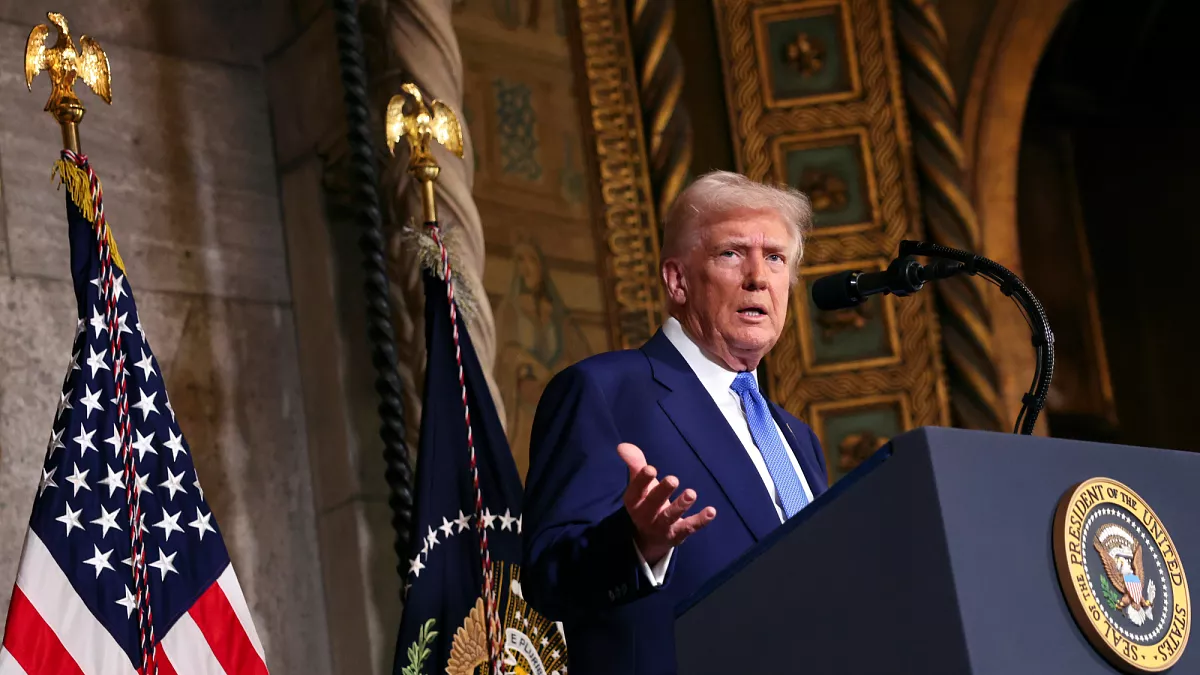

US President Donald Trump has intensified the global trade war by imposing a 10% baseline tariff on all imports, significantly increasing duties on key US trading partners, and levying a 29% tariff on Pakistan in response to its 58% tariff on American goods.
The move, announced Wednesday in the White House Rose Garden, marks a dramatic shift in global trade policy, disrupting decades of trade liberalization. The sweeping tariffs, including a 34% duty on Chinese imports and higher rates on allies such as the European Union (20%) and Japan (24%), have triggered sharp market reactions.
As news spread, Japan’s Nikkei hit an eight-month low, while US and European stock futures plunged, erasing nearly $5 trillion from US equities since mid-February. China, already facing steep tariffs, urged Washington to roll back the measures and vowed to retaliate.
US Treasury Secretary Scott Bessent cautioned against retaliation, warning that countermeasures could escalate the situation and drive consumer prices even higher. “If you retaliate, that’s how we get escalation,” Bessent told CNN.
The base 10% tariffs will take effect on April 5, with the higher country-specific levies following on April 9. Under Trump’s administration, the effective US import tax rate has soared from 2.5% in 2024 to 22%, a level unseen since 1910, according to Fitch Ratings’ US research head Olu Sonola.
“This is a game-changer, not only for the US economy but for the global economy,” Sonola stated. “Many countries will likely enter a recession if these tariffs remain in place long-term.”
Trump defended the tariffs as a necessary measure to protect American industries and jobs, blaming foreign nations for taking advantage of US trade policies.
“For decades, our country has been looted, pillaged, raped, and plundered by nations near and far, both friend and foe alike,” Trump declared.
Critics, including economists and even some Republicans, warn that the tariffs could push up costs for American households and slow global economic growth.
Despite the sweeping measures, Canada and Mexico—America’s largest trading partners—were spared additional levies, as they are already subject to 25% tariffs on many goods.
Trump’s aggressive trade stance has sparked bipartisan concern. Within hours of the announcement, the Senate narrowly passed a bill (51-48) to repeal Trump’s tariffs on Canada, with some Republicans breaking ranks. However, the Republican-controlled House is unlikely to follow suit.
