

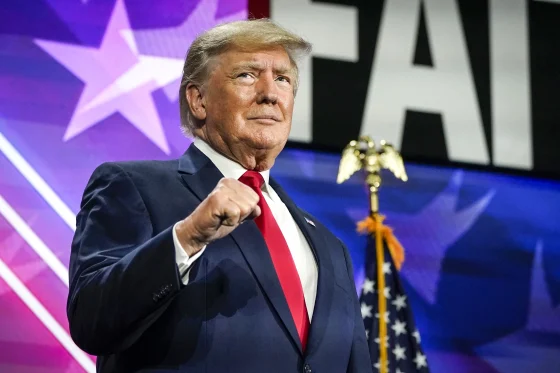

Former President Donald Trump’s recent executive order calls for sweeping changes to the U.S. electoral system, potentially reshaping the way elections are conducted nationwide, though it is likely to face significant legal challenges. The order seeks to make several changes, including requiring proof of U.S. citizenship for voter registration, limiting mail-in ballot deadlines, setting new standards for voting equipment, and barring foreign nationals from donating to certain elections.
Key Provisions of the Executive Order:
- Proof of Citizenship for Voter Registration: Trump’s order mandates that voters provide documentary proof of U.S. citizenship—such as a passport or birth certificate—when registering for federal elections. It also directs states to hand over their voter lists and maintenance records to federal agencies like the Department of Homeland Security for review. If states refuse to cooperate in prosecuting election-related crimes, they could face penalties, including losing access to federal grants.
- Mail-In Ballots to Be Received by Election Day: The executive order stipulates that all mail-in or absentee ballots must be received by Election Day. States would need to comply with this deadline to qualify for federal funding. Currently, 18 states and Puerto Rico allow ballots received after Election Day as long as they are postmarked by that date. Critics, including California Democratic Senator Alex Padilla, argue that this change would disenfranchise millions of voters, particularly in states like California, where ballots can be accepted up to seven days after Election Day.
- Ban on QR Codes for Ballot Counting: Trump’s order directs the Election Assistance Commission to amend guidelines for voting systems, specifically prohibiting the use of barcodes or QR codes in the vote-counting process. The commission is tasked with reviewing and possibly re-certifying voting systems under these new standards within six months. It remains unclear how this will affect states like Georgia, which use such systems.
- Foreign Nationals Barred from Election Donations: The order also bans foreign nationals from contributing to U.S. elections. This provision is aimed at reducing the influence of foreign donors, particularly in light of past concerns over contributions from foreign individuals to political causes. Republicans have targeted individuals like Swiss billionaire Hansjörg Wyss, whose donations to liberal causes have stirred controversy.
Can Trump Enforce These Changes Through Executive Order?
The question remains whether Trump has the authority to enforce these changes, given that the U.S. Constitution grants states broad power to regulate their own elections. The Constitution’s Elections Clause (Article I, Section 4) gives states the authority to determine “times, places, and manner” of elections, while Congress has the power to regulate federal elections. However, the president and executive branch have no explicit role in setting election laws.
Critics argue that Trump’s actions are an overreach. Virginia Kase Solomon, President of Common Cause, a non-partisan advocacy group, stated, “A president does not set election law and never will.” The ACLU’s Sophia Lin Lakin called the executive order a “blatant overreach” that could disenfranchise millions of voters.
Given America’s history of decentralized, state-controlled elections, any attempt by the president to alter state election laws via executive order is expected to face significant legal challenges.
