

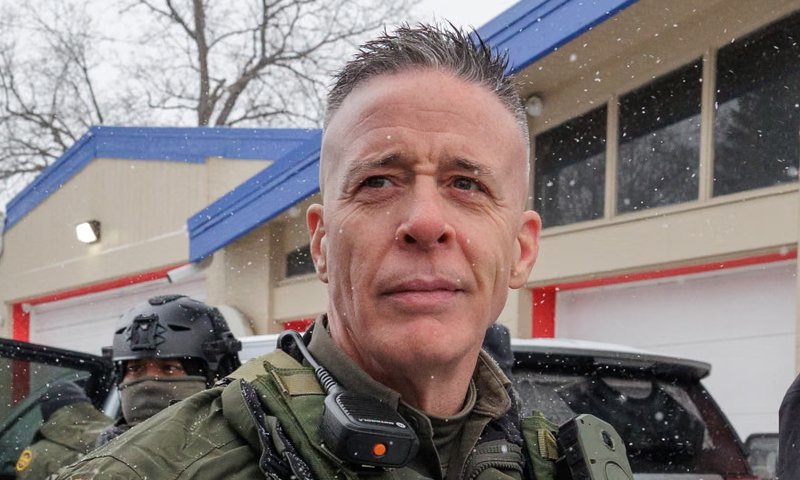

Gregory Bovino, the US border patrol commander who became the public face of the Trump administration’s aggressive immigration crackdown in Minneapolis, is being removed from the city as the White House reshuffles leadership and begins scaling back its federal presence following a second fatal shooting by officers.
Bovino’s departure comes just days after he appeared on national television defending federal agents and claiming they were the “real victims” following the killing of Alex Pretti, a 37-year-old ICU nurse shot by federal officers during an immigration operation. The remarks sparked widespread outrage and intensified criticism from civil rights groups and Democratic leaders.
According to a senior Trump administration official speaking to Reuters, Bovino will leave Minnesota along with some of the agents deployed under his command. Another source familiar with the matter said Bovino has been stripped of his specially created title of “commander at large” and will return to his former post as chief patrol agent in El Centro, California, along the US-Mexico border.
President Donald Trump announced on Monday that border czar Tom Homan will now oversee immigration enforcement operations in Minnesota, reporting directly to the president. The operation, dubbed Operation Metro Surge, has involved thousands of federal agents conducting arrests across Minneapolis and surrounding areas.
However, Homan’s arrival does not mark an end to the controversy. Minnesota’s top federal judge has ordered ICE’s acting director, Todd Lyons, to appear in court on Friday over allegations that the agency defied court orders—raising the possibility of a contempt finding. “The court’s patience is at an end,” the judge said.
Bovino’s removal signals a notable shift in strategy by the White House following the killing of Pretti, which came weeks after another fatal encounter involving federal agents. Earlier on Monday, Trump held what he described as “very good” and “productive” phone calls with Minnesota Governor Tim Walz and Minneapolis Mayor Jacob Frey—both Democrats who had previously clashed with the administration over the immigration surge.
Walz’s office said Trump agreed to consider reducing the number of federal agents in Minnesota and to work more closely with state authorities on targeting violent criminals rather than broad enforcement. Frey later said Trump acknowledged that the current situation “cannot continue” and confirmed that some federal agents would begin leaving the area.
The Department of Homeland Security pushed back on reports describing Bovino’s exit as a demotion. DHS spokesperson Tricia McLaughlin said Bovino had not been relieved of his duties, pointing to prior White House praise calling him a “key part of the president’s team.” Still, multiple outlets, including The Atlantic, reported that Bovino is expected to retire soon. CNN also reported that DHS suspended Bovino’s access to his social media accounts.
Despite news of his departure, protests continued in Minneapolis. Demonstrators gathered outside a hotel believed to be housing Bovino, banging pots, blowing whistles, and playing instruments while police monitored the scene. The protests have largely remained peaceful, though federal agents have faced criticism for using tear gas, physical force, and lethal weapons during enforcement actions.
Bovino had become known for promoting Trump’s deportation campaign through slick, militarized videos and frequent appearances on conservative media. His highly visible role—often appearing unmasked while surrounded by agents with face coverings—made him a lightning rod for public backlash. Comparisons to authoritarian policing intensified after videos contradicted his public statements defending agents involved in fatal shootings.
In Pretti’s case, Bovino claimed the nurse posed a serious threat to law enforcement. Video evidence later showed Pretti holding a phone, not a weapon, and appearing restrained before he was shot. Pretti’s union condemned administration rhetoric and called for an independent investigation, describing the killing as a “murder” and rejecting claims that Pretti was an assailant.
As federal officials signal de-escalation, the future of Operation Metro Surge remains uncertain. While some agents are set to withdraw, legal scrutiny and public pressure continue to mount over the tactics and accountability of federal immigration enforcement in Minnesota.
