

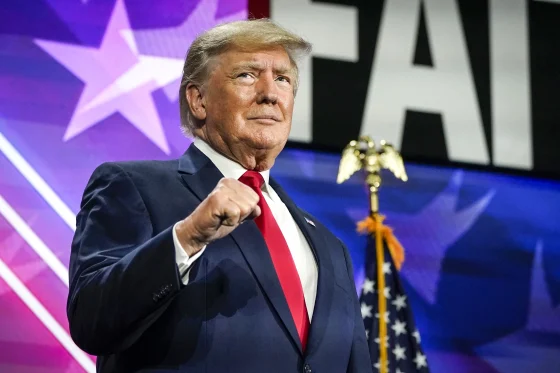

U.S. President Donald Trump has suspended the arrival of refugees previously cleared for entry into the country and announced the deployment of 1,500 additional soldiers to the U.S.-Mexico border, according to a memo and statements from the White House.
“President Trump signed an executive order authorizing the deployment of 1,500 more troops to the southern border,” White House Press Secretary Karoline Leavitt said on Wednesday.
Following an executive order signed shortly after Trump assumed office on Monday, a State Department email to refugee organizations revealed that “all previously scheduled travel of refugees to the United States is being canceled.” The memo also instructed the UN International Organization for Migration to halt moving refugees to transit centers and announced a suspension of all processing of refugee cases.
However, refugees already resettled in the United States will continue receiving planned services, according to the memo.
Throughout his presidential campaigns, Trump has emphasized a tough stance on undocumented immigration. The latest refugee policy also restricts legal avenues for individuals fleeing war, persecution, or disasters.
In his executive order, Trump suspended refugee admissions effective January 27 and directed a review of the refugee program, calling for “greater involvement” from states and local jurisdictions. Additionally, the order rescinded former President Joe Biden’s directive to consider climate change’s impact on refugee admissions.
Secretary Rubio’s Approach
New Secretary of State Marco Rubio, the son of Cuban immigrants, announced a shift in the State Department’s policies regarding migration. On Wednesday, Rubio stated that the department would “no longer undertake any activities that facilitate or encourage mass migration.”
“Our diplomatic efforts, especially in the Western Hemisphere, will focus on securing America’s borders, stopping illegal and destabilizing migration, and negotiating the return of illegal immigrants,” Rubio added.
Under Biden’s administration, the refugee program was expanded as a legal pathway for aiding people in crisis. In the 2024 fiscal year, the United States resettled over 100,000 refugees, marking the highest number in three decades. Refugees from the Democratic Republic of Congo and Myanmar were among the largest groups admitted in recent years.
Reactions and Concerns
Senator Jeanne Shaheen, the top Democrat on the Senate Foreign Relations Committee, expressed alarm at the moves, describing refugee acceptance as “a core American value.”
“The U.S. Refugee Admissions Program has long enjoyed bipartisan support and serves as a critical, life-saving resource for the world’s most vulnerable refugees while promoting global stability,” Shaheen said.
The State Department memo clarified that Afghans who had worked with the United States prior to the Taliban’s takeover in 2021 would still be eligible to arrive through a separate resettlement program.
