


Former White House advisor Jared Kushner’s previous suggestion about Gaza’s waterfront property has resurfaced following President Donald Trump’s controversial proposal to take control of Gaza and relocate Palestinians.
Kushner, who was a key advisor to Trump during his presidency, suggested last year that Israel should expel Palestinians from Gaza while “cleaning up” the area. In an interview with Harvard University’s Kennedy School of Government, Kushner proposed that Israel could bulldoze parts of the Negev desert, relocate people there, and then “finish the job” by clearing out Gaza’s territory. He specifically mentioned Gaza’s waterfront as highly valuable, recommending that Israel should “move the people out” and potentially relocate them to Egypt via the Rafah border or to the Negev desert, with the right diplomatic support.
Kushner, often referred to as the “architect” of Trump’s controversial Middle East peace plan, was a driving force behind the normalization of relations between Israel and several Arab nations, including the UAE, Bahrain, Morocco, and Sudan. His ties to Israeli Prime Minister Benjamin Netanyahu and his father, Charles Kushner, recently nominated as US ambassador to France, further highlight his deep connections to Israel.
Trump’s recent remarks about Gaza, made on January 25, suggest that Palestinians could be relocated to neighboring Arab countries such as Egypt and Jordan, an idea rejected by both those countries and Palestinian leaders. His plan, which was announced after a ceasefire agreement on January 19, proposes that the US would “take over” Gaza and transform it into “the Riviera of the Middle East.” This redevelopment plan has been widely criticized by Palestinians, Arab nations, and global leaders, including those from Canada, France, Germany, and the UK.
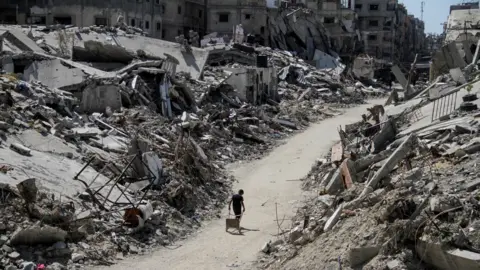
Trump’s proposal to relocate Palestinians from Gaza follows a brutal war that has resulted in the deaths of over 47,500 Palestinians, leaving the Gaza Strip in ruins. The idea of resettling the population has sparked strong condemnation and underscores the ongoing tensions surrounding the region’s future.
