


American brands in India are facing mounting calls for boycotts following the United States’ decision to impose a 50% tariff on goods imported from India. The move, introduced under former US President Donald Trump, has sparked a wave of nationalist sentiment among certain business groups, political supporters, and social media users in India, urging consumers to turn toward locally made products instead.
India, the world’s most populous nation, has long been a lucrative market for American corporations, especially in consumer goods, technology, and food services. US-based beverage companies dominate store shelves, popular coffee chains enjoy consistent foot traffic, and international smartphone brands attract large crowds during new product launches. Messaging platforms like WhatsApp — owned by US tech giant Meta — count India as their largest user base globally.
Despite the absence of immediate signs that sales have been affected, the boycott movement is gaining traction online and offline. The campaign’s supporters are calling for consumers to prioritize “Made in India” products over foreign alternatives, framing the movement as both an economic and patriotic duty.
Manish Chowdhary, co-founder of an Indian skin-care company, shared a widely circulated video message encouraging citizens to support local farmers, startups, and manufacturers. Drawing inspiration from South Korea’s global success in food and beauty products, he criticized the trend of consumers “lining up for products from thousands of miles away” while domestic entrepreneurs struggle for recognition in their own country.
Similarly, Rahm Shastry, the CEO of a local on-demand driver service, argued that India should develop its own equivalents to dominant US-based tech platforms such as Twitter, Google, YouTube, WhatsApp, and Facebook, much like China has done.
While some Indian retail companies already challenge foreign brands domestically, they often face difficulties when attempting to expand internationally. In contrast, the country’s IT services sector, led by companies like Tata Consultancy Services (TCS) and Infosys, has successfully embedded itself into global markets, delivering software solutions to clients worldwide.
During a recent address in Bengaluru, Prime Minister Narendra Modi urged greater self-reliance, emphasizing that Indian technology firms already serve the global market but should now focus more on domestic needs. He did not single out any foreign companies in his remarks but called for renewed attention to India’s internal economic priorities.
The Swadeshi Jagran Manch, a group affiliated with the ruling Bharatiya Janata Party (BJP), organized small rallies across various Indian cities urging citizens to boycott American goods. The group is also circulating a table on WhatsApp that lists Indian alternatives for common consumer items such as soap, toothpaste, and soft drinks. Social media campaigns include graphics promoting the boycott of foreign food chains, complete with brand logos.
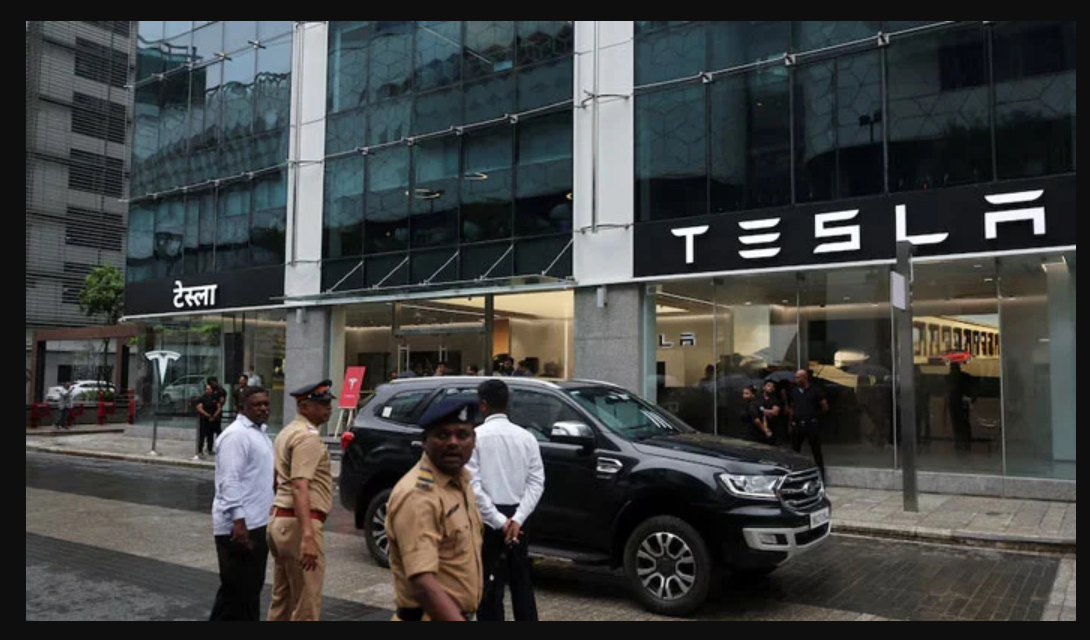
The boycott movement coincided with the opening of Tesla’s second showroom in India, located in New Delhi. The launch drew both Indian government officials and representatives from the US embassy, illustrating the complex interdependence between the two nations despite rising trade tensions.
However, not all consumers are aligning themselves with the nationalist call. Rajat Gupta, a 37-year-old resident of Uttar Pradesh, expressed indifference while enjoying a budget coffee at an American restaurant chain in Lucknow. “Tariffs are a matter of diplomacy, and my coffee should not be dragged into it,” he remarked.
Whether these calls to boycott American products will lead to a measurable shift in consumer behavior remains uncertain. For now, the debate has highlighted deeper questions about economic self-reliance, globalization, and the role of consumer choice in shaping national policy responses.
