

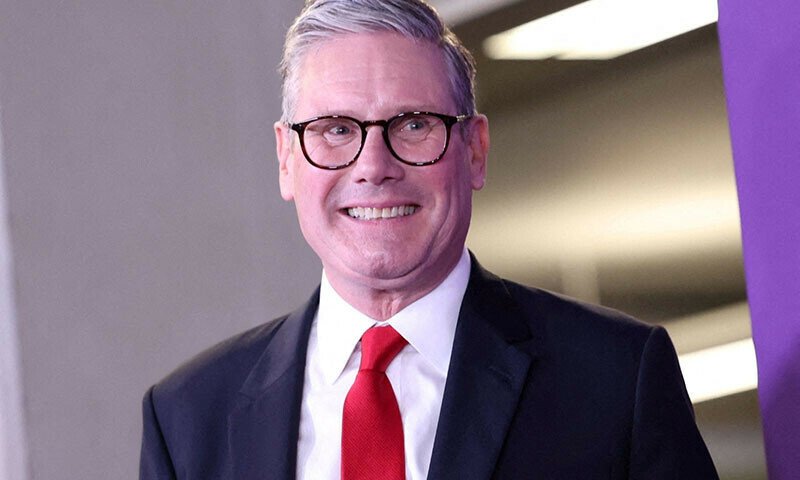

British Prime Minister Keir Starmer is reportedly edging toward formally recognising a Palestinian state — a potential shift in longstanding UK foreign policy — as pressure grows both within Parliament and among the public over the deepening humanitarian crisis in Gaza.
Two senior government officials confirmed on Monday that discussions around recognition have intensified inside Starmer’s cabinet. The move comes ahead of a major United Nations summit aimed at reviving the long-stalled two-state solution and follows public outcry over severe food shortages and rising civilian casualties in Gaza.
More than 250 Members of Parliament, including several from Starmer’s ruling Labour Party, have publicly urged the government to recognise Palestine. This growing political momentum reflects widespread frustration with the current situation and calls for the UK to take a more active role in resolving the conflict.
Sources close to the government, speaking on condition of anonymity, said that distressing reports from Gaza — including images of starving children and worsening famine — have shifted opinions within Starmer’s team. Israeli restrictions have significantly hindered humanitarian aid deliveries, further fuelling calls for immediate action.
Despite Labour’s historic support for Palestinian self-determination, Starmer has so far been cautious. He has previously argued that recognising Palestine outside of a broader peace framework could be seen as a symbolic gesture, potentially undermining delicate negotiations between Israel and Hamas. In earlier remarks, he insisted that recognition should come “as part of a wider plan” that ensures lasting peace and security for both Palestinians and Israelis.
Still, internal pressure is mounting. Several senior ministers are reportedly advocating for recognition, and an emergency cabinet meeting has been called this week to address the situation. Ministers have been recalled from recess — a move seen as a sign of how seriously the issue is being taken within the government.
The topic also came up during a recent meeting between Starmer and former US President Donald Trump at his Turnberry resort in Scotland. While Trump dismissed French President Emmanuel Macron’s earlier recognition of Palestine as lacking real significance, he avoided criticising the UK’s potential move.
“I’m not going to take a position,” Trump said. “I don’t mind him taking a position. I’m looking to getting people fed right now. That’s the No. 1 position, because you have a lot of starving people.”
During the conversation, Starmer reportedly encouraged Trump to press Israel to ease its blockade of Gaza and improve access for humanitarian aid. Trump signalled some support for UK-led initiatives to set up international food distribution centres across Gaza — a move that could serve as an alternative to the existing, and often troubled, US-Israeli aid delivery system.
Downing Street also confirmed that Starmer presented Trump with a joint European peace proposal, developed with French President Emmanuel Macron and German Chancellor Friedrich Merz. While specific details remain under wraps, the plan reportedly lays out a long-term vision for stability and reconstruction in Gaza.
Starmer’s balancing act reflects his background as a human rights lawyer and his stated commitment to international law. His administration recently dropped the UK’s opposition to International Criminal Court arrest warrants for Israeli leaders, including Prime Minister Benjamin Netanyahu — a move that further distances Britain from its previous diplomatic stance.
Critics of early recognition argue it would be a largely symbolic gesture that risks weakening the UK’s leverage in future peace negotiations. Legal uncertainties around state recognition and diplomatic obligations also remain points of contention.
However, supporters insist the UK has a historic and moral responsibility to act, citing Britain’s colonial-era involvement in the region, including the Balfour Declaration. For them, recognising Palestine would send a powerful message of solidarity and moral clarity at a time of severe humanitarian crisis.
