

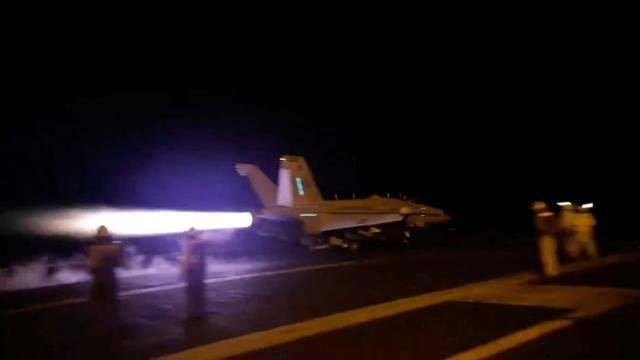

In an ongoing effort to secure vital shipping routes in the Red Sea, the United States executed a second strike on Houthi targets in Yemen, marking the latest development in the continuous conflict between the Houthis and international forces.
Termed a “follow-on action” by the US, the operation specifically aimed at a Houthi radar site. This comes on the heels of joint UK-US airstrikes on nearly 30 Houthi positions, supported by allies like Australia and Canada, with the objective of mitigating the recent increase in Houthi attacks on shipping vessels in the Red Sea.
The US Central Command clarified that the strikes were intended to diminish the Houthi’s capacity to pose a threat to maritime vessels. In response, Houthi spokespersons promised a “strong and effective response,” emphasizing no injuries or material damages resulting from the attacks.
Despite the strikes, Houthi representatives asserted that the impact on their ability to obstruct vessels in the Red Sea and the Arabian Sea was minimal. The heightened tensions in the region have raised concerns about potential destabilization in the Middle East. After the initial US-UK strikes, thousands gathered in Sanaa, Yemen’s capital, expressing solidarity with the Palestinians and voicing anti-US sentiments.
Both the UK and the US maintain that their actions solely focus on safeguarding crucial shipping routes and are unrelated to the Israel-Gaza conflict. According to the White House, the Red Sea accounts for approximately 15% of global seaborne trade, including 8% of global grain, 12% of seaborne oil, and 8% of the world’s liquefied natural gas.
Houthis Must End Attacks In Red Sea, Says UN Security Council
Meanwhile, on Wednesday, the UN Security Council issued a demand for the immediate cessation of attacks on ships in the Red Sea by Yemen’s Houthis.
The council also cautioned against escalating tensions and implicitly supported a US-led task force responsible for safeguarding vessels.
The resolution, which received the support of eleven members, called on the Houthis to release the Galaxy Leader, a Japanese-operated vehicle carrier seized by the group on November 19, along with its 25-person crew.
The resolution stressed the imperative for the Houthis to cease all attacks that hinder global commerce, impede navigational rights and freedoms, and jeopardize regional peace.
