


US Stock Market
The United States stock market has suffered a massive blow, shedding over $1.7 trillion in value following President Donald Trump’s refusal to rule out the possibility of an economic recession this year. Investors reacted negatively to his remarks, triggering a sharp sell-off that sent major indices tumbling.
On Monday, the benchmark S&P 500 fell by 2.7 percent, bringing it nearly 9 percent below its all-time high recorded on February 19. Meanwhile, the tech-heavy Nasdaq 100 experienced an even steeper drop, plunging 3.81 percent, marking its worst single-day decline since September 2022. With these losses, both indices have now reached their lowest levels since September, adding to the two-week streak of declines that has gripped Wall Street.
Among individual stocks, Tesla recorded one of the most severe drops, plummeting 15.43 percent. The electric vehicle company, led by Elon Musk—who has been an influential figure in Trump’s cost-cutting economic policies—suffered significant losses amid the broader market turmoil.
The impact of the market rout was not confined to the U.S., as Asian markets also saw sharp declines on Tuesday. Japan’s Nikkei 225 and Taiwan’s TAIEX both dropped over 2.5 percent, while Hong Kong’s Hang Seng Index fell by approximately 1.5 percent.
The market volatility comes in response to Trump’s unpredictable tariff policies, which have unsettled investors. His recent decisions have raised concerns that the U.S. economy is heading towards a downturn, or even a recession.
In an interview with Fox News, Trump hinted at economic uncertainty, stating, “I hate to predict things like that. There is a period of transition because what we’re doing is very big.” He added that his policies were aimed at bringing wealth back to America, though he acknowledged that such changes take time.
Investor confidence has been shaken by Trump’s erratic trade policies. Last week, he imposed a 25 percent tariff on imports from Mexico and Canada and doubled tariffs on Chinese goods to 20 percent. However, just two days later, he announced a delay in some of the tariffs on Mexican and Canadian products until April 2. Additionally, a 25 percent tariff on steel and aluminum imports is set to take effect on Wednesday.
Analysts and economists have raised concerns about the economic outlook, with major financial institutions adjusting their recession predictions. Goldman Sachs increased its probability of a recession within the next 12 months from 15 percent to 20 percent, while JPMorgan Chase raised its forecast from 30 percent to 40 percent, citing extreme U.S. policies as a key factor.
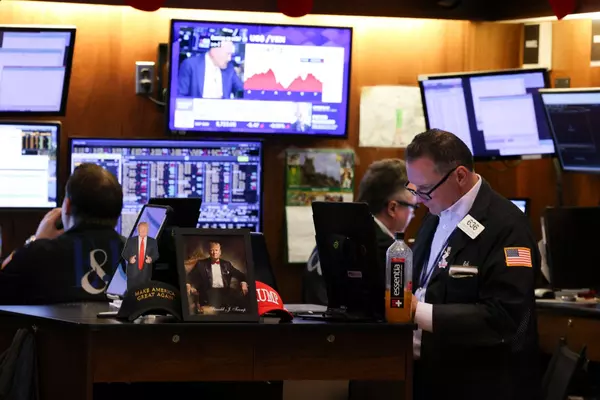
Monday’s trading session was described as a “bloodbath” by New York Stock Exchange trader Peter Tuchman. “These stocks are being eaten away, and this is obviously all over fear of a recession,” he said in a video shared on social media. He criticized the uncertainty coming from the White House, describing it as “indecisiveness, confusion, and mixed messaging,” which has led to a loss of confidence in the market.
The stock market turmoil has drawn criticism from political leaders. Democratic Senator Elizabeth Warren accused Trump of putting the economy in danger, stating that “the stock market is a flashing warning light.” Even Republican Senator Rand Paul expressed concern, pointing out that market movements reflect investor sentiment and should not be ignored.
Despite the panic, some officials within the Trump administration attempted to downplay fears of an economic slowdown. Kevin Hassett, head of the National Economic Council, dismissed recession concerns as “blips in the data.”
Speaking to CNBC, he predicted that while the first quarter might be weak, the second quarter would see an economic rebound as the effects of tax cuts become more apparent.
However, with markets continuing to slide and uncertainty looming, investors remain wary of the potential consequences of Trump’s trade policies and their long-term impact on the U.S. economy.
