


Caracas Responds to U.S. Military Build-Up with Coastal Patrols and Drone Surveillance
Amid escalating tensions with the United States, Venezuela has launched a military operation along its Caribbean coast, deploying warships and surveillance drones in response to the approach of a U.S. naval squadron. Venezuelan Defence Minister Vladimir Padrino announced the move on Tuesday, saying it was necessary to protect national sovereignty.
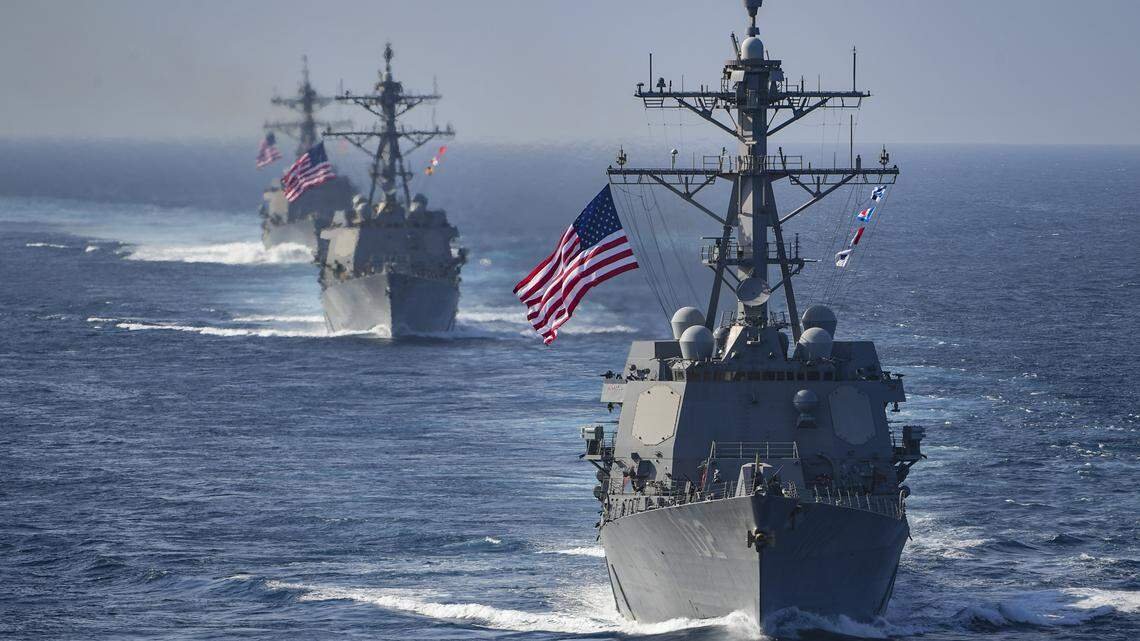
In a video shared on social media, Padrino described the operation as a “significant deployment” involving larger naval vessels and aerial surveillance, to monitor maritime activity within Venezuela’s territorial waters. The measures were prompted by Washington’s recent deployment of an amphibious U.S. naval squadron—comprising three warships, including a guided missile cruiser and a nuclear-powered fast-attack submarine—to waters off Venezuela. Around 4,500 U.S. troops, including 2,200 Marines, are believed to be involved.
The U.S. government says the operation targets Latin American drug cartels, but Caracas sees it as a provocation. President Nicolas Maduro has accused the U.S. of attempting to instigate regime change under the guise of counter-narcotics operations. He insists Venezuela is free of coca cultivation and cocaine production, and claims the U.S. is ignoring its own domestic drug crisis.
Diplomatic Fallout and Accusations of Hostile Intent
Venezuela has lodged a formal complaint with the United Nations, calling the U.S. naval build-up a “serious threat to regional peace and security.” The presence of a nuclear-powered submarine was described as a “clear act of intimidation”, with Caracas demanding guarantees that nuclear weapons will not be used or threatened in the region.
Tensions have intensified since Washington recently doubled its reward for Maduro’s arrest on drug trafficking charges—from $25 million to $50 million—and issued a $25 million reward for Interior Minister Diosdado Cabello, whom the U.S. also accuses of leading the Cartel de los Soles, a designated terrorist organisation allegedly involved in cocaine trafficking.
Despite the rhetoric, analysts say a direct military confrontation is unlikely, viewing the U.S. deployment as psychological pressure intended to push Maduro’s government to the negotiating table. Phil Gunson of the International Crisis Group remarked that the show of force is likely “an attempt to create anxiety in government circles” rather than a prelude to war.
Inside Venezuela, reactions remain mixed. While Maduro has mobilized militias and 15,000 troops to strengthen security—particularly near the Colombian border—many Venezuelans have dismissed the U.S. naval threat as political theatre.
In an additional show of force, Venezuelan forces claim to have dismantled illegal shipyards used to build semi-submersible vessels for drug transport, reinforcing their stance that they are actively combating regional trafficking threats.
