

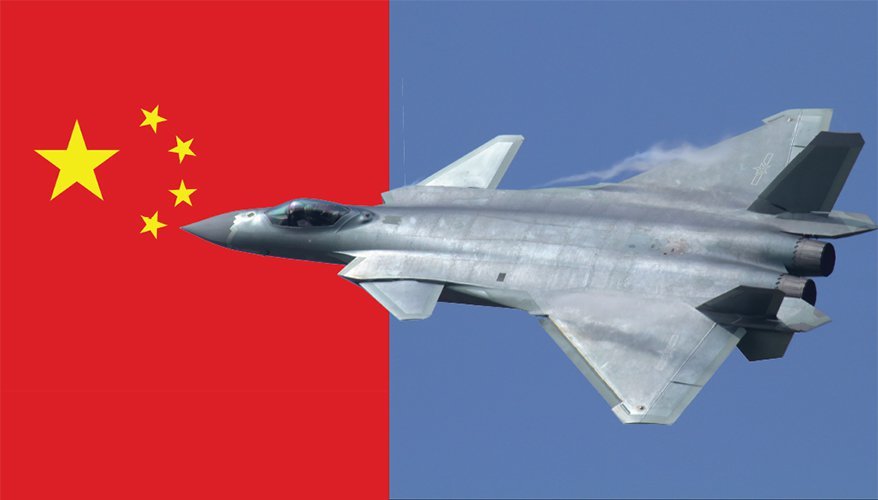

Taiwan’s defense ministry reported that 37 Chinese aircraft were detected around the self-ruled island on Wednesday as they headed to exercises with an aircraft carrier in the western Pacific.
China, which claims democratic Taiwan as part of its territory, maintains a near-daily presence of fighter jets, drones, and warships around the island, located 180 kilometers (110 miles) from the southern Chinese coast.
Taiwan is also a crucial part of a chain of islands that military strategists view as a gateway from the South China Sea to the Pacific Ocean.
At around 9:30 am (0130 GMT) Wednesday, Taiwan’s Ministry of National Defense detected a total of 37 Chinese aircraft, including fighter jets, bombers, and drones. Thirty-six of the aircraft crossed the sensitive median line of the Taiwan Strait, which bisects the narrow waterway separating the island from China.
The aircraft headed to the Western Pacific via Taiwan’s southern and southeastern airspace to join the aircraft carrier Shandong in conducting joint sea and air training, according to a statement from the defense ministry.
Defense Minister Wellington Koo told reporters that the Shandong did not pass through the Bashi Channel, the area off Taiwan’s southern tip where Chinese ships typically transit en route to the Pacific Ocean.
Instead, it went further south through the Balingtang Channel toward the Western Pacific, referring to a waterway just north of the Philippines’ Babuyan Island, about 250 kilometers south of Bashi.
The Chinese flights occurred a day after Japan’s Joint Staff Office reported that four PLA navy vessels, including the Shandong, were sailing 520 kilometers southeast of Miyako Island. The same day, the Chinese navy’s Shandong was observed landing and departing fighter aircraft and helicopters.
China has never renounced the use of force to bring Taiwan under its control and has increased military and political pressures on the island in recent years. In May, days after Taiwanese President Lai Ching-te took office, China launched war games around the island as “punishment” for an inauguration speech that Beijing called a “confession of Taiwan independence.”
On Wednesday, Lai met with Raymond Greene, the new director of the American Institute in Taiwan, the de-facto US embassy, emphasizing their “solid partnership… in the midst of China’s repeated provocation and attempts to change the status quo in the Taiwan Strait.”
While the United States, like many other countries, does not officially recognize Taiwan diplomatically, it is Taipei’s key partner and major provider of weapons, which has repeatedly angered Beijing, calling on Washington to stop arming the island.
Greene stated that Washington would continue to “strongly support Taiwan’s ability to defend itself.”
“We have a long-term and shared interest to maintain peace and stability in the Taiwan Strait. This is vital to the prosperity of the Indo-Pacific region, as well as to global security,” he said during his meeting with Lai.
