

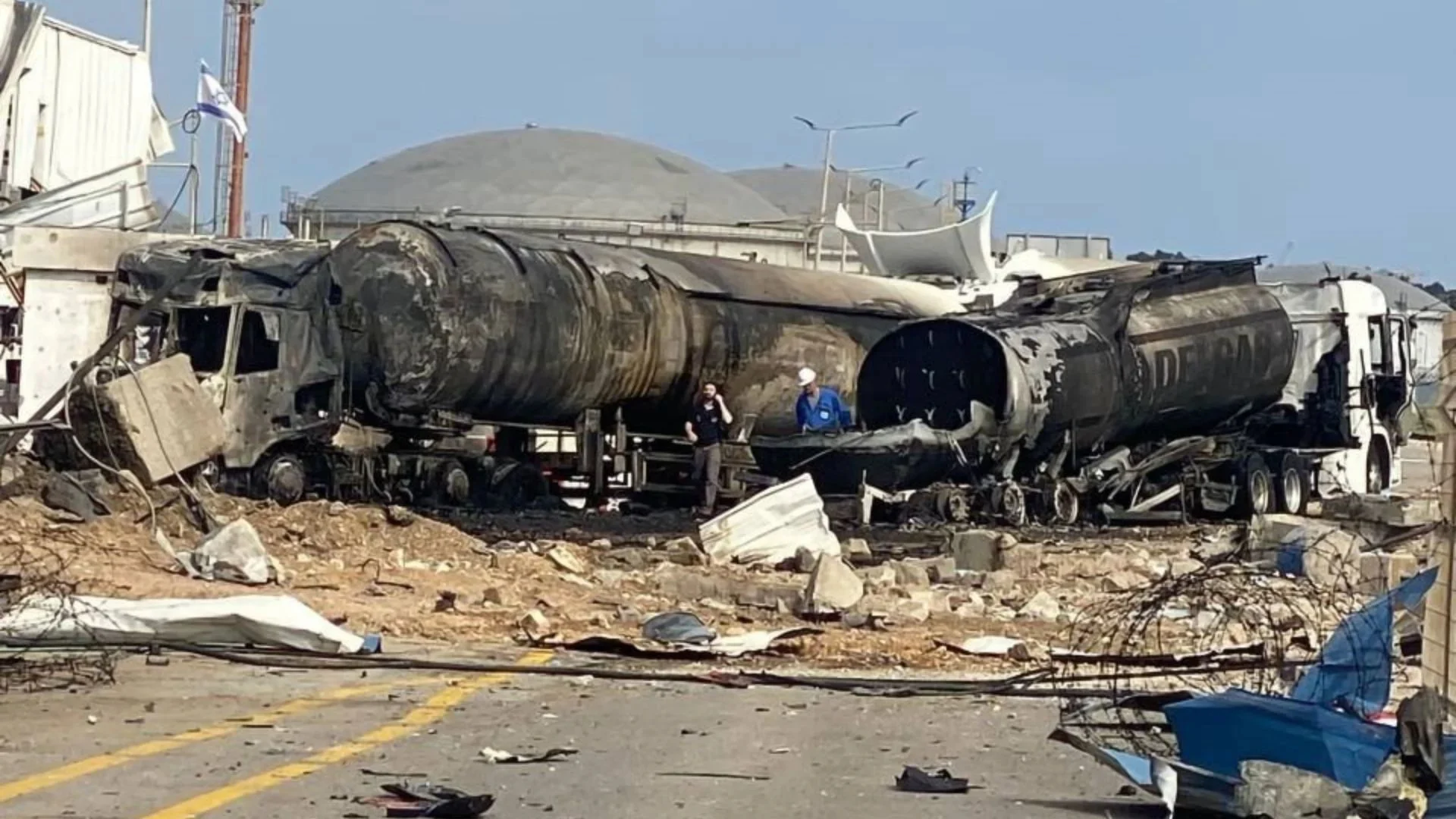

All operations at the Haifa Bay oil refinery were suspended after an Iranian missile strike overnight between June 15 and 16 caused severe damage and claimed the lives of three workers.
The Bazan Group, which operates the facility, confirmed the shutdown in a statement submitted to the Tel Aviv Stock Exchange. The company reported extensive damage to its power plant, resulting in a complete halt of operations at both the refinery and its affiliated facilities. Efforts are underway in coordination with the Israel Electric Company to restore power.
Among the deceased was Dani Avraham, 59, a long-time employee of the refinery and resident of Kiryat Motzkin. He was described as a devoted professional with over 30 years in the energy sector.
The targeted site, known for its distinctive cooling tower and proximity to residential areas, has long been considered a potential strategic target for Israel’s adversaries. Although Hezbollah previously released drone footage of the facility, this marks the first known direct missile hit on the refinery.
Public concern over the refinery’s location has been longstanding. Environmental groups, residents, and local officials have repeatedly called for its relocation due to pollution and safety risks. The Israeli government had already approved a plan in 2022 to relocate the refinery by 2030, with removal of nearby oil tanks scheduled to begin this year.
Haifa Mayor Yona Yahav reiterated these concerns, stating that the government must act decisively to move industrial plants away from populated areas.
Rescue teams spent hours attempting to reach the three workers trapped beneath the debris. A large fire broke out following the missile impact, further complicating the rescue efforts. According to reports, the victims were not killed by the missile directly, but rather by smoke inhalation and extreme heat from the ensuing blaze. Two other workers at the site sustained minor injuries.
While the missile strike occurred around 4 a.m., local media were restricted from reporting specific details for over 12 hours. International outlets, however, began covering the incident much earlier, with footage aired from the scene, including by broadcasters restricted within Israel.
