

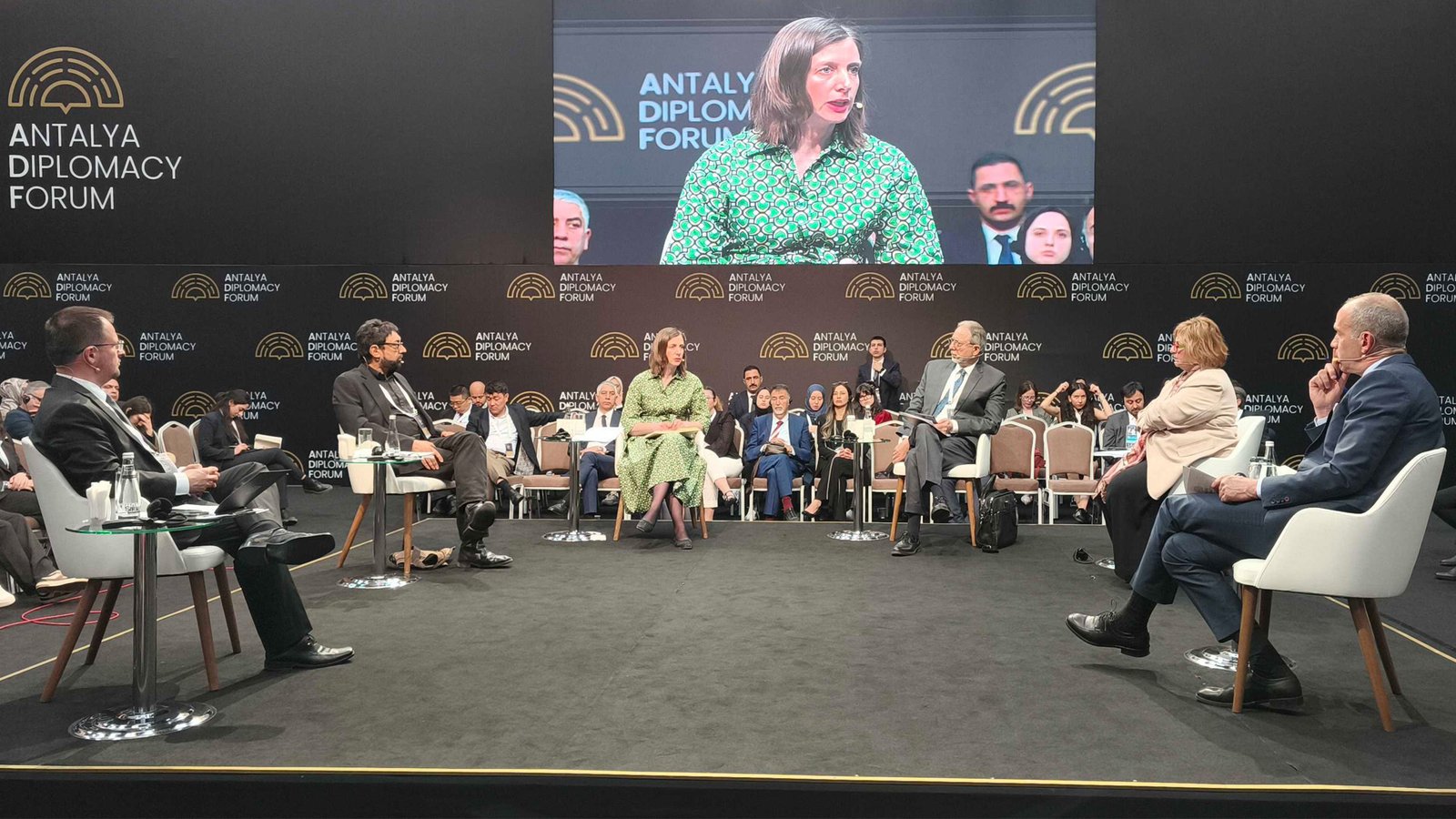

As the curtains closed on the fourth Antalya Diplomacy Forum, global experts delivered a stark warning: anti-Muslim hatred is not only on the rise but must be recognized for what it truly is—an insidious form of racism that threatens the foundations of democracy, human rights, and pluralism around the world.
During a high-level panel titled “Confronting Discrimination and Racism in the 21st Century,” speakers called for urgent global action, arguing that Islamophobia has become a global crisis that affects everyone—not just Muslims.
Islamophobia Is Racism, Not Just Intolerance
“Anti-Muslim hatred is real, and by whatever name we call it, it is a form of racism,” said Evren Dağdelen Akgün, Special Representative for Combating Intolerance and Discrimination Against Muslims at the OSCE. She cited EU data showing that half of Europe’s Muslim population experiences daily discrimination, warning that addressing symptoms without tackling root causes will never yield cohesive societies.
Akgün described how racism and Islamophobia seep into democratic institutions, undermining political representation and freedoms. When such hatred is normalized through media and political rhetoric, she cautioned, it creates a loop of impunity that fuels more discrimination and violence.
A Human Rights Crisis, Not Just a Muslim Issue
Ambassador Mehmet Paçacı, Special Representative of the OIC Secretary General on Islamophobia, provided a sobering global overview. In the United States alone, nearly 9,000 anti-Muslim incidents were recorded in 2024—the highest in nearly three decades. In Europe, Islamophobic attacks rose by 43 percent last year. In Australia and parts of Asia, harassment—particularly against Muslim women—has doubled in the last two years.
“These are not just numbers,” Paçacı said. “They represent real people—families living in fear simply because of their faith.”
He condemned mainstream media for reinforcing anti-Muslim narratives and conspiracy theories, warning that this normalization of hate weakens social cohesion and democratic values. “Anti-Muslim racism is not just a Muslim issue. It’s a human rights issue.”
Europe’s Challenge: Racism Embedded in Society
Marion Lalisse, the European Commission’s Coordinator on Combating Anti-Muslim Hatred, echoed these concerns. She emphasized that democracy and fundamental rights cannot be taken for granted—and must be earned daily.
“Racism in Europe is widespread,” Lalisse noted, impacting not just Muslims, but also Black communities, Roma, Asians, and Jews. “The Roma community,” she said, “remains one of the most vilified groups, despite being integral to European identity.”
Lalisse urged a deeper acknowledgment of structural racism—discrimination embedded in institutions and systems, not just in individuals. She highlighted how media narratives often frame Muslims through the lens of terrorism or migration, fuelling fear and division. While some outlets report responsibly, others exploit Islamophobia for profit, she said.
To counter this, the EU is working with journalists, press councils, and civil society organizations to change the narrative and promote inclusive reporting. Initiatives like the European Coalition of Cities Against Racism—which includes Istanbul and Antalya—are part of this grassroots push.
Islamophobia Isn’t a Western Problem—It’s a Global One
Salman Sayyid, professor of decolonial theory at the University of Leeds, took the discussion further, arguing that Islamophobia is not just cultural bias—it’s a political tool.
“Islamophobia is how the contract between rulers and ruled is being rewritten,” Sayyid said. While liberal democracies pride themselves on tolerance, he warned that democracy and racism often coexist comfortably unless they are intentionally challenged.
“No one wants to be called a racist—but many have no problem doing racism,” he said, pointing to the hypocrisy of political figures who speak of inclusion while enacting exclusionary policies.
Sayyid also warned that Islamophobia often serves as a gateway to broader racism. Citing the Trump-era travel ban, he noted how policies aimed at Muslims ultimately affect a wider group—including non-Muslims—under the guise of national security.
Representation and the Struggle for Equality
Koç University professor Şener Aktürk added that underrepresentation of Muslims in politics contributes to the problem. In many European countries, Muslims hold just a fraction of the seats they would have under proportional representation.
“In France, which has the largest Muslim population in Europe, the National Assembly should have around 40 Muslim members,” he said. “It has far fewer.”
Aktürk also challenged the notion of Europe as exclusively Christian. “Muslims have been part of Europe for centuries—from Spain to Sicily,” he said. “Framing them as outsiders is historically inaccurate and politically dangerous.”
He emphasized that the fight is not about ancestry, but about securing equal rights and dignity for all people, regardless of background or belief.
Multiculturalism as a Solution, Not a Threat
Amid rising nationalism and exclusionary politics, speakers strongly defended multiculturalism—not just as an ideal, but as a practical necessity.
“Multiculturalism is not dead—it is essential,” said Akgün.
Sayyid added, “Newness comes from encountering strangeness. We become more creative, more human, when we embrace diversity.”
Together, the panelists called for a renewed commitment to building inclusive, multicultural societies that recognize and confront anti-Muslim racism as part of the broader struggle for human dignity.
The Way Forward
The Antalya session offered more than just warnings—it outlined a roadmap:
- Acknowledge Islamophobia as a form of racism
- Hold political leaders and media accountable for hate speech
- Support grassroots and international efforts for inclusive societies
- Promote multiculturalism as a core democratic value
“This is not just about Muslims,” Ambassador Paçacı concluded. “This is about the kind of world we want to live in. The fight against Islamophobia is a fight for justice—for everyone.”
