

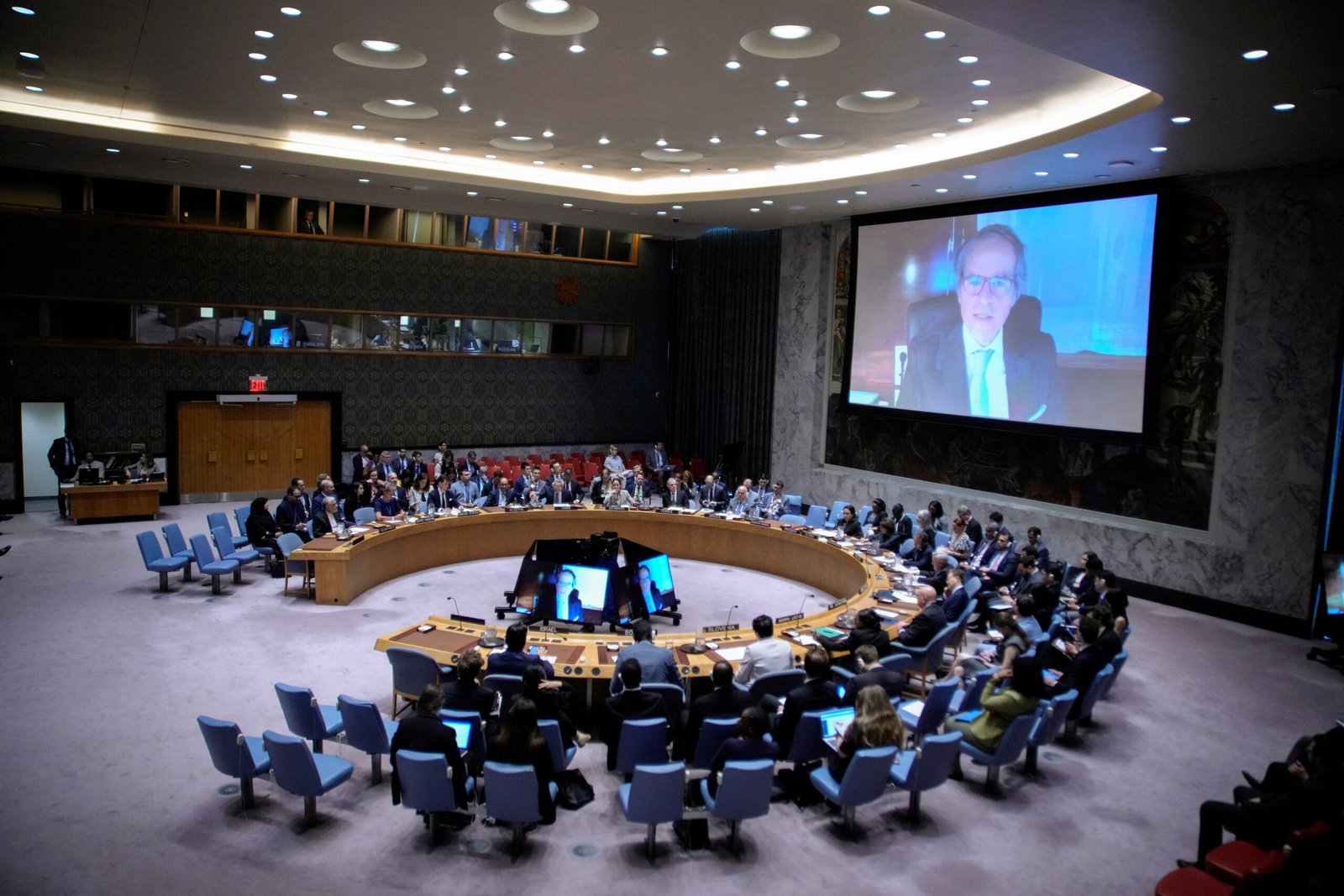

As global conflicts grow and trust fades, the United Nations struggles to prove its relevance
As the United Nations marks the 80th anniversary of its founding charter this week, the organisation finds itself mired in criticism, with its influence weakened, finances strained, and credibility under intense scrutiny. What was once envisioned as the cornerstone of global peacekeeping now faces growing doubts over its future.
On June 26, 1945, representatives from 50 nations signed the UN Charter in San Francisco, laying the groundwork for an international body meant to prevent the kind of devastation wrought by World War II. Eight decades later, the UN’s 193 member states will commemorate that moment — but the celebration comes amid a storm of global crises and institutional stagnation.
“The organisation has weathered criticism during past crises — from the Rwandan genocide to the Iraq war,” said Richard Gowan of the International Crisis Group. “But this is an especially bad moment.”
He pointed to widespread frustration over the UN Security Council’s inability to act on major conflicts, notably in Ukraine and Gaza — a paralysis largely caused by the veto power held by the Council’s five permanent members: the US, UK, China, Russia, and France.
“The UN system is suffering a credibility crisis,” Gowan warned. “And it’s unclear if member states have the political will or resources to reverse course.”
Romuald Sciora, a research fellow at the French Institute for International and Strategic Affairs, was even more blunt:
“The UN is becoming a political dwarf. I don’t expect it to disappear entirely by its 100th anniversary — but it may slowly fade into irrelevance, like other forgotten institutions of the past.”
A Fractured Membership and Fading Influence
Observers note that while structural reforms are badly needed, not all of the UN’s problems are self-inflicted. The organisation has become an easy target for blame in a deeply divided world where consensus is rare and unilateralism is on the rise.
“The idea that ‘might makes right’ is creeping back into global politics,” said Gissou Nia of the Atlantic Council. “And that takes us further from the values that led to the UN’s founding.”
Nia, a human rights lawyer, also pointed to growing public distrust, especially from powerful member states.
“Constant accusations — that the UN is anti-Semitic, irrelevant, or supports dictators — chip away at its legitimacy.”
While Secretary-General Antonio Guterres insists that the world “has never needed the UN more,” he acknowledges the mounting challenges. Ongoing conflicts have reached their highest number since 1945, and humanitarian needs are at record levels — yet funding is drying up, especially after the US cut its contributions under President Donald Trump.
In response, Guterres launched the UN80 reform initiative, aimed at streamlining operations and potentially reducing thousands of staff positions. Still, many argue that cosmetic changes will not solve the organisation’s deeper structural dysfunctions.
More Than Just Bureaucracy
Gowan notes that, like any large organisation, the UN struggles with bureaucracy — but that shouldn’t overshadow its tangible achievements.
“We’ve grown too used to the UN being there and spend more time criticising its flaws than recognising its successes.”
Indeed, the UN continues to serve as a unique global forum where adversaries still sit across the table, and where even the smallest nation has a voice. On the ground, agencies like the World Food Programme fed over 100 million people in 120 countries last year. Peacekeeping forces still operate in dangerous zones to protect vulnerable civilians.
“The UN was a magnificent tool,” Sciora said. “And however flawed, the world would be worse off without it.”
As it turns 80, the United Nations stands at a crossroads — caught between irrelevance and necessity, burdened by its structure, yet still relied upon by a world in turmoil. Whether it will adapt and endure or continue its slow decline may depend less on the institution itself, and more on the willingness of its members to reform and recommit to its founding ideals.
