

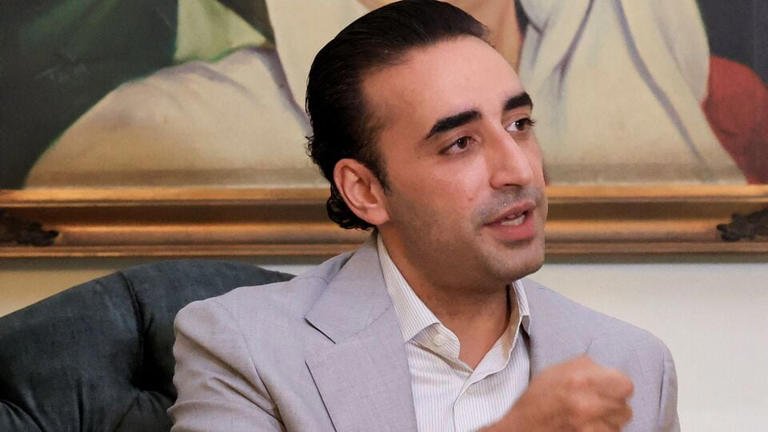

Former foreign minister and Pakistan Peoples Party (PPP) Chairman Bilawal Bhutto-Zardari has strongly criticized India’s so-called “new normal” of aggression, warning that such a strategy is unsustainable and counterproductive—especially between two nuclear-armed nations.
His remarks follow the ceasefire agreement reached on May 10 between Pakistan and India, after four days of intense hostilities involving drone and missile strikes. The escalation began with what Islamabad described as unprovoked attacks by New Delhi. Indian Prime Minister Narendra Modi later declared that “Operation Sindoor” had set a new standard in counterterrorism efforts.
Speaking to state television on Wednesday, Bilawal stated that any full-scale conflict between the neighbors would have consequences beyond South Asia. He will be leading a diplomatic delegation tasked by Prime Minister Shehbaz Sharif to visit key global capitals, where they will brief international leaders, lawmakers, and media on Pakistan’s peace-oriented stance and India’s recent provocations.
Bilawal emphasized that lasting peace in the region depends on resolving core issues, including the Kashmir dispute, cross-border terrorism, and India’s manipulation of water resources. He accused New Delhi of constructing a narrative based on hatred and misinformation, asserting that “Pakistan stands for truth and peace, while India promotes aggression and falsehoods.”
He particularly condemned India’s violations of the Indus Waters Treaty, labeling them a form of “hybrid warfare” and warning that such actions could lead to future conflicts over water resources.
Bilawal noted that throughout the recent conflict, Pakistan exercised restraint and acted only in self-defense — a position recognized by the international community.
Climate Minister Musadik Malik, also part of the delegation, said India’s aggressive posturing had failed. “Their claims collapsed — their Rafales fell like birds,” he said, accusing India of deliberately targeting civilians.
Former foreign minister Khurram Dastgir added that India’s actions stem from rising anti-Muslim and anti-Pakistan sentiments, and accused New Delhi of engaging in “water terrorism” and acting irresponsibly on the global stage.
