

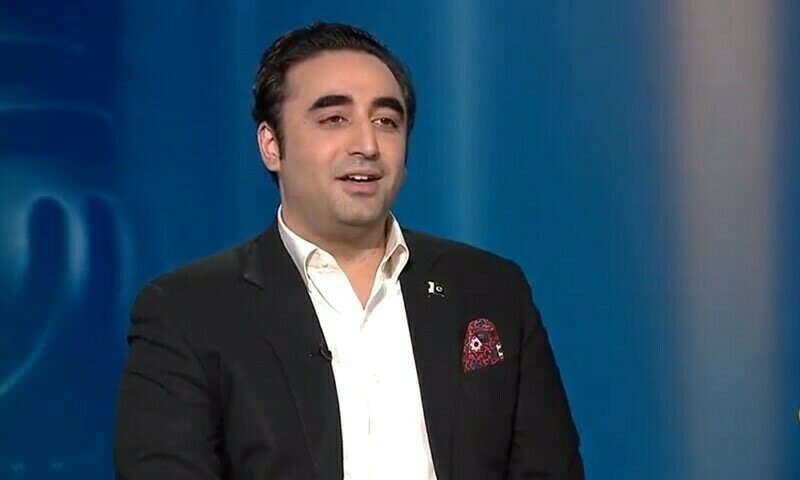

At UN, PPP Chairman links regional instability to unresolved Kashmir dispute; warns lowered threshold for conflict between nuclear states.
Pakistan Peoples Party (PPP) Chairman Bilawal Bhutto-Zardari has called on the international community to urge India to engage in a comprehensive dialogue with Pakistan, stressing that unresolved tensions—particularly the Kashmir issue—have dangerously reduced the threshold for military conflict between the two nuclear-armed neighbours.
Speaking at a press conference at the United Nations Headquarters in New York on Tuesday, Bilawal said:
“The ceasefire is a welcome first step, but it’s only a first step. The world today is less safe post-ceasefire, simply because the threshold for full-blown conflict between nuclear powers has lowered—not risen.”
Bilawal, a former foreign minister, is leading a nine-member high-level parliamentary delegation on a two-day visit to the U.S. to present Pakistan’s position on the recent military escalation with India and to counter New Delhi’s narrative at the global level.
The delegation includes Hina Rabbani Khar, Sherry Rehman, Dr. Musadik Malik, Khurram Dastgir Khan, Jalil Abbas Jilani, Tehmina Janjua, Bushra Anjum Butt, and Syed Faisal Subzwari.
Highlighting the root cause of long-standing tensions, Bilawal pointed to the Kashmir issue, describing it as an “unresolved item on the UN Security Council’s agenda” and a driving force behind extremism in the region, especially in Indian Illegally Occupied Jammu and Kashmir (IIOJK).
He condemned India’s May 7 airstrikes inside Pakistan as illegal and a violation of both international law and the UN Charter, reiterating Pakistan’s commitment to peace but warning that such provocations endanger regional and global security.
Addressing a press conference at the United Nations Headquarters, Bilawal criticised India’s recent military strikes inside Pakistan following the April 22 Pahalgam terrorist attack, which New Delhi blamed on Islamabad without providing evidence.
“India used the Pahalgam attack as a pretext to launch illegal strikes inside Pakistan, targeting civilian infrastructure, places of worship, and water and energy facilities,” Bilawal said. “Innocent civilians, including women and children, lost their lives.”
He noted that Pakistan had publicly offered to be part of an impartial international investigation into the attack, confident of its innocence. However, the Indian government rejected the offer and launched what Bilawal described as “unprovoked aggression.”
Pakistan, he said, acted in self-defence.
“When Indian jets violated our airspace, our military responded with precision, targeting only those aircraft that had carried out the strikes. We downed six jets,” he said.
Following the aerial attacks, Bilawal said India also launched missile strikes, which Pakistan responded to in kind. He credited U.S. President Donald Trump and Secretary of State Marco Rubio with playing a key role in brokering a ceasefire.
“The conflict escalated quickly. Next time, the world might not have enough time to intervene. That’s why it’s essential to pursue dialogue and diplomacy—not just for Pakistan’s sake, but for global security,” he stressed.
Bilawal reiterated that the unresolved dispute over Jammu and Kashmir remains the root cause of instability in the region. He described the situation in Indian Illegally Occupied Jammu and Kashmir (IIOJK) as a “wound that continues to fester” due to broken promises by both the Indian government and the international community.
“Terrorism in IIOJK is directly linked to the failure to resolve the Kashmir issue under UN Security Council resolutions,” he said.
Bilawal also raised alarm over India’s suspension of the Indus Waters Treaty, calling it a violation of international law and a direct threat to Pakistan’s survival.
“Cutting off water to 200 million people is not just a violation—it’s an act of war. No civilised nation should endorse such weaponisation of water, especially amid climate change and regional water scarcity.”
The PPP leader also advocated for the establishment of a formal complaint and conflict-resolution mechanism between the two countries, noting that Pakistan has suffered the most from terrorism globally.
“Pakistan has faced more terrorist attacks and more victims than any other country. I’ve experienced this personally, having lost my mother to terrorism,” he said. “We’ve fought this menace on every front—political, military, and diplomatic.”
Bilawal criticised India for politicising terrorism and using it as a tool to justify aggression against Pakistan and to target Muslims domestically and in Kashmir.
“If every terrorist attack in India or IIOJK is blamed on Pakistan and used to justify war, and we adopt the same standard, then we are on a path to perpetual conflict. That is simply untenable.”
He added that Pakistan remains willing to work with India on counterterrorism efforts, but warned against “leaving the fate of 1.7 billion people in the hands of non-state actors.”
Bilawal also claimed that Indian strikes used Israeli drones and accused Prime Minister Narendra Modi’s government of drawing inspiration from Israeli policies in Palestine.
“Modi is a budget version of Netanyahu—replicating the worst examples,” he said. “India’s demographic changes in Kashmir are clearly inspired by Israel’s settler colonial model in the West Bank.”
Earlier, Bilawal and his high-level parliamentary delegation met with France’s Permanent Representative to the UN, Ambassador Jerome Bonnafont. The delegation included senior politicians such as Hina Rabbani Khar, Sherry Rehman, Dr Musadik Malik, and others.
The Pakistani officials briefed the ambassador on India’s recent military escalation and violations of international law, including its suspension of the Indus Waters Treaty and its continued aggression in Kashmir.
Bilawal emphasized Pakistan’s restrained response and stressed the need for a peaceful resolution to the Kashmir dispute. He urged France to play a role in reviving the treaty and promoting bilateral dialogue.
Ambassador Bonnafont reiterated France’s support for regional peace and underscored the importance of restraint, dialogue, and adherence to international obligations.
Bilawal also announced that the delegation would begin engagements in Washington, D.C., from Wednesday, where they plan to meet U.S. government officials and lawmakers.
“The U.S. enjoys good relations with both India and Pakistan. It can help facilitate peace,” Bilawal said. “India likes to project itself as a net security provider, but its actions show it is the source of insecurity in the region. Real peace between India and Pakistan is the only path to genuine regional security.”
