

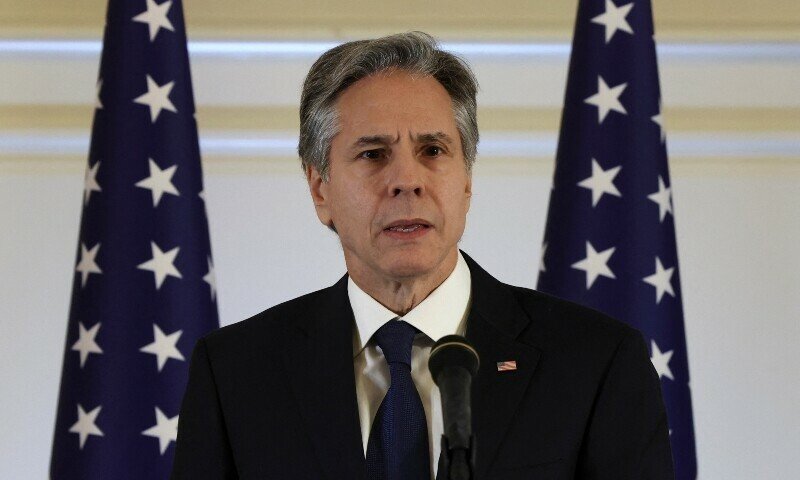

WASHINGTON D.C.: Antony Blinken, the top US diplomat, is set to return to the Middle East on Thursday, marking the fourth visit by the Biden administration since the commencement of Israel’s three-month-long conflict with Hamas on Oct. 7. Fears of a broader regional escalation loom over the intensive diplomatic efforts.
Blinken’s weeklong trip will encompass visits to Israel, the West Bank, Gulf countries, Egypt, Turkiye, and Greece. During this tour, he will reiterate calls for increased humanitarian aid to Gaza and explore solutions for the post-war management of the Gaza Strip.
State Department spokesperson Matthew Miller emphasized Blinken’s focus on preventing the conflict from spreading beyond Gaza and discussed potential steps to avoid escalation.
The recent drone strike in Beirut, resulting in the death of Hamas deputy leader Saleh Al-Arouri, has heightened regional tensions. The leader of Iran-backed Hezbollah, which has engaged in conflicts with Israel, declared that the Shia militia “cannot be silent.”
In response, the US conducted a retaliatory strike in Baghdad, targeting a leader of an Iran-backed militia responsible for recent attacks on US personnel.
The conflict has also affected Red Sea shipping lanes, with Houthi rebels launching drones and missiles at over 20 ships since Nov. 19. Miller emphasized the shared interest in preventing the conflict from expanding beyond Gaza.
Addressing the aftermath of Hamas’ assault, Israel launched a comprehensive air and ground offensive, resulting in casualties and humanitarian concerns. Blinken aims to revive US appeals for Israel to mitigate the impact on civilians and address the humanitarian crisis, while also initiating discussions on the future governance of Gaza post-Hamas.
Blinken’s agenda includes visits to NATO allies Turkiye and Greece. Turkiye’s prolonged deliberation on approving Sweden’s NATO membership has led to frustrations among Western allies, including the US.
US officials support Israel’s rejection of genocide charges at the International Criminal Court and advocate for increased protection of civilians while acknowledging the need for a ceasefire, in line with the priorities of Israel’s Arab neighbors.
