

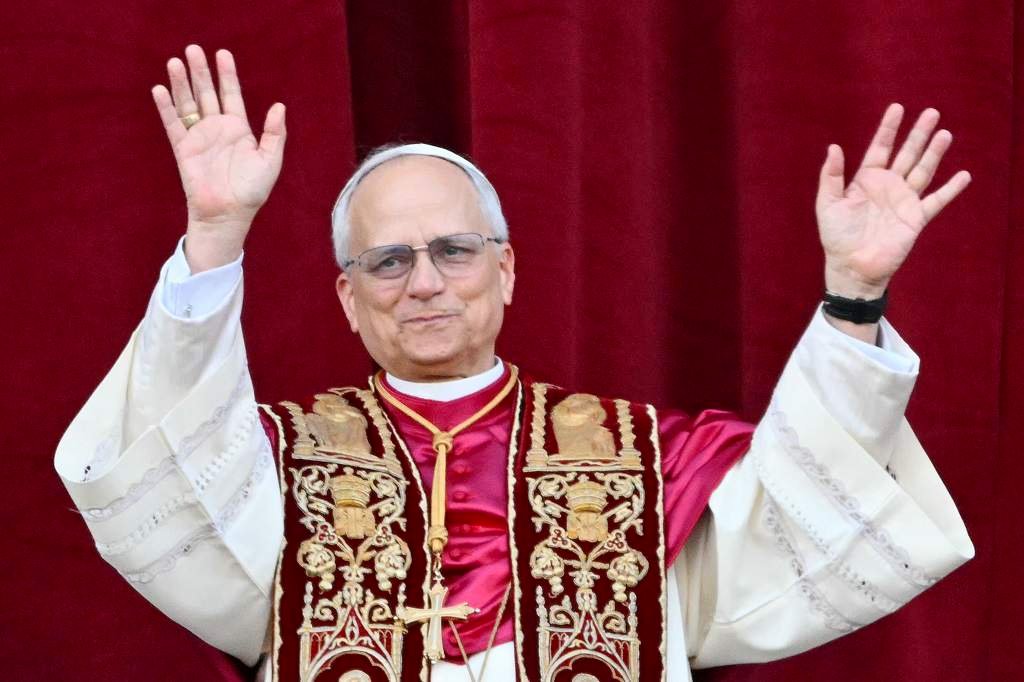

Cardinal Prevost
VATICAN CITY: In a historic and unexpected decision, Cardinal Robert Prevost was elected as the new leader of the Roman Catholic Church on Thursday, taking the name Pope Leo XIV. With this appointment, he becomes the first pontiff from the United States, marking a significant milestone in the Church’s history.
The announcement came approximately 70 minutes after white smoke rose from the chimney of the Sistine Chapel, signaling the successful election of a new pope by the College of Cardinals. The proclamation was made from the central balcony of St. Peter’s Basilica by French Cardinal Dominique Mamberti, who uttered the traditional Latin phrase “Habemus Papam” — meaning “We have a pope” — to the tens of thousands gathered in St. Peter’s Square.
Pope Leo XIV then appeared before the cheering crowd and greeted them with a simple yet powerful message: “Peace be with you all.” At 69 years old, the new pontiff hails from Chicago but has spent a substantial portion of his ecclesiastical career serving as a missionary in Peru.
Though he became a cardinal only in 2023, his influence within the Church grew quickly, particularly due to his leadership role in the Vatican department responsible for selecting bishops around the world.
Prior to his elevation, Prevost served as bishop of Chiclayo in northern Peru from 2015 to 2023. Pope Francis brought him to Rome in 2023 to head the Dicastery for Bishops, a key position in shaping the global leadership of the Church.
Despite his relatively low public profile and few media appearances, Prevost is known among his peers for his humility, quiet demeanor, and dedication to social justice — qualities that earned him widespread respect among reform-minded cardinals.
Pope Leo XIV succeeds Pope Francis, who passed away on April 21 after leading the Church for twelve transformative years. Francis, the first Latin American pope, pushed for a more open and inclusive Church, encouraging dialogue on once-taboo subjects such as the role of women in the clergy and LGBTQ inclusion.
Leading up to the conclave, speculation surrounded several high-profile cardinals, including Italy’s Pietro Parolin, the Vatican Secretary of State under Francis, and the Philippines’ Luis Antonio Tagle.
While they were considered frontrunners, Cardinal Prevost’s election came as a surprise to many observers. Nonetheless, his track record of aligning with Francis’ vision of reform likely resonated with a significant portion of the cardinal electors.
During a Vatican press conference in 2023, Prevost had said, “Our work is to enlarge the tent and to let everyone know they are welcome inside the Church.” His election as Pope Leo XIV suggests a continuity of that inclusive philosophy, indicating that the Catholic Church under his leadership may continue on the path of reform and global engagement that marked the Francis era.
