

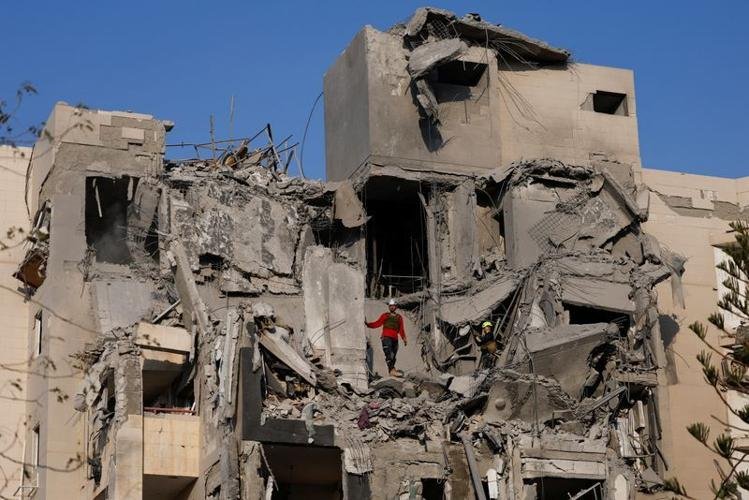

Fresh explosions were reported in Tehran on Tuesday, casting doubt over a fragile ceasefire that had supposedly taken effect just hours earlier. This came even after U.S. President Donald Trump claimed that he had ordered Israel to stop its ongoing airstrikes on Iran.
According to witnesses in the Iranian capital, at least two loud blasts were heard. Simultaneously, Israeli military radio reported that a radar installation near Tehran had been targeted. However, conflicting statements from both U.S. and Israeli officials have fueled confusion over whether new strikes were authorized.
Israeli Prime Minister Benjamin Netanyahu’s office insisted that no further air raids had been carried out following a conversation with President Trump. Nevertheless, reports of renewed military activity suggested otherwise.
While en route to a NATO summit in the Netherlands, Trump posted on his social media platform that he had ordered Israeli planes to stand down. “All planes will turn around and head home, while doing a friendly ‘Plane Wave’ to Iran. Nobody will be hurt, the Ceasefire is in effect!” he wrote.
This followed a more forceful post in which he warned Israel: “Do not drop those bombs. If you do it, it is a major violation. Bring your pilots home, now!”
Speaking to reporters before his departure from the White House, Trump expressed frustration over both parties allegedly breaching the ceasefire. “I’ve got to get Israel to calm down now,” he remarked, adding that Israel had “unloaded” shortly after the agreement had been reached. He further criticized the ongoing conflict, saying, “Iran and Israel have been fighting so long and so hard that they don’t know what they’re doing.”
Reports suggested that Trump had a direct phone call with Netanyahu during which the Israeli leader agreed to scale back — but not entirely cancel — the planned bombing mission. Axios reported that Netanyahu had proposed a limited de-escalation instead of a full halt to air operations.
Meanwhile, Israeli Defence Minister Israel Katz had earlier confirmed that he had authorized additional airstrikes on Iranian targets in response to what he alleged were Iranian missile launches — a claim Iran has categorically denied.
Iranian officials asserted that their country had not fired any missiles and accused Israel of continuing its bombardment well beyond the ceasefire deadline. According to Tehran, Israeli attacks persisted for more than 90 minutes after the ceasefire was supposed to come into effect.
As confusion reigns over the true status of the ceasefire, both sides appear to remain on high alert, raising concerns that the situation could unravel further despite diplomatic efforts to cool tensions.
