

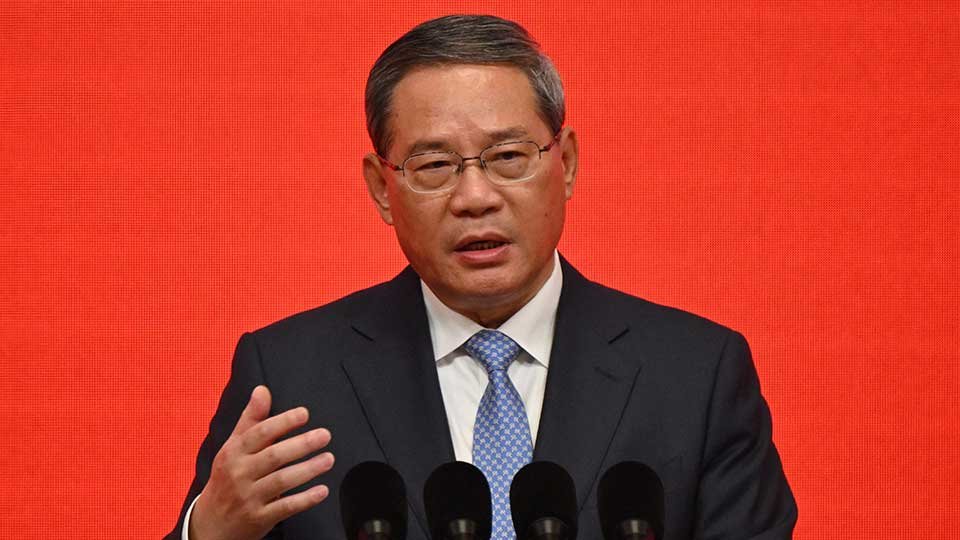

China has set an economic growth target of approximately 5% for the year, emphasizing domestic demand as the primary driver of its economy amid rising trade tensions with the United States.
Speaking at an annual political gathering, Premier Li Qiang highlighted the government’s plans to boost economic activity, including increasing fiscal spending to address sluggish consumer demand, youth unemployment, and ongoing challenges in the property sector. The budget deficit has been raised to 4% for the first time in three decades, signaling a commitment to greater public expenditure.
As part of these economic measures, Beijing aims to generate 12 million new urban jobs while maintaining an inflation target of 2%. Officials stressed the need to accelerate efforts in strengthening domestic consumption to counterbalance external pressures affecting trade, science, and technology sectors.
Acknowledging the complexities of the global economic landscape, Li noted that China’s recovery remains fragile, with domestic demand still insufficient to sustain long-term growth. He underscored the importance of proactive policies to ensure economic stability.
Alongside its economic roadmap, China has announced a 7.2% increase in its defense budget, bringing military spending to 1.78 trillion yuan ($245 billion). The move aligns with the country’s ongoing efforts to modernize its armed forces, particularly in response to regional security concerns and strategic competition with the US.
China’s military modernization strategy, set to be completed by 2035, prioritizes advancements in missile systems, naval capabilities, and surveillance technologies. Additionally, the armed forces continue to enhance combat readiness through intensive training, often centered around Taiwan and the South China Sea disputes.
Despite international scrutiny, China maintains that Taiwan is part of its territory and has not ruled out the use of force to achieve unification. Meanwhile, with a proposed $850 billion military budget, the US remains the world’s largest defense spender.
