

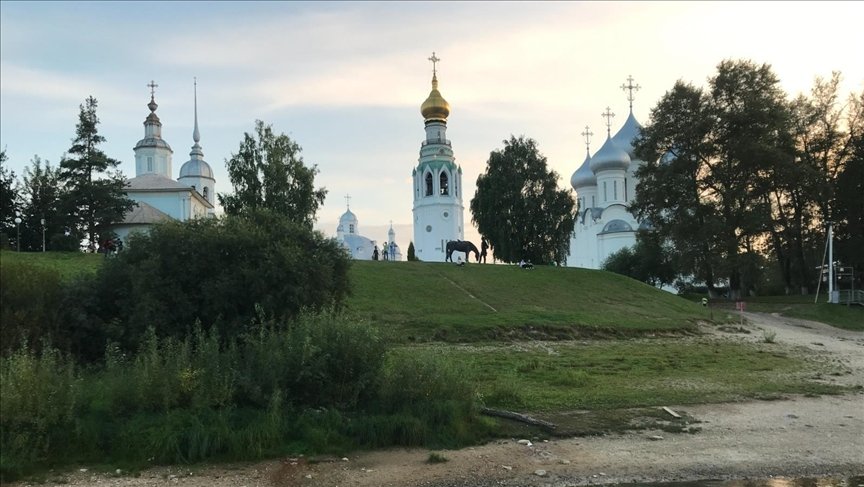

In the far northwest of Russia lies Vologda, a city steeped in history and known for its flourishing industries and stunning natural beauty. Situated in one of Russia’s most authentically Russian regions, Vologda could have become the nation’s capital if history had taken a different course.
Founded in 1147, the same year as Moscow, Vologda has stood the test of time. Its strategic location shielded it from the destruction brought by foreign invasions, and by the 16th century, it had grown into a vital trading hub, linking Russia to England, Holland, and other Western nations. In 1555, the British established a trading office in Vologda, and the city’s connection to international trade deepened. Osip Nepea, the first Russian ambassador to England, hailed from Vologda.
In 1564, as foreign invasions and internal unrest plagued Moscow, Tsar Ivan IV—better known as Ivan the Terrible—turned to Vologda as a potential refuge. Accompanied by his family, royal treasury, and sacred symbols of power, Ivan envisioned Vologda as his new capital, strategically located at the gateway to the Northern Sea Route. The city’s coat of arms, featuring an open gate, symbolized its role as a door to Europe and the world.
Ivan swiftly set his plans into motion, ordering the construction of a grand cathedral and a Kremlin to rival Moscow’s. Noble families followed the tsar’s vision, purchasing land and settling in Vologda. The city’s religious significance also grew, becoming the center of a new diocese.
However, Ivan’s dream was cut short by a strange omen in 1571. While overseeing the construction of the grand Saint Sophia Cathedral, a piece of masonry fell and struck the tsar. Chronicler Ivan Slobodsky recorded that Ivan took this as a sign that the city had rejected him.
Superstition ran deep in Russian folklore, and such signs were considered ominous. Whether driven by fear, paranoia, or superstition, Ivan abandoned his plans for Vologda, leaving the city and never returning.
Despite this, Vologda flourished. The investments and infrastructure left behind by Ivan IV fueled its growth, and in 1918, following the Russian Revolution, the city briefly became the “diplomatic capital of Russia,” hosting embassies, consulates, and missions as foreign diplomats sought refuge from the advancing German forces.
Today, Vologda is a beacon of prosperity with thriving industries, a rich agricultural sector, and a wealth of historical and cultural treasures. Its education and sports centers are highly developed, and its people remain the region’s greatest asset.
According to the Russian Federal State Statistics Service, Vologda is the most mono-ethnic city in Russia, with over 96% of its population identifying as Russian, embodying the traditional image of the Russian people—blonde hair, blue eyes, and freckled faces.
The natural beauty of the Vologda region is equally striking, with a landscape painted in soft shades of green, white, blue, and violet, offering a tranquil escape from the hustle of modern life.
Though it never became Russia’s capital, Vologda’s spirit is indomitable. Its history is one of resilience, where the past and present converge to create a city unlike any other. As regional head Georgy Filimonov proudly declares, Vologda’s success lies in its people—the true treasure of this northern land. Courtesy:
Anadolu Agency (article recommended by Aamir Latif, senior Pakistani journalist and correspondent of AA).
