

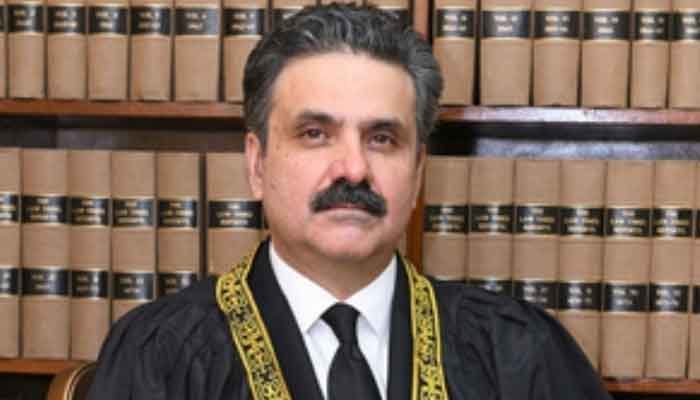

Chief Justice of Pakistan Yahya Afridi has expressed support for the recent transfer of three judges to the Islamabad High Court (IHC) from other high courts, hailing the move as constitutional.
The announcement followed a statement from the Supreme Court Bar Association (SCBA), which voiced its backing for the transfers. The decision, which took place last week, involved three judges from Lahore High Court, Sindh High Court, and Balochistan High Court. However, the move has sparked strong opposition from lawyers who staged a strike on Monday, alleging that the transfers were designed to block Justice Mohsin Akhtar Kiyani from becoming IHC Chief Justice.
Seniority and Constitutional Grounds
Justice Sarfraz Dogar, transferred from Lahore High Court, is now the senior-most judge after IHC Chief Justice Amir Farooq.
In an oath-taking ceremony for lawyers on Monday, CJP Afridi addressed the transfer issue, emphasizing that it was in line with Pakistan’s Constitution. He clarified that transfers and appointments are separate matters, asserting that the transfer does not impact a judge’s seniority. He also noted that the judges moved to IHC were not given new appointments but were merely transferred.
CJP Afridi further explained that Islamabad High Court represents the entire country, not just a specific province. He confirmed that the transfer was done under Article 200 of the Constitution.
SCBA’s Support for the Transfer
Just before CJP Afridi’s comments, the Supreme Court Bar Association issued a statement affirming that the president is empowered by Article 200 of the Constitution to transfer judges between high courts, with their consent and after consultation with the concerned chief justices and the Chief Justice of Pakistan.
The SCBA highlighted that there have been several instances in the past where judges from other high courts were transferred to IHC, including the current judges who made the move.
