

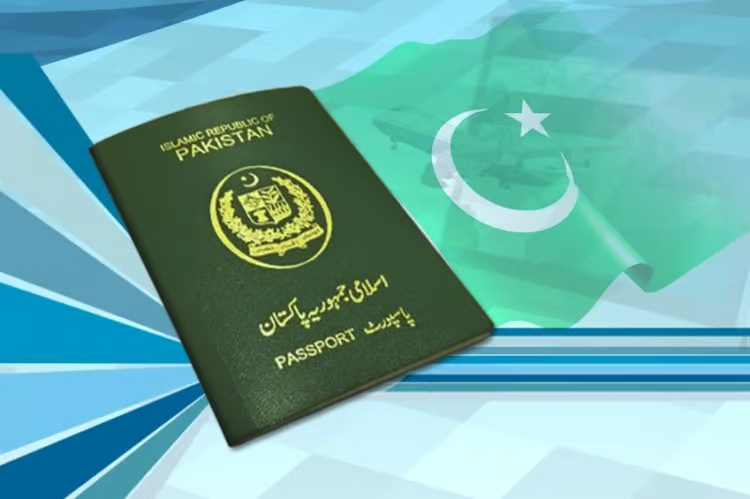

Passport Applications
The Interior Ministry has recently announced a significant surge in passport applications, reporting that between 45,000 to 50,000 applications are submitted daily.
However, the current operational resources of the ministry are only able to process approximately 20,000 to 22,000 passports each day. This disparity between the number of applications and the processing capacity has raised concerns about delays and backlogs.
During a recent statement made to the National Assembly, Interior Minister Syed Mohsin Raza Naqvi elaborated on the reasons behind these delays.
He pointed out that the passport issuance system, which was implemented in 2004, was initially adequate for the demand at that time.
However, the system has not evolved to meet the current needs, especially as the number of regional offices has expanded dramatically from 30 to 223, and foreign missions have grown from 10 to 93.
As a result, the outdated infrastructure and lack of modern technological upgrades have created significant strain on the system.
The situation has been further complicated by a shortage of passport paper that occurred late last year, which led to prolonged waiting times for applicants, often lasting several months.
To tackle the growing backlog, the Interior Ministry has taken decisive steps, now operating 24 hours a day, seven days a week, with staff working in three shifts.
Furthermore, to improve efficiency, passport printing has been decentralized, allowing major cities such as Karachi, Peshawar, Quetta, Lahore, and Multan to handle printing in their regional offices.
In an effort to enhance production capacity and reduce waiting times, the ministry is actively procuring new equipment. This includes the acquisition of 20 Delta printers and 20 laminators, which are expected to arrive by October 2024.
Additionally, there are plans to order desktop printers and e-passport machines, which are anticipated to be delivered by November 2024.
Officials within the Interior Ministry are optimistic that these upgrades will significantly expedite the passport processing timeline and help address the backlog of applications.
The implementation of these measures is a crucial step towards improving the overall efficiency of the passport issuance system, ensuring that applicants receive their documents in a timely manner and restoring confidence in the services provided by the Interior Ministry.
