

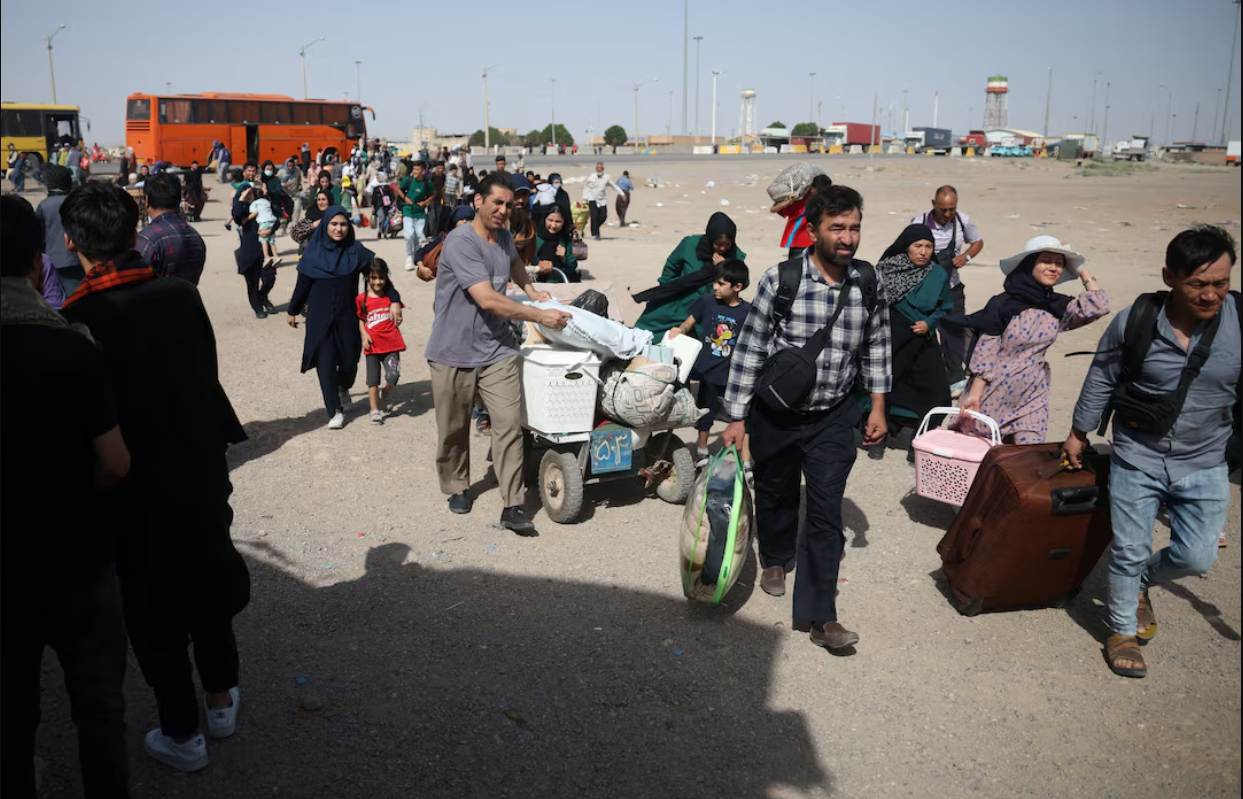

Since June 2025, nearly 700,000 Afghan nationals have been deported from Iran, according to humanitarian agencies. Among those affected is 31-year-old Habiba, an aspiring engineer who fled Taliban rule to pursue a master’s degree in Iran. Just weeks before completing her thesis, she was deported, returning home with only her documents and laptop, symbols of a future abruptly cut short.
Habiba now finds herself in a country where educational opportunities for women have been almost entirely dismantled. “I was so close,” she said at the Islam Qala border crossing, disheartened by the sudden collapse of her dreams. Her story is one among many emerging from the mass expulsions that followed the brief conflict between Iran and Israel in June.
Humanitarian groups report that Iranian accusations of espionage against Afghan nationals triggered the mass deportations. Though Iranian officials insist the deportations were aimed at undocumented migrants, many of the expelled claim they held valid documents. The border shared between Iran and Afghanistan stretches over 900 kilometers of arid terrain, now a pathway for thousands forced to return daily.
Iranian authorities maintain that most returnees left voluntarily, citing internal security and limited resources. As of July, temporary census cards issued to about 2 million Afghan nationals were declared void. These individuals were reportedly given until July to leave the country. An estimated 2.1 million others had no documentation at all, officials said.
Conditions at the Afghan border remain dire. Many returnees arrived dehydrated, hungry, and without their possessions. Although Iranian officials claim that deportations were conducted with “dignity,” reports from aid workers suggest otherwise. Numerous returnees say they were forced out abruptly, often losing unpaid wages and being separated from their families in the process.
One such individual, Rahela, a 37-year-old certified makeup artist and seamstress, had built a livelihood in Tehran. Now in Herat with her two daughters, she is unable to work due to Taliban restrictions on women’s employment and mobility. Separated from her husband and lacking a male guardian to escort her in public, Rahela finds herself confined once more, with her independence stripped away.
Men returning from Iran also face severe challenges. Many have been deported alone, while their families remain in Iran. One man, Rahim Uzbek, 59, now lives in a mosque, separated from his wife and children. His savings, including rent payments, were lost in the hurried exit.
Another returnee, Mansoor Ahmad, 21, recounted being beaten and placed in solitary confinement by Iranian authorities after being falsely accused of assisting an escape from a deportation center. He showed visible bruises and red marks on his back and shoulders, reflecting the physical abuse he endured.
Although Iranian authorities have denied systemic mistreatment, some have acknowledged that the sudden expulsions caused unintentional separations and hardship. They emphasized efforts to facilitate voluntary returns and claimed students were advised to leave with family members to avoid disruption.
Despite facing discrimination and hardship in Iran, many Afghan nationals had found a sense of stability there, some pursued education, others held jobs. For Rahela and many others, the return to Afghanistan is not just a homecoming but a return to social and economic confinement. “Life in Iran was tough,” she admitted, “but at least we had work and women had the freedom to live.”
Now, Afghan authorities and international organizations are grappling with the overwhelming number of returnees. With Afghanistan’s ongoing economic crisis, restrictions on women, and limited humanitarian resources, the outlook for those forced back into the country remains bleak.
