

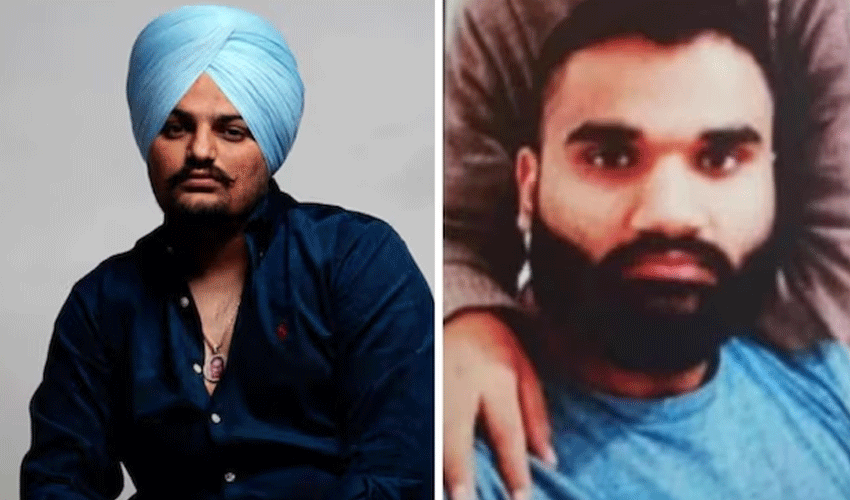

Sidhu Moose Wala
On the birth anniversary of Punjabi rap icon Sidhu Moose Wala, a chilling confession has emerged from Canada-based gangster Goldy Brar, who admitted to orchestrating the singer’s assassination in 2022. In a detailed six-hour interview with a British media outlet, Brar showed no remorse for the brazen daylight killing that sent shockwaves through India and the global Punjabi diaspora.
On May 29, 2022, Sidhu Moose Wala, born Shubhdeep Singh Sidhu, was driving his black Mahindra Thar SUV in his hometown of Mansa district when two vehicles intercepted him. Soon after, a hail of bullets—24 shots in total—riddled his vehicle, killing the 28-year-old singer instantly.
Moose Wala’s cousin and a friend, who were with him at the time, were injured but survived. The murder came just a day after the Punjab government had downgraded Moose Wala’s security cover, a decision that triggered widespread outrage across the nation.
Widely regarded as one of Punjab’s most influential cultural figures, Moose Wala was admired for his bold lyrics and fearless commentary on social and political issues. His music amassed billions of views and earned him a loyal fanbase in India and abroad.
In his interview, Brar justified the killing in cold, unapologetic terms. “In his arrogance, he made some mistakes that could not be forgiven,” Brar said. “It was either him or us. As simple as that.” Brar, believed to be operating from Canada, is closely linked to jailed gangster Lawrence Bishnoi.
According to Brar, Moose Wala had fallen out of favour with the Bishnoi gang after he promoted a kabaddi tournament allegedly associated with their rivals, the Bambiha gang. Tensions had worsened following the murder of Bishnoi’s associate Vicky Middukhera in 2021, a killing Indian police connected to Moose Wala’s then-manager, Shaganpreet Singh, who has since fled to Australia.
Although Moose Wala was never formally charged in the Middukhera case, Brar insisted that he was complicit. “Everyone knew Sidhu’s role—police, journalists, even politicians—yet no one acted. So we took it upon ourselves,” he claimed.
Brar dismissed suggestions that the murder was motivated by fame or money, calling it an act of retribution born out of frustration with the justice system. “Law, justice—there’s no such thing,” he said. “Only the powerful get justice in this country.” He also noted that even Middukhera’s politically connected brother couldn’t secure justice, prompting Brar to take matters into his own hands. “I did what I had to do for my brother. I have no remorse whatsoever.”
The interview, aired on BBC on June 11—Moose Wala’s birth anniversary—marks the first time Brar has openly justified his involvement in the killing.
Experts warn that the murder and Brar’s newfound notoriety have emboldened organized crime networks in northern India. According to one BBC journalist, “This is the biggest killing in decades in Punjab,” with the gangsters’ capacity for extortion and threats rising sharply. The Bishnoi-Brar syndicate has reportedly expanded its influence through digital extortion targeting businessmen and celebrities.
Since the murder, Indian authorities have arrested more than 30 individuals connected to the case. Two of the six identified gunmen were killed in police encounters, while the rest remain in custody with no trial concluded yet.
Despite Brar’s confession, he remains beyond the reach of Indian law enforcement, believed to be operating out of Canada—a situation that has led to diplomatic tensions and ongoing calls for his extradition.
Sidhu Moose Wala’s death has cast a long shadow over Punjab’s cultural landscape. An electrical engineering graduate turned musical superstar, Moose Wala’s rise from rural Punjab to international acclaim was seen as a remarkable success story. His music addressed themes of identity, agrarian struggles, and caste discrimination, making him a powerful voice for many in the region.
For many, his murder symbolizes the dangerous intertwining of crime, politics, and popular culture that continues to haunt Punjab.
