

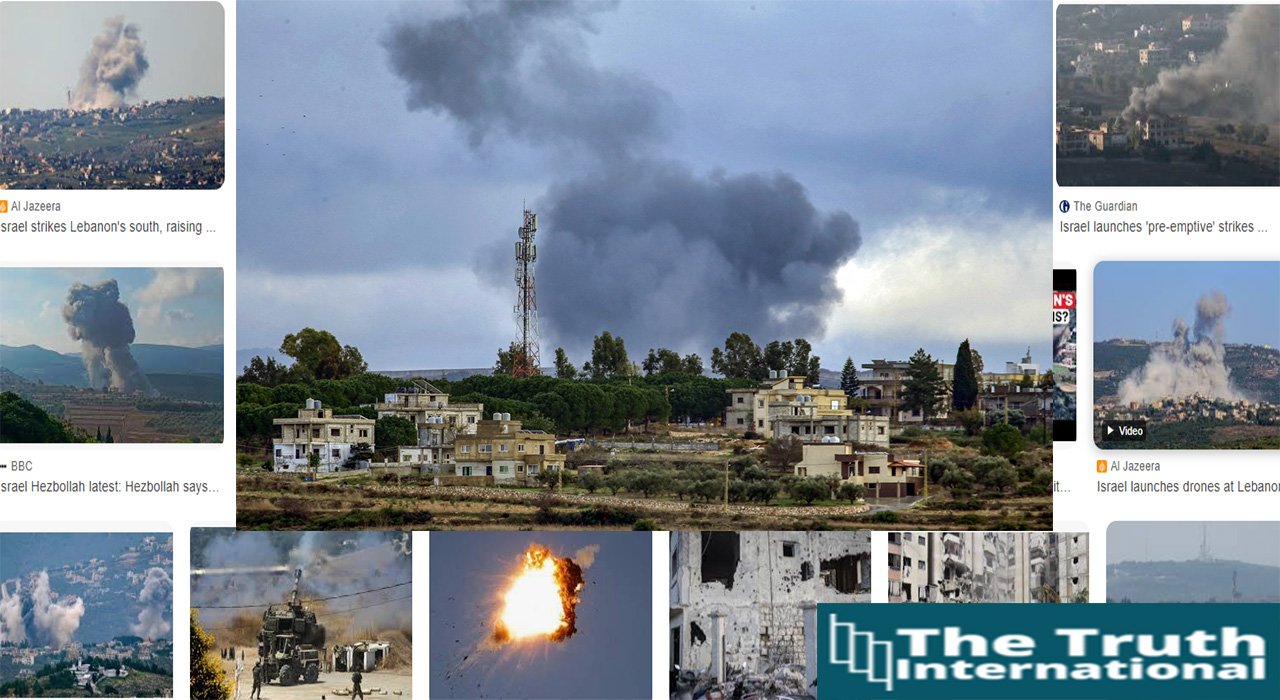

Israel continues its aggressive military campaign against Lebanon, which analysts suggest is an attempt to divert attention from its setbacks in the Gaza war and its increasing isolation both domestically and internationally.
On Monday, the Israeli military announced it had launched hundreds of airstrikes in Lebanon. Lebanese Health Minister Firas Abiad reported that the strikes had killed 492 people, including 35 children and 58 women, and left over 1,650 others injured.
Israel has warned of further military action, with army spokesperson Daniel Hagari stating that a ground invasion into Lebanon remains a possibility. “We will do everything necessary to return the residents of the north to their homes safely,” Hagari said, reinforcing Israel’s goal of halting Hezbollah attacks to facilitate the return of displaced Israelis.
Hezbollah, Lebanon’s powerful resistance group, is estimated to have over 100,000 fighters and around 150,000 rockets, including precision-guided missiles. Israel has declared that stopping Hezbollah’s attacks from northern Lebanon is now a key war objective.
Since October 8, the day after Israel launched its war on Gaza, the exchanges of fire between Israel and Hezbollah have displaced tens of thousands of people in both northern Israel and southern Lebanon. Hezbollah has said it is willing to cease its attacks if a ceasefire is reached in Gaza, but Israeli Prime Minister Benjamin Netanyahu has reportedly undermined negotiations by introducing new conditions.
Monday’s bombardment marked some of the most intense exchanges between Israel and Hezbollah since the Gaza conflict began, which has already claimed over 41,400 Palestinian lives, including more than 16,000 children.
These airstrikes come after a series of Israeli attacks in Lebanon, including last week’s deadly strike in Beirut, where Israeli airstrikes killed nearly four dozen people, including women and children, as well as Hezbollah’s top commander, Ibrahim Aqil.
Hezbollah retaliated on Monday by launching long-range rockets at Israel, triggering sirens in several West Bank settlements near Tel Aviv. The group also targeted Israeli military bases in northern Israel and Haifa.
Lebanese Prime Minister Najib Mikati condemned the ongoing Israeli assault, calling it a “war of extermination” aimed at destroying Lebanese towns and villages. He appealed to the United Nations and the international community to intervene and halt the violence.
This escalation, including the deaths of nearly 500 Lebanese civilians, mirrors Israel’s campaign in Gaza, where it has been accused of genocide and war crimes by international bodies such as the International Court of Justice (ICJ) and the International Criminal Court (ICC). The ICC has requested arrest warrants for both Netanyahu and Israeli Defense Minister Yoav Gallant for war crimes and crimes against humanity.
Israel’s military struggles in Gaza and its inability to halt Hezbollah’s retaliation have led to increasing domestic discontent and further international condemnation, leaving the Netanyahu government facing growing pressure both at home and abroad.
