

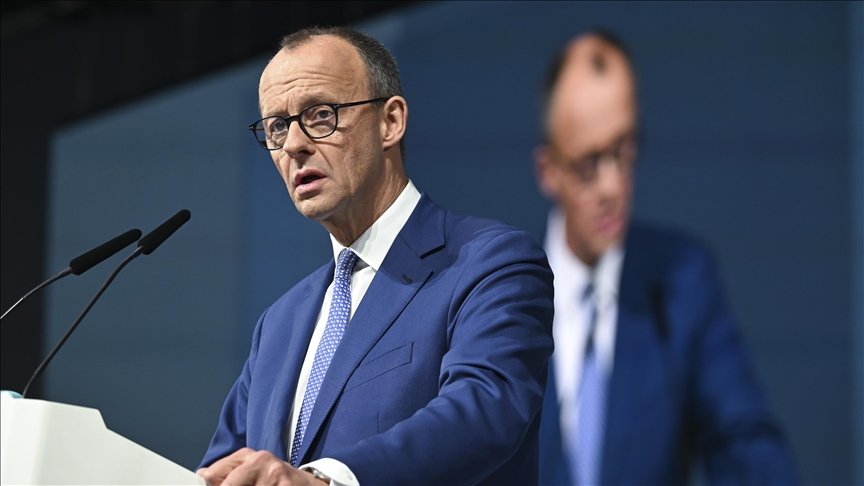

German opposition leader Friedrich Merz has claimed victory after projections showed his Christian Democrats (CDU/CSU) winning 28.5 percent of the vote in the federal election, securing a decisive lead over other parties.
Chancellor Olaf Scholz conceded defeat for his center-left Social Democrats, calling the outcome “a bitter election result.” Projections from ARD and ZDF public television placed his party in third place, marking its worst postwar performance in a national parliamentary election.
“The Union has clearly won the election,” said Carsten Linnemann, general secretary of Merz’s Christian Democratic Union. “Germany’s next chancellor will be Friedrich Merz.”
Meanwhile, the far-right Alternative for Germany (AfD) has surged to become the country’s second-strongest political force, securing 20.6 percent of the vote—nearly doubling its 2021 result.
Despite the victory, Merz’s conservatives fell short of an absolute majority, meaning they will need to form a coalition. Whether this will require one or two partners depends on how many parties secure parliamentary seats.
Economic Concerns, Migration, and Global Uncertainty
The election, which included absentee ballot projections, was largely shaped by concerns over Germany’s prolonged economic stagnation and mounting pressure to curb migration.
It also unfolded amid growing uncertainty over Ukraine’s future and Europe’s relationship with the United States.
As the EU’s most populous country and a key NATO member, Germany plays a central role in European stability. It has been Ukraine’s second-largest weapons supplier after the U.S. and will be instrumental in shaping Europe’s response to geopolitical challenges—including potential shifts in U.S. foreign and trade policy under a future Trump administration.
