

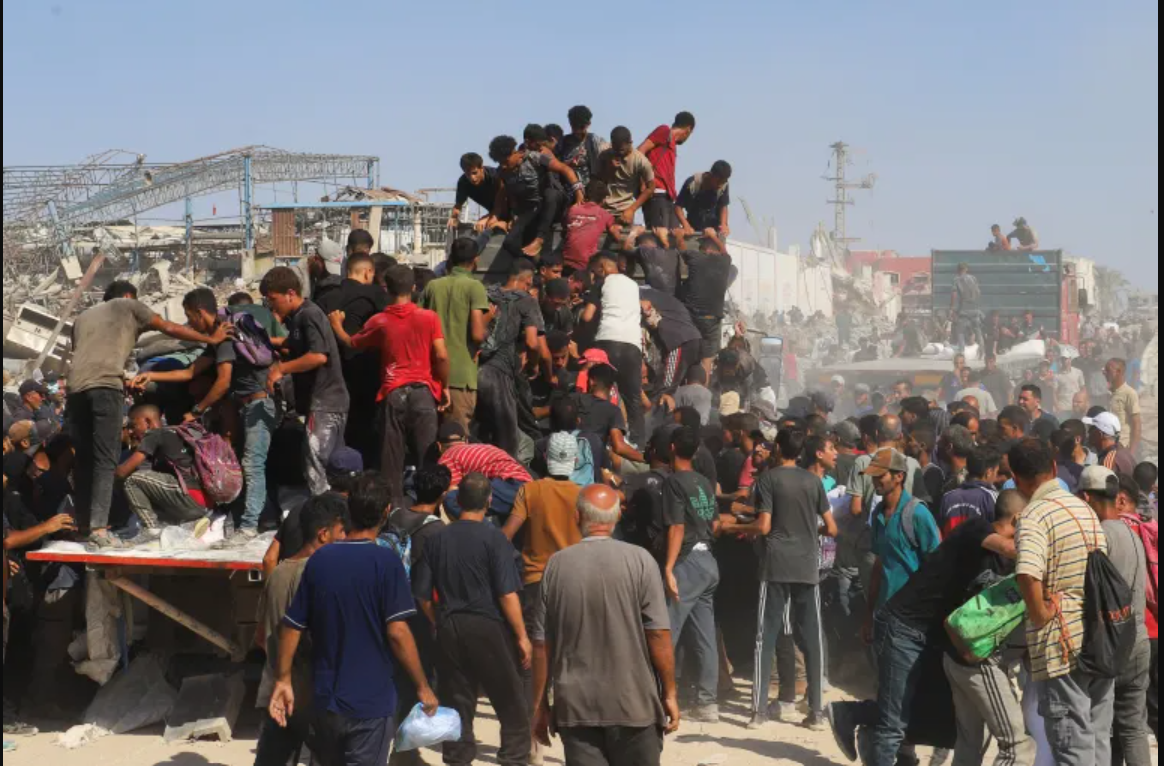

Hamas has indicated its readiness to allow the International Committee of the Red Cross (ICRC) to deliver essential food and medical supplies to Israeli captives held in Gaza. This development is contingent upon the restoration of consistent aid deliveries to Palestinian civilians enduring dire humanitarian conditions.
The announcement follows the release of troubling video footage last week, showing two Israeli hostages in visibly weakened states, sparking widespread concern and renewed international pressure for humanitarian intervention.
Netanyahu Accuses Hamas of Starving Hostages
Following the release of the footage, Israeli Prime Minister Benjamin Netanyahu called upon the ICRC to urgently intervene. He claimed the footage revealed what he described as “systematic starvation” of Israeli hostages, despite Hamas’ claims that Gaza itself faces a humanitarian disaster. According to Netanyahu, only 36 aid trucks were permitted to enter Gaza on Saturday, far below what is needed for the enclave’s nearly two million residents, many of whom face the threat of famine.
Hamas Claims Captives Share Gaza’s Struggles
In response, Abu Obeida, spokesperson for Hamas’s Qassam Brigades, stated that the Israeli captives “eat what our fighters and all our people eat,” implying that the captives are not subjected to worse conditions than the general population. He further declared that Hamas is prepared to cooperate with the ICRC regarding humanitarian aid to the captives—but only if humanitarian corridors are opened to ensure sustained aid to all areas of Gaza.
“You cannot demand food for captives while starving an entire population,” Abu Obeida emphasized, underscoring the conditional nature of Hamas’s offer.
Red Cross Calls for Unrestricted Access
Reacting to the hostage videos, the ICRC expressed alarm over the captives’ deteriorating health. It reiterated its appeal for full access to all detainees, both in Gaza and in Israeli custody. The organization highlighted that its teams have not been allowed to visit Palestinian detainees held by Israel since October 7, 2023.
The ICRC also condemned a recent attack that killed one of its affiliated staff members from the Palestine Red Crescent Society (PRCS) in a clearly marked facility in Khan Younis. While the statement did not assign blame, it called the incident a grave breach of humanitarian norms.
Hostage Families Denounce Military Approach
Families of the Israeli captives have expressed growing frustration over the Israeli government’s reliance on military solutions. In a joint statement, they warned that prolonged conflict further endangers their loved ones’ lives. “Our sons are starving and dying in tunnels,” they said. “For 22 months, we’ve been sold the illusion that military means will bring them back.”
It is estimated that approximately 50 hostages remain in Gaza, though international and local sources suggest that less than half are still alive.
Starvation Crisis Worsens in Gaza
Meanwhile, humanitarian organizations continue to raise the alarm over the deepening crisis in Gaza. The United Nations has reported that over one million women and girls in the territory are now experiencing severe hunger. In a post on social media, the UN emphasized the urgency of the situation: “One million. That’s how many women and girls are starving in Gaza. This horrific situation is unacceptable and must end.”
Despite growing international outcry, reports indicate that more than 22,000 aid trucks remain stalled outside Gaza’s borders due to ongoing Israeli restrictions, exacerbating fears of a looming full-scale famine.
As negotiations continue and global attention intensifies, the humanitarian crisis in Gaza shows no signs of abating. The possibility of limited Red Cross access to hostages may offer a small opening, both for aid and dialogue, but only if conditions for the wider Palestinian population are addressed.
