

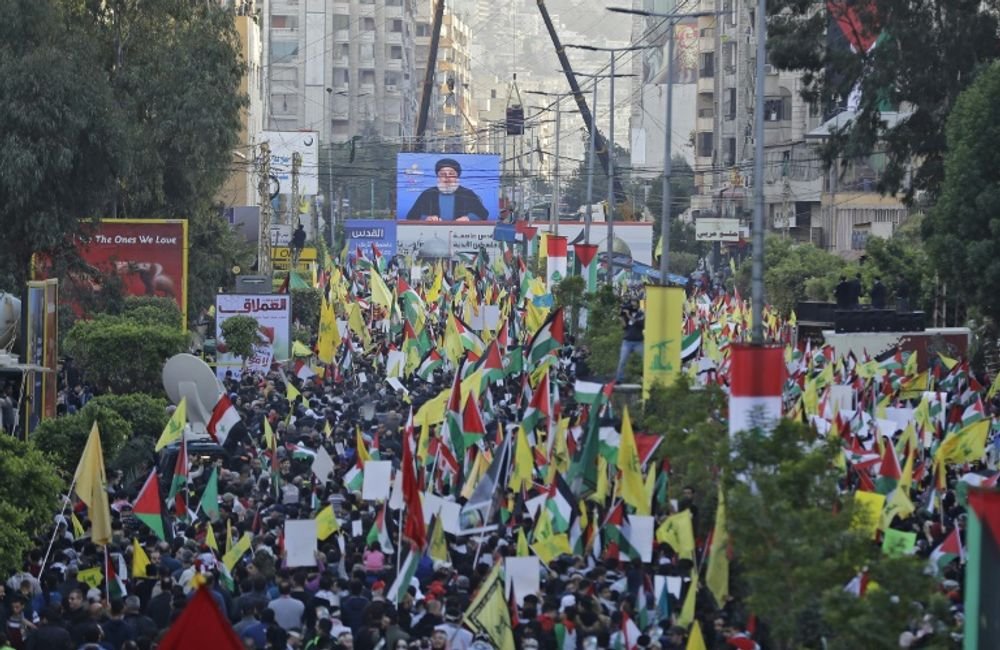

Hezbollah has issued a strong warning against Israeli interference in Lebanon, particularly over recent actions aimed at undermining the Lebanese resistance movement. Israel has been accused of stirring unrest in Lebanon in an attempt to demonize Hezbollah.
The latest tensions began after the Lebanese government blocked two Iranian flights from landing at Rafik Hariri International Airport, a decision made under pressure from Israel. One flight was scheduled for Thursday and another for Friday. Lebanese Roads Minister ordered the cancellation of the flights, citing an alleged warning from the United States, which claimed that Israel would target the airport if the planes landed. Additionally, the White House reportedly warned Lebanon that Israel could shoot down the flights.
Israel has accused Iran of using civilian planes to smuggle money to Hezbollah, but has provided no evidence to support these claims. This led to the stranding of dozens of Lebanese citizens in Tehran, as Mahan Air was informed its aircraft could not land in Beirut.
The government’s decision sparked protests across Lebanon, with demonstrators decrying the influence of Israel and the United States on their government. During a protest on Saturday, the Lebanese army clashed with demonstrators, deploying tear gas at those who staged a sit-in along the airport road.
The protests also targeted a UNIFIL convoy in Beirut, an attack that both Israel and the United States blamed on pro-Hezbollah demonstrators. However, Hezbollah condemned the assault on the international peacekeeping force, reaffirming its commitment to protect UNIFIL and public and private property.
In a statement on Sunday, Hezbollah condemned the government’s decision, calling for a reversal of the ban on Iranian flights. They urged the Lebanese authorities to take steps to protect national sovereignty and prevent Israel from imposing its will on the country. Hezbollah emphasized that the protests were a peaceful expression of popular opposition to foreign interference.
The longstanding conflict between Israel and Hezbollah flared up again in October 2023, following Israel’s war on Gaza. Hezbollah launched strikes on Israeli military targets in a show of solidarity with Palestinians. This conflict escalated further with Israeli airstrikes in Lebanon and an invasion of southern Lebanon in 2024, but Israel was forced to agree to a ceasefire in late November after failing to achieve its objectives.
Despite the ceasefire agreement, Israel has repeatedly violated the terms, killing Lebanese civilians and soldiers. Lebanon’s army has struggled to respond effectively due to Israel’s military dominance in the region.
Israel’s history in Lebanon dates back to 1982, when it invaded and occupied parts of the country. Hezbollah eventually drove Israeli forces out in 2000. Israel also launched a full-scale military operation against Lebanon in 2006, but was defeated by Hezbollah, which forced a retreat. Israel has failed to defeat Hezbollah militarily and is now seeking to ignite internal unrest in Lebanon, hoping to pit the people against their government.
Israel is also attempting to disrupt the funeral of Hezbollah leader Sayyed Hassan Nasrallah, scheduled for February 23 in Beirut. Israel fears that the large turnout for Nasrallah’s funeral will highlight its military failures and bolster support for Hezbollah.
