


Belt and Road Initiative
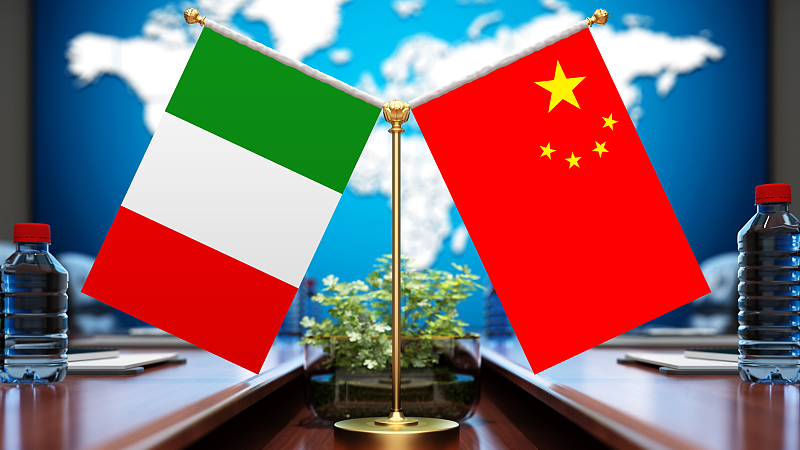
Italy has formally communicated to China its decision to withdraw from the Belt and Road Initiative (BRI), dispelling concerns about potential strains on relations and economic repercussions, according to government sources. Italy had joined the BRI in 2019, becoming the first major Western nation to participate despite warnings from the United States.
Prime Minister Giorgia Meloni, who assumed office last year, expressed dissatisfaction with the initiative, stating it had not yielded significant benefits for Italy. The 2019 agreement is set to expire in March 2024, and Rome recently conveyed its non-renewal decision to Beijing.
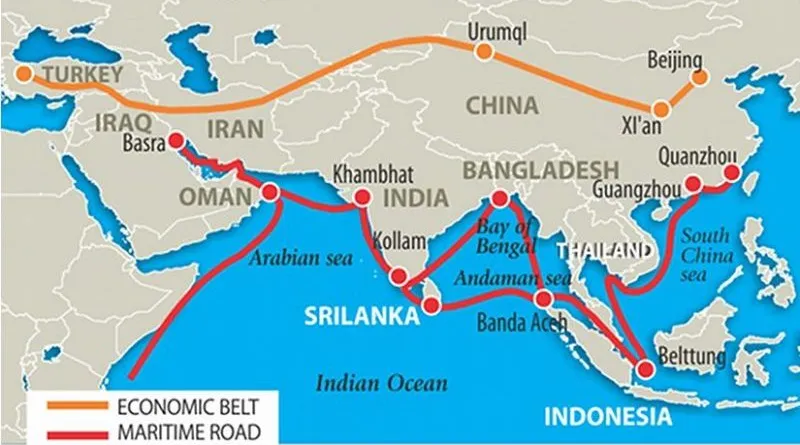
The move is seen as a significant diplomatic shift, as Italy seeks to recalibrate its relationship with China. The government sources emphasized that despite the withdrawal from the BRI, Italy intends to maintain positive relations with China. Italy, slated to assume the G7 presidency in 2024, stressed that other G7 nations have strong ties with China despite not being part of the BRI.
Italy’s participation in the BRI, initiated in 2013, aimed at fostering collaboration on infrastructure and building projects. However, Italian exports to China did not see the expected surge, with Chinese firms appearing to be the primary beneficiaries. Italian exports totaled €16.4 billion ($17.7 billion) in 2022, up from €13 billion in 2019, while Chinese exports to Italy rose to €57.5 billion from €31.7 billion during the same period.
Despite being part of the BRI, Italy had signaled skepticism by limiting the influence of Chinese companies in certain instances. In June, Meloni’s cabinet restricted the influence of Chinese shareholder Sinochem on Italian tire manufacturer Pirelli, employing “golden power” rules to safeguard strategic assets.
The withdrawal aligns with Meloni’s commitment to NATO and was reportedly assured to U.S. President Joe Biden earlier this year. While Meloni aims to strengthen strategic ties, including a visit to China, Italy’s departure from the BRI underscores evolving geopolitical dynamics and national interests.
