

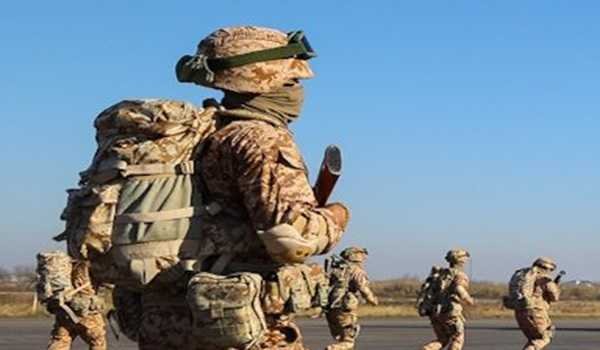

Iran’s Islamic Revolutionary Guard Corps (IRGC) on Tuesday firmly stated that the country’s military capabilities would not be subject to negotiation, ahead of a new round of discussions with the United States on Iran’s nuclear programme.
“Defence and military strength are among the red lines of the Islamic Republic and are not open to any form of negotiation,” said IRGC spokesperson Ali Mohammad Naini, as reported by Iran’s state broadcaster.
The latest statement comes as Iran and the United States are set to resume indirect nuclear talks in Muscat this Saturday, following a high-level meeting in the Omani capital last week—the most senior-level engagement since the collapse of the 2015 nuclear deal.
US President Donald Trump, who re-entered office in January, has reinstated his “maximum pressure” strategy on Tehran after previously withdrawing from the Joint Comprehensive Plan of Action (JCPOA) during his first term. In March, he sent a letter to Iran’s Supreme Leader Ayatollah Ali Khamenei proposing nuclear negotiations while warning of potential military consequences if Iran declined.
Speaking to reporters on Monday, Trump claimed he would resolve the issue, describing the situation with Iran as “almost an easy one,” and warning that military strikes on Iranian nuclear sites were on the table. He labelled Iran’s leadership as “radicals” who must not be allowed to obtain nuclear weapons.
Iran has consistently denied seeking nuclear weapons, asserting that its atomic programme is intended for peaceful energy production.
On Sunday, Iran’s official news agency reiterated that Tehran’s regional influence and missile development were also non-negotiable red lines in the ongoing dialogue.
Last week’s meeting in Muscat involved Iran’s Foreign Minister Abbas Araghchi and US Middle East envoy Steve Witkoff in what Iranian sources described as “indirect” talks. These discussions marked the highest-level contact between the two nations since the JCPOA unraveled.
The 2015 agreement had offered Iran relief from international sanctions in exchange for limitations on its nuclear programme. Though diplomatic relations between Iran and the US have remained severed since the 1979 Islamic Revolution, both sides described the recent dialogue as “constructive.”
Araghchi is also expected to visit Moscow later this week for talks with Russian officials. Russia, a key ally of Iran and a signatory to the 2015 nuclear deal, welcomed the renewed Iran-US engagement and cautioned that any military conflict would lead to a “global catastrophe.”
