

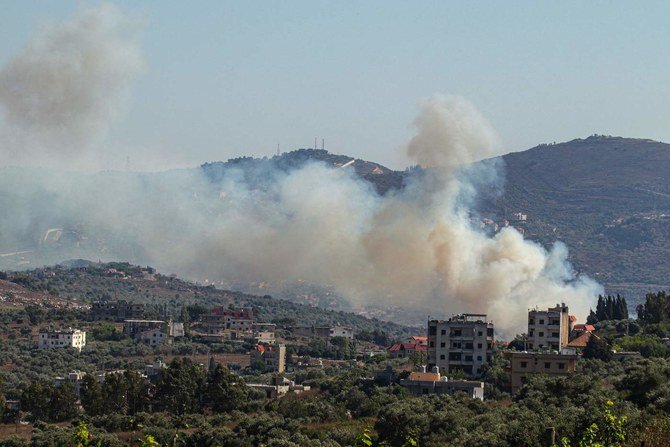

Israel carried out three airstrikes in Damascus on Sunday, targeting a security complex and a government research center that it has previously accused of being used by Iran to develop missiles, according to two regional security sources.
The strikes caused significant damage to the main customs headquarters and buildings adjacent to the military intelligence offices within the Kafr Sousa district of the Syrian capital. The research facility was also reportedly damaged, the sources said on condition of anonymity. One source stated that the strikes targeted infrastructure used for storing sensitive military data, equipment, and guided missile components.
Earlier that day, Israel struck at least seven sites in southwest Syria, including the Khalkhala air base north of Sweida, which Syrian army troops had vacated the previous night. Additional strikes near Mezzah military airport, southwest of Damascus, reportedly hit ammunition depots.
U.S. Airstrikes on Islamic State
Simultaneously, the U.S. Central Command (CENTCOM) announced that its forces conducted over 75 airstrikes in central Syria on Sunday, targeting Islamic State leaders, operatives, and camps. CENTCOM stated on social media that the operation employed various aircraft, including B-52s, F-15s, and A-10s. The strikes aimed to prevent the Islamic State from exploiting the current instability in Syria.
Israeli Moves in Golan Heights
On the same day, Israeli Prime Minister Benjamin Netanyahu ordered the military to “seize” the demilitarized buffer zone along the Syrian border after the collapse of a 50-year-old disengagement agreement between the two countries. Netanyahu claimed that Syrian forces had abandoned their positions in the area.
The Israeli military imposed a curfew in five Syrian towns in the Golan Heights, instructing residents to remain indoors for their safety. Netanyahu, visiting the Israeli-occupied Golan Heights, stated that the Israeli Defense Forces (IDF) had been directed to take control of the buffer zone and nearby strategic positions.
The buffer zone, established in 1974, separates Israeli-held territory from Syrian areas and is monitored by UN peacekeepers. A UN Peacekeeping spokesperson reported that unidentified armed individuals were observed in the separation area, with some entering UN positions.
Iranian Reaction and Embassy Incident
Iran, a key ally of the Assad regime, reiterated its stance that Syria’s future should be determined solely by its people, free from foreign interference. The Iranian foreign ministry called for a national dialogue to form an inclusive government and expressed optimism about continued cooperation between Tehran and Damascus.
However, on Sunday morning, unidentified assailants were seen rummaging through furniture and documents at the Iranian embassy in Damascus, according to footage aired by Saudi Arabia’s Al Arabiya channel.
