

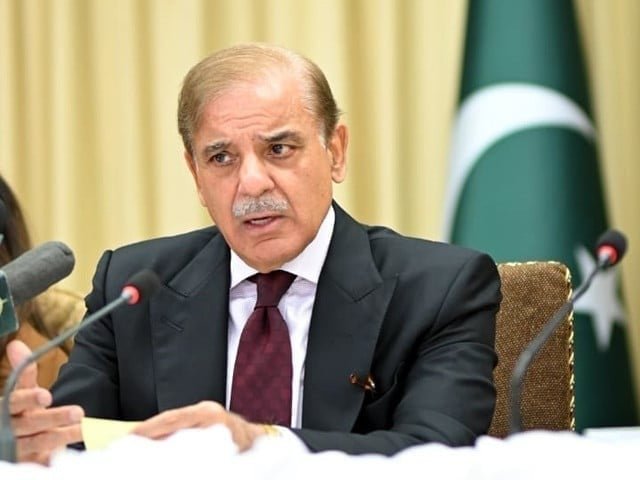

Prime Minister Shehbaz Sharif emphasized that enduring peace in South Asia hinges on resolving the Jammu and Kashmir dispute, urging India to engage in meaningful dialogue with Pakistan. His comments came during a ceremony at the Pakistan Monument in Islamabad marking Youm-e-Tashakur, held to honor the country’s armed forces and resilient citizens.
The ceremony followed the success of Operation Bunyan-um-Marsoos, Pakistan’s large-scale retaliatory strikes against Indian aggression across the Line of Control (LoC). These strikes, termed “precise and proportionate” by officials, were carried out in response to Indian attacks within Pakistani territory, which India had claimed targeted militant hideouts.
During the operation, Pakistan shot down six Indian fighter jets, including three Rafale aircraft, and dozens of drones. The conflict, lasting 87 hours, concluded on May 10 with a ceasefire brokered by the United States.
According to the military’s public relations wing, ISPR, 53 people, including 13 military personnel and 40 civilians, were martyred in Indian strikes during the escalation. The confrontation followed a deadly incident in Indian Illegally Occupied Jammu and Kashmir (IIOJK) that claimed the lives of 26 tourists. India blamed Pakistan for the attack without providing evidence.
At the event, attended by civil and military leadership, the premier described Youm-e-Tashakur as a historic moment, reminiscent of the losses Pakistan endured in 1971. He highlighted that during Marka-e-Haq, Pakistanis across the country were united in prayer for their armed forces.
PM Shehbaz stressed Pakistan’s desire for peaceful coexistence, stating that both countries could choose peace or hostility. He lamented that past wars between India and Pakistan yielded no real outcomes and called for dialogue on Kashmir, trade, and terrorism.
He criticized India for rejecting Pakistan’s offer of an international investigation into the Pahalgam attack and instead launching strikes that killed Pakistani civilians, including children. Pakistan’s response, he said, shattered India’s illusions of regional dominance by successfully targeting Indian airbases and infrastructure following midnight missile strikes on May 9 and 10.
He praised the coordination between military leadership and the government during the crisis, noting that Pakistan’s swift and forceful retaliation caught many by surprise. After these decisive actions, Pakistan accepted India’s ceasefire proposal.
PM Shehbaz denounced India’s massive defense spending as an attempt to establish regional hegemony and commended Pakistan’s armed forces for proving their capability and resilience. He also lauded the national unity displayed from Peshawar to Karachi during the conflict.
Calling for a renewed focus on economic development, he urged the nation to utilize its talent and resources to elevate Pakistan’s global standing. He expressed gratitude to allied nations—UAE, Qatar, Kuwait, China, Saudi Arabia, Turkey, and the US—for supporting Pakistan during the escalation. He also thanked US President Donald Trump for his role in facilitating peace.
Earlier, the prime minister visited the family of martyred Squadron Leader Usman Yousaf in Rawalpindi to offer condolences. Accompanied by Defence Minister Khawaja Asif, COAS General Asim Munir, and Information Minister Attaullah Tarar, PM Shehbaz praised the martyr’s sacrifice and prayed for his elevated status in the hereafter.
He later visited injured soldiers and civilians at the Combined Military Hospital (CMH) in Rawalpindi. Acknowledging their bravery, he said the courage and unity shown during Marka-e-Haq was truly unparalleled.
