

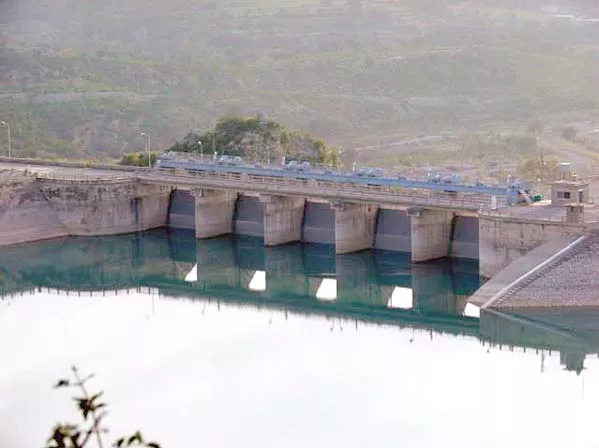

A looming water crisis threatens the twin cities of Islamabad and Rawalpindi as water levels at Khanpur Dam continue to decline sharply. Authorities estimate that the dam’s current reserves may last only 35 more days unless significant rainfall occurs soon.
The receding water has exposed rocks and mounds across the reservoir, underscoring the dual impact of climate change and a steadily falling water table. Officials have raised alarms, warning that without adequate rainfall in the next 10 to 15 days, the situation could reach critical levels.
The shortage of rainfall in the dam’s catchment zones—particularly the Margalla Hills—has further intensified the crisis. This shortfall could force authorities to suspend irrigation supply to parts of Punjab and Khyber Pakhtunkhwa and reduce drinking water availability for residents of Rawalpindi and Islamabad.
At present, the water level at Khanpur Dam stands at 1,935 feet above mean sea level, only 25 feet above the dead level. The inflow has diminished to just 82 cusecs, while the outflow continues at 235 cusecs, further depleting the reservoir.
The Water and Power Development Authority (WAPDA) has cautioned that if weather conditions remain unchanged, the situation will deteriorate further. In preparation, the Water and Sanitation Agency (WASA) may implement a water rationing plan to manage the dwindling supply.
This situation highlights the urgent need for comprehensive and sustainable water management strategies as the region confronts worsening resource scarcity.
