

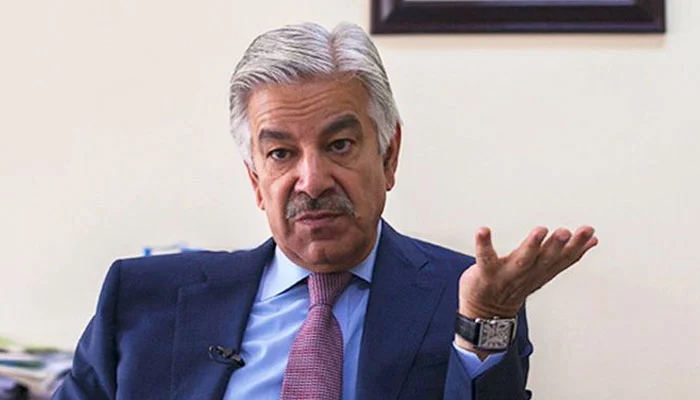

Defense Minister Khawaja Asif has warned that a military confrontation with India could erupt within the next two to four days, following a deadly attack in the Pahalgam region of Indian-administered Kashmir that killed 26 people.
Speaking in an interview from Islamabad, Asif said a military incursion by India appeared imminent, prompting Pakistan to bolster its defenses and make critical strategic decisions. He emphasized that Pakistan’s military has briefed the government on the heightened threat, though he refrained from disclosing further specifics.
The Pahalgam attack, which claimed the lives of 25 Indian citizens and one Nepali national, has intensified demands within India for retaliatory action against Pakistan. India has linked the incident to two Pakistani suspects, a claim Islamabad firmly denies, calling instead for an independent investigation.
In an additional statement, Asif cautioned that “the clouds of war are gathering” and stressed that if hostilities were to commence, Pakistan would retaliate with full force. While reaffirming that Pakistan remains on high alert, he said nuclear weapons would only be deployed if the country’s survival was directly threatened.
Earlier, Asif categorically rejected India’s accusations, labeling the Pahalgam attack as a “fabricated drama” aimed at boosting Prime Minister Narendra Modi’s political standing. He pointed to skepticism within India itself, with several voices suggesting that the attack could be politically motivated. Asif advocated for the formation of an international commission, preferably under United Nations oversight, to impartially investigate the incident.
Following the attack, India officially suspended the historic Indus Waters Treaty — a significant move considering the treaty had endured multiple wars and longstanding hostilities. Pakistan responded by declaring the suspension of all bilateral agreements with India during an emergency meeting of its National Security Committee (NSC), chaired by Prime Minister Shehbaz Sharif and attended by top military leaders.
As part of escalating measures, India ordered all Pakistani nationals to leave within 48 hours and announced the closure of the Attari border crossing. Staff members at Pakistan’s High Commission were also instructed to return home within a week. Visa services for Pakistani citizens, including diplomatic and SAARC-related visas, were suspended, and several Pakistani diplomats were declared persona non grata.
Reacting sharply, Pakistan announced the closure of the Wagah border for regular travel after April 30, while allowing Sikh pilgrims to continue their religious visits. Indian nationals were ordered to depart Pakistan within 48 hours, and all SAARC visas for Indian citizens were revoked.
Additionally, Pakistan expelled Indian defense, naval, and air advisors posted at the Indian High Commission and closed its airspace to Indian aircraft. Trade relations were also suspended, including indirect trade routed through third countries.
Pakistan firmly rejected India’s suspension of the Indus Waters Treaty, asserting that it is a binding international agreement brokered by the World Bank, and warned that any attempt to block Pakistan’s water rights would be treated as an act of war. The NSC declared water a matter of national security and pledged to raise the issue at international forums.
In an unprecedented move, Pakistan also announced the suspension of the Simla Agreement, which had provided the framework for managing bilateral relations since 1972.
Concluding its session, the NSC asserted that India’s aggressive actions reaffirm the Two-Nation Theory, the ideological foundation of Pakistan’s creation, stressing that recent events highlight the ongoing need for a separate homeland for Muslims.
The NSC denounced India’s recent statements as provocative, baseless, and irresponsible, warning of serious regional consequences if tensions continue to escalate.
