

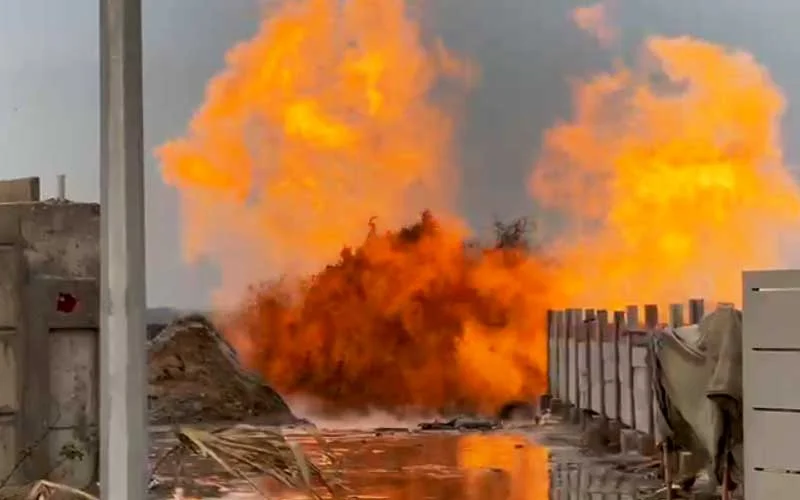

After burning relentlessly for 17 days, the mysterious fire in Karachi’s Korangi area has finally been put out. Despite the flames being extinguished, gas emissions continue to seep from the pit, where water—initially used by firefighters—continues to erupt, raising ongoing safety and environmental concerns.
The fire first broke out on March 29, following the drilling of a 1,200-foot-deep bore at the site. The persistent blaze raised alarms regarding the nature and quantity of gas fueling it.
Authorities responded by forming an investigative committee under the Ministry of Petroleum and consulting Cudd Well Control, a U.S.-based firm known for handling emergency well situations. Technical teams from Pakistan Petroleum Limited (PPL) and United Energy Pakistan Limited also conducted a joint site visit, involving experts in drilling, completions, and health and safety.
Their findings indicated that the fire maintained a consistent intensity since the early days of the incident, suggesting a significant, possibly connected gas source beneath the surface. The site itself has changed considerably: the crater has widened due to overflowing water and eroded sand, while hot water and visible vapour emissions continue.
Preliminary chemical analysis of the water emerging from the site has revealed the presence of hazardous substances. Samples showed excessive concentrations of benzene, toluene, and tetrachloroethylene—raising environmental and public health concerns.
Specifically, tetrachloroethylene was measured at 33 micrograms per litre, far exceeding the acceptable limit of 5 mg. Benzene levels reached 19 mg per litre, almost four times the safety threshold, while toluene registered at 15 micrograms per litre—three times over the recommended limit. A slightly elevated amount of o-xylene was also found, though its concentration wasn’t fully disclosed.
Despite these findings, the total hydrocarbon levels in the water remain within acceptable safety margins, according to the initial report. Further investigations are expected to determine the long-term risks and necessary remediation steps.
